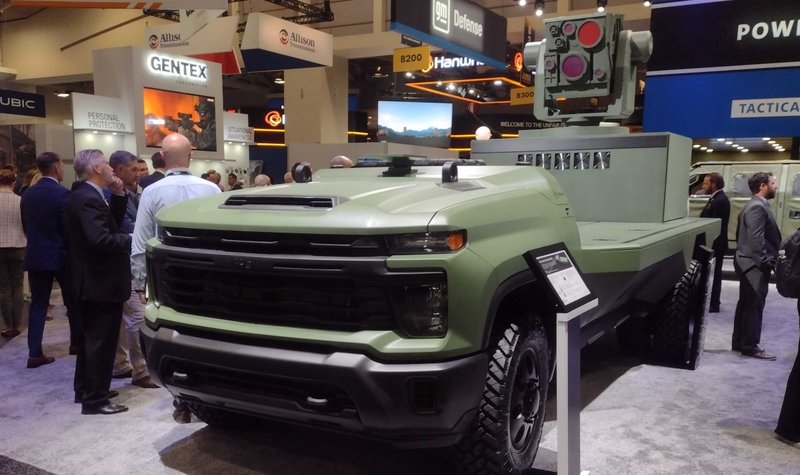
Rather than developing entirely new weapons, defence companies are looking to build on existing weapons and systems to deliver greater capability, control costs and accelerate fielding.
With a production rate of more than 10 million vehicles annually, the US commercial car and vehicle manufacturing base is second only to China. Defence companies are looking at how the vehicles, technology and manufacturing capability can support programmes.
Roman Köhne, CEO of Rheinmetall's Weapon and Ammunition Division, discusses the company's announcements at Eurosatory 2026, including developments in defence technology, precision systems, industrial ...
The Swedish Defence Materiel Administration has placed two orders with Scania and Volvo for 487 logistics vehicles, with initial deliveries scheduled for 2022.
The Ajax family of tracked vehicles is being procured by the UK MoD to replace the remaining legacy Combat Vehicle Reconnaissance (Tracked) (CVR(T)) in service with the British Army.
The platform was tested throughout the mountainous terrains of Southern Kazakhstan, across forested and savannah-like steppe and the salt marshes of Central Kazakhstan covering a total distance of 25,000 km.
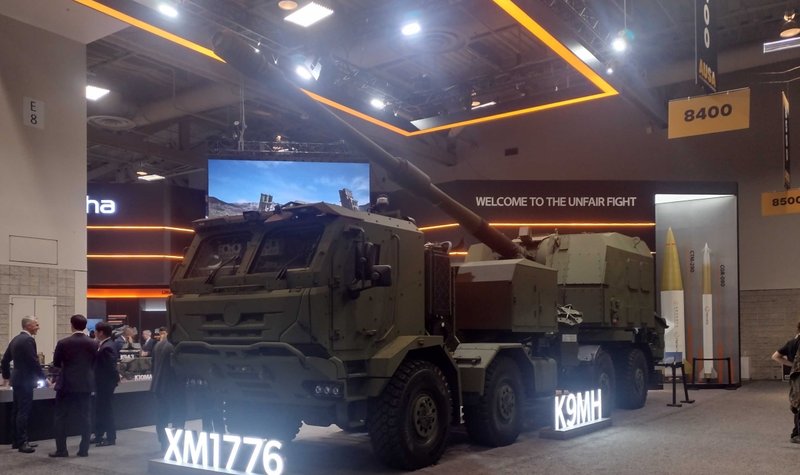
Finnish defence minister Antti Kaikkonen has approved a plan to purchase five K9s this year and another five in 2022, while Estonia is also moving to acquire more of the South Korean-made SPHs.
The Finnish company has announced the delivery to Latvia on 29 October. The country has procured over 200 6x6 armoured personnel carriers, and Finland intends to order 160 units in 2023.
As part of its overall modernisation strategy, the US Army is developing a variety of high-energy laser weapons to defeat UAVs, target helicopters and defend against rockets, mortars and artillery fire.