Active protection systems: from optional upgrade to operational requirement
Germany has ordered Trophy APS for installation on its Leopard 2s, and the technology will be integrated as standard for future versions of the MBT. (Photo: Bundeswehr)
As battlefield threats multiply, active protection systems are becoming increasingly important for armoured vehicle survivability – but cost, integration challenges and evolving drone threats will determine how widely they can be deployed.


Brought to you in partnership with Rafael
The economics of land warfare are shifting. In Ukraine, relatively inexpensive first-person-view (FPV) drones and loitering munitions are disabling armoured vehicles worth millions of dollars, while persistent aerial surveillance makes concealment and evasion increasingly difficult.
Established threats have not disappeared either. Antitank guided missiles (ATGMs), rocket-propelled grenades (RPGs) and mines continue to threaten main battle tanks (MBTs), infantry fighting vehicles (IFVs) and armoured personnel carriers (APCs).
The result is a reassessment of what constitutes sufficient vehicle protection. Armour alone is increasingly inadequate against threats approaching from multiple directions and targeting vulnerable areas such as turret roofs, engine decks, sensor ports and running gear.
Active protection systems (APS), once largely an enhancement for selected high-value platforms, are consequently becoming a more important part of armoured vehicle procurement and modernisation.
APS addresses the growing imbalance between relatively inexpensive threats and the vehicles they target, but wider adoption brings trade-offs. Systems add cost, weight and complexity while placing additional demands on power, space and platform integration – challenges that become more acute on smaller and older vehicles.
The new normal?
The operational principle of APS combines a detection and tracking system with a set of countermeasures which can include soft-kill and hard-kill capabilities.
According to Shephard Defence Insight land analyst Dr Peter Magill, armoured vehicles have become both “more important but also more vulnerable than ever”.
“With the increasing use of drones, infantry forces need protected mobility to operate safely in the battlespace. But those same vehicles are also vulnerable to UAVs,” he explained.
“This is why NATO and its allies are scrambling to acquire more APS. Ukraine has provided a clear example, where threats like FPV drones are particularly lethal to both dismounted infantry and armoured vehicles.
“Equally, the continued widespread use of man-portable anti-armour weapons like ATGMs and RPGs has helped level the playing field.”
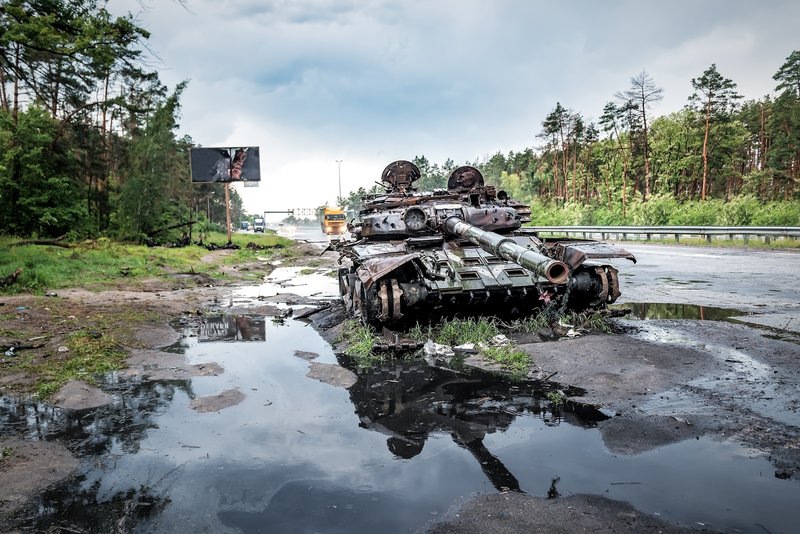
Conflicts in Ukraine and elsewhere have shifted the dial on self-protection requirements for tanks and other heavy combat vehicles. Armour alone is no longer enough. (Photo: Shutterstock/Vova Shevchuk)
Notably, the growing demand for APS is driven not by forecasts or trials, but reflects the proven combat performance of the technology. Across modern battlefields, armoured vehicles equipped with systems such as Rafael’s Trophy are demonstrating improved survivability, better operational availability and greater battlefield endurance. Several industry players offer APS today, but the only mature system is Trophy, which was first operationally used in 2011 and has been continuously evolving since.
The evidence of APS uptake is increasingly visible in major procurement programmes. For example, Germany ordered 123 Trophy APS sets for its new Leopard 2A8 fleet, and the system has now effectively become part of the baseline configuration of the latest iteration of the MBT.
Norway has also selected the system, and in January 2026, KNDS-Deutschland placed a US$385 million contract with EuroTrophy covering systems for Leopard 2A8 customers Croatia, the Czech Republic, Lithuania and the Netherlands. Outside Europe, the US Army has fielded four brigade combat team sets of Trophy on M1 Abrams MBTs and more than 1,800 systems have now been sold globally according to the manufacturer.
This is significant because APS is no longer always considered as a retrofit or partial fleet solution. It is increasingly being incorporated into the fundamental architecture around which a generation of European MBTs is being built.
International land warfare expert Christopher F Foss emphasised this move towards a more holistic approach across the board: “An increasing number of platforms are now being fitted with an electronic architecture which will allow the APS to be integrated with other sensors such as laser detectors and acoustic location devices.”
A similar trend is evident with IFVs. In the US, Elbit Systems received contracts totalling $164 million in 2024 to provide its Iron Fist APS for M2A4E1 Bradley upgrades, followed by a further $228 million announced in January 2026. General Dynamics Ordnance and Tactical Systems was also contracted for $57 million of work on the project. Iron Fist has also been ordered by some European countries for installation on BAE Systems CV90-series IFVs.
In short, APS procurement is beginning to move beyond a small number of tanks towards broader combat vehicle fleets, particularly those expected to operate close to the forward edge.
This translates into potentially significant demand in Europe. Shephard Defence Insight lists a total of 13,115 heavy armoured vehicles due for delivery across the lives of announced and forecast programmes active in 2026-2030.
This covers MBTs, wheeled assault guns and 6x6, 8x8 and tracked APCs and IFVs, all platforms capable of APS integration. There is also a significant opportunity for retrofitting in-service fleets.
The price of integration
However, installation of an APS is considerably more complicated than bolting additional armour onto a vehicle.
“Despite what some may think, an APS is not a simple plug-and-play system,” Magill noted. “Electrical and software demands can mean that older platforms simply cannot accommodate them, potentially leaving them vulnerable to modern battlefield threats.
“There are also cost implications. Some older vehicles may actually be worth less than the cost of a modern APS. As such, militaries need to weigh up whether the extra protection is worth the price. It is not unheard of for AFV upgrade packages to be cancelled because their new weapon systems cost more than the vehicles. The same situation could occur when considering the installation of new protective systems.”
There are further integration considerations. Sensors require unobstructed coverage; countermeasure launchers must be positioned without interfering with weapons, optics or other equipment; and the platform must provide sufficient cooling, internal space and payload capacity.
US assessments have previously highlighted size, weight and power as important limitations, noting that legacy vehicles such as the M1 Abrams were not originally designed around the additional demands imposed by APS. Integration can therefore result in compromises elsewhere on the platform.
Independent analysis of Trophy integration on the British Army’s Challenger 3, meanwhile, highlighted not only the added mass but also the consequences of placing equipment high on the turret, where weight can have a disproportionate effect on platform dynamics.
While future platforms can be designed from the outset with sufficient generation, cooling, processing and physical interfaces to accommodate APS and allow systems to be upgraded as threats evolve, older fleets face a different calculation: how much additional weight and electrical demand can the platform accept, and is the resulting protection worth the cost and complexity of integration?
The drone problem
Many existing APS were also originally optimised primarily against relatively fast antitank rockets and guided missiles, but FPV drones present a different detection and engagement challenge. They can be small, slow-moving and highly manoeuvrable with a very low visible or radar signature. They may also approach from steep angles or exploit gaps in sensor and effector coverage.
A reported Russian experience in Ukraine in July 2026 demonstrated the problem. Footage released by Ukrainian forces appears to show an FPV drone striking the rear of a T-72B3A fitted with Russia’s Arena-M APS without the system visibly engaging it.
The outcome of a single encounter is clearly insufficient to establish the overall effectiveness of Arena-M or the technology in general, but Russian analysts had previously questioned whether its radar was capable of reliably detecting this kind of small drone.
And as Magill emphasised, not all APS are created equally: “Some will have better radar coverage than others. However, stronger radars require more power and are more expensive, and so may not be suitable for all vehicles. Mileage will vary depending on the platform installed.”
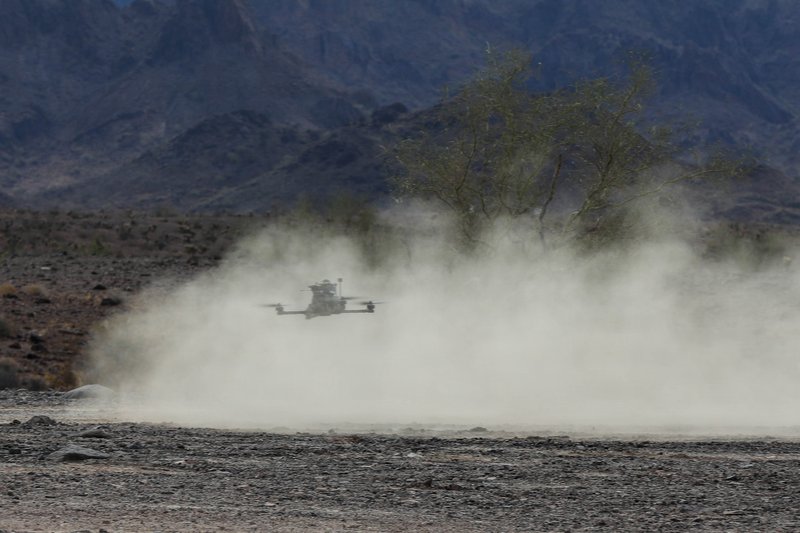
The proliferation and continuous development of FPV drones and loitering munitions mean that APS technology must also evolve to keep pace with the threat. (Photo: US Army)
These issues can be mitigated, however. Trophy, for example, already provides the capability to counter evolving UAS technologies and is designed to be upgradeable through software rollouts, parameter refinement and expanded engagement capabilities.
This approach is intended to ensure the system remains effective against current and emerging threats without requiring fundamental changes to the host platform.
Nonetheless, even a successful interception does not necessarily remove the threat entirely: the vehicle’s underlying armour and other protection still needs to withstand fragments and residual effects after an incoming weapon has been disrupted.
Trade-offs are inevitable, as Magill confirmed: “Soft-kill measures may not be effective against all targets, whilst hard-kill options have a limited supply of munitions and could be overwhelmed by a large number of enemies. Combining the two can offer balance, but again, compromises may have to be made with other systems.”
Layered protection
APS should therefore be viewed as one component of a wider survivability architecture. Passive and explosive-reactive armour, signature management, jamming, soft-kill countermeasures, hard-kill APS and tactical measures all have roles to play.
The parallel with contemporary air defence is apparent: no single layer can economically address every threat.
“An APS is not a one-size-fits-all solution,” Magill noted. “Whilst they can be an effective tool in enhancing survivability, they are best employed as part of a multi-layered system. So, working in collaboration with other elements can allow them to protect armoured platforms far more effectively than if they are employed in isolation.”
In operational terms, vehicles equipped with sensors capable of detecting the direction of incoming fire may be able to share that information with other onboard systems or wider battlefield networks, allowing crews or accompanying forces to locate and engage the attacker.
At the same time, hard-kill systems introduce their own considerations when infantry is operating close to the vehicle. Countermeasures designed to destroy an incoming projectile must be managed carefully around dismounted troops, civilians and adjacent platforms, which may not have the same levels of armour.
Protection requirements will continue to differ substantially across vehicle classes and missions.
According to Magill, there is a clear hierarchy of priorities: “APS are increasingly essential for MBTs and IFVs engaged in direct combat. For pure transport vehicles, requirements may differ. APCs on or near the front line will significantly benefit from APS, whilst lighter armoured vehicles used for patrol or rear echelon work will not have as pressing a requirement.
“The same goes for artillery and long-range fire platforms, which should be far enough behind the front line to be safe. Of course, on the modern battlefield, nothing is truly safe from UAVs, so an APS may still come in useful even for vehicles which won’t see direct combat.”
Identifying another potential application, Foss added: “Combat engineer vehicles such as armoured bridging systems and bulldozers also operate in the direct-fire zone and are key assets required to keep up the momentum of operations, so they are also candidates for APS to enhance their survivability.”
The value of APS extends beyond direct vehicle protection. By preventing disabling damage and keeping combat platforms operational, systems such as Trophy enable armored fleets to maintain momentum and stay in the fight.
Rather than having to replace turrets, tracks or the entire vehicle, operators can often return platforms to action following minor repairs or routine maintenance and refueling. Significantly, APS helps prevent the loss of critical assets from the force structure.
Despite the clear benefits, assessment of a vehicle’s mission set and likelihood of frontline exposure is undoubtedly shaping spending and procurement. Equipping every vehicle in a large fleet may be financially and technically unrealistic, meaning armies will have to determine where APS offers the greatest operational return, with vehicles fitted “for but not with” the equipment being one option.
The ultimate result is likely to be a tiered expansion of APS through the remainder of the decade.
A growing market
Meeting that demand for APS requires a concomitant ramp-up in industrial capacity, and the growing market is encouraging partnerships between system developers and vehicle manufacturers as customers seek assured supply chains and integration expertise.
A prime example of this is EuroTrophy, the joint venture between Rafael, KNDS and General Dynamics European Land Systems, which has been set up to establish European production, vehicle integration and through-life support. The same industrial model is applied in the US, with the Rafael Systems Global Sustainment company serving as prime contractor alongside DRS and General Dynamics, guaranteeing full US sovereignty over the system.
For AFV designers, the ability to integrate active protection may become as important a discriminator as armour levels or automotive performance, and for armed forces, supplier selection may increasingly turn on the ability to sustain protection across a fleet, replenishing countermeasures, supporting vehicles locally and introducing upgrades as threats evolve.
The debate is now less about whether APS improves survivability – operational experience has already made the case for it – and more about how widely the technology can realistically be fielded, which vehicles should receive it first (or at all) and how closely future platforms should be designed around it.
The arguments in its favour are significant: APS is no longer a defensive add-on; it is a core combat capability. By preserving platforms, crews and operational momentum, systems such as Trophy can enable armored forces to sustain combat power and maintain freedom of action throughout the fight.
While cost, capacity and integration challenges will inhibit the universal rollout of APS by 2030, for vehicles expected to manoeuvre and fight within range of ATGMs, the ubiquitous loitering munitions and FPV drones, deploying without it should become the exception, especially as existing and emerging threats can strike at a considerable distance from any nominal front line.
Explore the full capability of Rafael’s Trophy active protection system.


More from Studio
-
![How laser weapons could transform the economics of European air defence (Podcast)]()
How laser weapons could transform the economics of European air defence (Podcast)
Former UK Defence Secretary Lord John Hutton examines how drones, missiles, laser weapons and procurement pressures are reshaping European air defence.
-
![How Pearson Engineering combines tradition with innovation for the demining mission (Video)]()
How Pearson Engineering combines tradition with innovation for the demining mission (Video)
At Eurosatory 2026, Pearson Engineering's Group CEO Ian Bell talked about the company's role in delivering specialist armoured engineering, route-clearance and demining capabilities to military customers around the world.
-
![Ukraine experience forces rethink of counter-UAS doctrine]()
Ukraine experience forces rethink of counter-UAS doctrine
A panel session at Eurosatory 2026 brought together industry, academia and the French armed forces to assess how Ukraine’s battlefield reality is reshaping counter-UAS (CUAS) technology, air defence doctrine and Western procurement priorities.
-
![Networked advantage: keeping unmanned systems in the loop with battlefield radio technology]()
Networked advantage: keeping unmanned systems in the loop with battlefield radio technology
Unmanned systems are powerful intelligence, surveillance and reconnaissance (ISR) assets and communication tools, but are often isolated from wider networks, limiting their potential. Industry is now tackling this challenge, empowering UxVs to act as integrated nodes across domains.
-
![Air defence at scale: Europe’s challenge of cost, integration and sustainability]()
Air defence at scale: Europe’s challenge of cost, integration and sustainability
The evolution of aerial threats is driving renewed investment in ground-based air defence across Europe. Yet beyond capability, a more pressing challenge is emerging: how to sustain air defence at scale, as rising costs, limited stockpiles and industrial production constraints place increasing pressure on existing structures.
-
![The path to a safer future – why technological innovation is key to successful mine clearance]()
The path to a safer future – why technological innovation is key to successful mine clearance
Landmines continue to present a persistent and constantly evolving global threat, and advances in technology are improving how the challenges posed by minefields are managed, while reducing risks to human life. The growing capabilities of autonomous and robotic systems, coupled with advanced sensor capabilities, are now fuelling industry’s responses to this pervasive danger.