Armed forces race to keep counter-UAS defences up to date
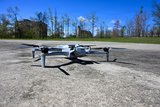
Members of the British Army Trials Unit trial future counter UAS weapon system. (Photo: Crown Copyright)
Procurement of counter-uncrewed aerial systems is accelerating as the rapidly evolving capabilities of autonomous drones pushes developers to combine sensors and improve alerts for soldiers.


On NATO’s eastern flank in Estonia, the British Army will be equipped with new uncrewed aerial systems (UAS) and counter-UAS (CUAS) technologies under a £25 million (US$33.8 million) investment announced on 17 November 2026.
But, by the time the British Army puts new CUAS detectors in soldiers’ hands and on their vehicles by its target date of April 2027, the UAS those systems are meant to spot may already have changed.
Uncrewed aerial vehicle (UAV) technology is evolving at such a pace that CUAS designed to detect and destroy hostile UAVs is in a race to keep up.
“It’s almost
Our news & analysis is now part of Defence Insight®
A Basic-level or higher Defence Insight subscription is now required to view this content.


More from Air Warfare
-
![November crewed air roundup: Europe is rethinking fighter and airlift procurement]()
November crewed air roundup: Europe is rethinking fighter and airlift procurement
November’s crewed air market demonstrated the ways allies are working together to modernise their air forces, showing how future partnerships could take different forms depending on what countries need most.
-
![Tekever eyes naval carrier surveillance role for AR5 uncrewed aircraft]()
Tekever eyes naval carrier surveillance role for AR5 uncrewed aircraft
Tekever’s AR5 carrier debut highlights its potential for maritime surveillance as the Royal Navy develops its future hybrid air wing.
-
![Why combat advantage depends on connected mission systems]()
Why combat advantage depends on connected mission systems
How can armed forces connect autonomous platforms and introduce new capabilities faster while maintaining security and airworthiness?
-
![F-16 backbone, Gripen spearhead: Ukraine’s future fighter fleet takes shape]()
F-16 backbone, Gripen spearhead: Ukraine’s future fighter fleet takes shape
Ukraine’s future fighter fleet could combine F-16s, Gripens and potentially Rafales, balancing combat needs against training, logistics and aircraft supply constraints.