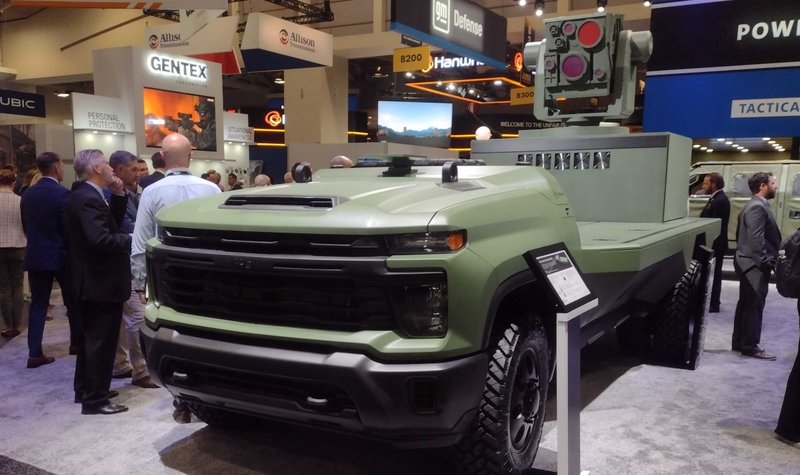
Rather than developing entirely new weapons, defence companies are looking to build on existing weapons and systems to deliver greater capability, control costs and accelerate fielding.
With a production rate of more than 10 million vehicles annually, the US commercial car and vehicle manufacturing base is second only to China. Defence companies are looking at how the vehicles, technology and manufacturing capability can support programmes.
Roman Köhne, CEO of Rheinmetall's Weapon and Ammunition Division, discusses the company's announcements at Eurosatory 2026, including developments in defence technology, precision systems, industrial ...
The latest order for RGW 90 simulators reflects the value for Switzerland of simulation technologies to lessen the environmental impact of training and reduce costs.
There are three distinct phases to the Challenger 3 MBT upgrade plan for the British Army, but the MoD is still considering its 120mm ammunition options.
After 27 months of tests and evaluations, the US Army has chosen the XM250 light machine gun and XM5 rifle as two of its Next Generation Squad Weapons.
EVO2 LWIR sensors were previously only available with Oculus and Aeron cameras, but they can now also be installed with Osiris and Jaegar platforms from Silent Sentinel.
DARPA continues to explore the potential of uncrewed platforms across the air, land and sea domains — although industry, academia and government agree that challenges must still be overcome.
AOC Europe 2022 is returning in 10-12 May at Parc des Expositions, Montpellier in France to reunite the European electronic warfare community under one roof.
The CAVS programme includes significant levels of vehicle protection but the question remains of how to protect troops from modern anti-armour weapons remains.