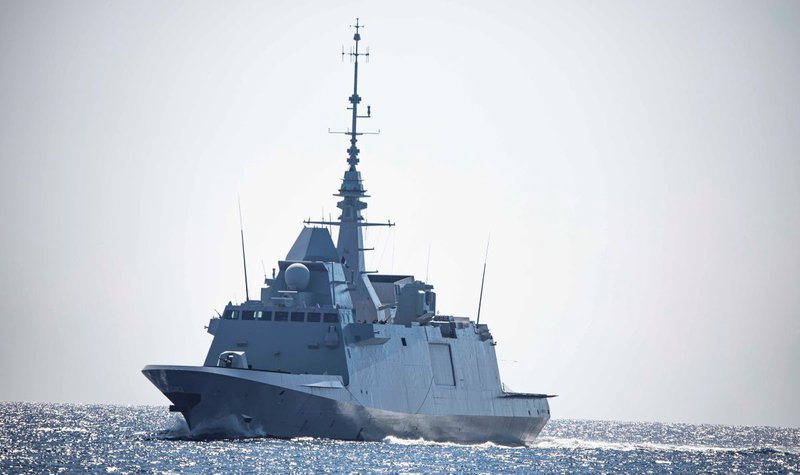
New interceptors and launchers could help navies preserve missile stocks during prolonged escort operations. Yet lower engagement costs will only improve merchant protection if the weapons are available where ships need defending.
Western armies continue to test uncrewed ground vehicles, but wider procurement will depend on turning ambitions for autonomy into defined operational roles and funded requirements.
Quantum3D Government Systems has received a contract from the Link Simulation and Training division of L3 Technologies to deliver equipment in support of an upgrade …
A Self-organising Communications and Autonomous Delivery Service (SCADS) project, run by Australia's Defence Science and Technology Group (DST), is looking to create 'flocks' of UAS …
Lockheed Martin company Sikorsky has strengthened its stronghold in Asia-Pacific through long customer relationships and a new service centre.At Rotorcraft Asia 2017, the company spoke …
Last month Airbus Helicopters opened a new 'delivery room' at its Seletar facility, with the company's Singaporean base of operations delivering an average of two …
Senior US military leaders are becoming increasingly concerned by so-called 'grey zone' naval activities being conducted by Iran and its surrogates.Gen Joseph Votel, US Army, …
The Pentagon needs to 'ramp up munitions production in a very significant way', according to the opening government keynote address at this week's NDIA National …
Airbus Helicopters has signed Singapore Post (SingPost) as its logistics partner for its Skyways aerial unmanned parcel delivery system, the company announced on 18 April.Airbus …
The US Army has successfully conducted an operational test of its inflatable Transportable Tactical Command Communications (T2C2) satellite communications (SATCOM) terminal, in temperatures below negative …
Oshkosh Defense has received multiple delivery orders from the US Army Tank-Automotive and Armaments Command (TACOM) to recapitalise its family of heavy tactical vehicles (FHTV), …