Extending mission readiness: where XR adds real value in pilot, crew and maintenance training
H145D3 XR Simulator. (Photo: REISER)
Extended reality (XR) is becoming increasingly relevant in military aviation training, adding a flexible layer to an integrated ecosystem spanning the pilot, crew, and maintenance domains.


Enjoy free access to this sponsored article, all content provided by REISER
Military aviation training faces a readiness paradox. Operators must prepare crews and technicians for increasingly complex missions, stricter safety requirements, and higher operational tempo, while aircraft availability, budgets, and airspace constraints limit live training.
Live flying remains indispensable, but it is resource-intensive, difficult to scale, and often unsuitable for repeating high-risk, low-frequency, or mission-specific scenarios.
Modern readiness therefore depends on assigning each training objective to the right environment. Full-flight simulators, flight and maintenance training devices, procedural trainers, and digital learning platforms serve different purposes. Their greatest value emerges when they are connected within an integrated training ecosystem, rather than viewed as isolated solutions.
Used appropriately within this architecture, XR can increase training availability, enable more repetition, reduce dependency on physical assets, and support mission preparation closer to the operational environment. Used indiscriminately, however, it risks becoming a technology-driven exercise rather than a training-driven solution.
For mission-oriented aviation, the value of XR is not the headset itself. It lies in combining immersive visualisation, physical interaction, procedural accuracy, instructor oversight, and a clearly defined training objective.
Complex procedures
In maintenance training, complex procedures often require access to high-value aircraft, representative components, or limited training hardware. This can create bottlenecks and unnecessary wear on operational equipment.
Here, VR applications can help technicians develop core procedural skills before working on real systems. In a controlled environment, they can repeat tasks, make mistakes without risking damage, and build confidence before moving on to hands-on training. This creates an efficient pathway from virtual familiarisation and procedural sequencing to tactile, mechanical, and qualification-relevant work on physical trainers or aircraft.
REISER’s full-scale NH90 Maintenance Training Rig (MTR) applies this approach without relying on operational helicopters, and supports qualification training up to Category B1 and B2 standards. Replicating the aircraft in full detail, it covers more than 1,500 maintenance training tasks, including procedures that are difficult or impractical to rehearse under real-world conditions.
Combined with a functional cockpit that simulates maintenance-relevant avionics behaviour, the MTR can improve training effectiveness and shift additional tasks away from operational equipment. The underlying solution can be adapted to any other aircraft or vehicle platform.
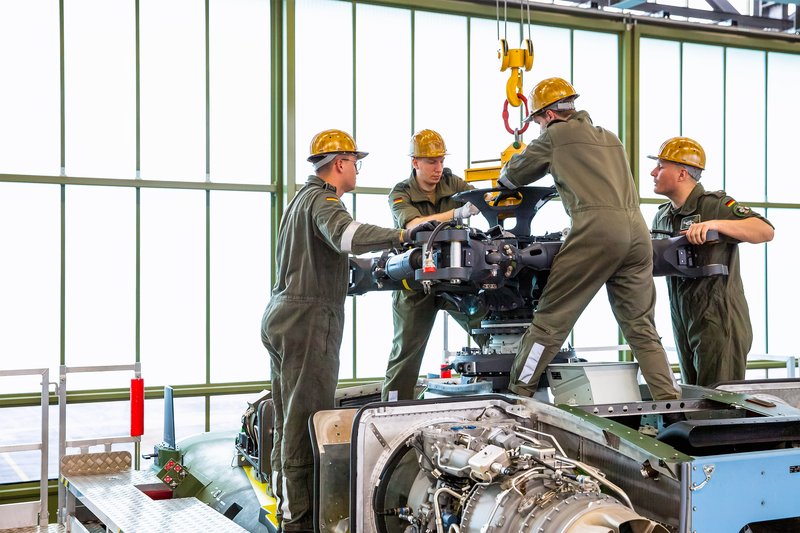
NH90 TTH Maintenance Training Rig at the German Air Force Technical Training Centrer Fassberg. (Photo: REISER)
Mission readiness is not built by cockpit handling alone. It also depends on coordination between pilots, rear crew, and mission specialists, as well as exposure to varied conditions and scenarios that may be hazardous or difficult to reproduce in live flight. Integrated simulation brings together aircraft behaviour, mission context, and crew interaction in realistic, repeatable scenarios, independent of weather, airspace restrictions, or aircraft availability.
Mobile, small-footprint XR devices provide major pilot controls, such as Hands-On Throttle and Stick (HOTAS), as physical interfaces while integrating secondary controls into the virtual environment. They can support tasks ranging from basic familiarisation and cockpit orientation to mission-specific preparation and, depending on configuration, selected elements of tactical or multi-ship training.
Combining virtual and physical
For rotary-wing mission training, the combination of virtual environments and physical interaction is especially important. Visual immersion alone is not enough when the training objective includes muscle memory, crew coordination, control handling, and procedural discipline.
REISER’s hoistAR® combines a mobile XR environment with real hoist equipment and tactile interaction. Connected to a pilot training device, it enables hoist operators and flight crews to rehearse the same mission scenario; connections across geographically separate sites can reduce travel costs and increase crew availability.
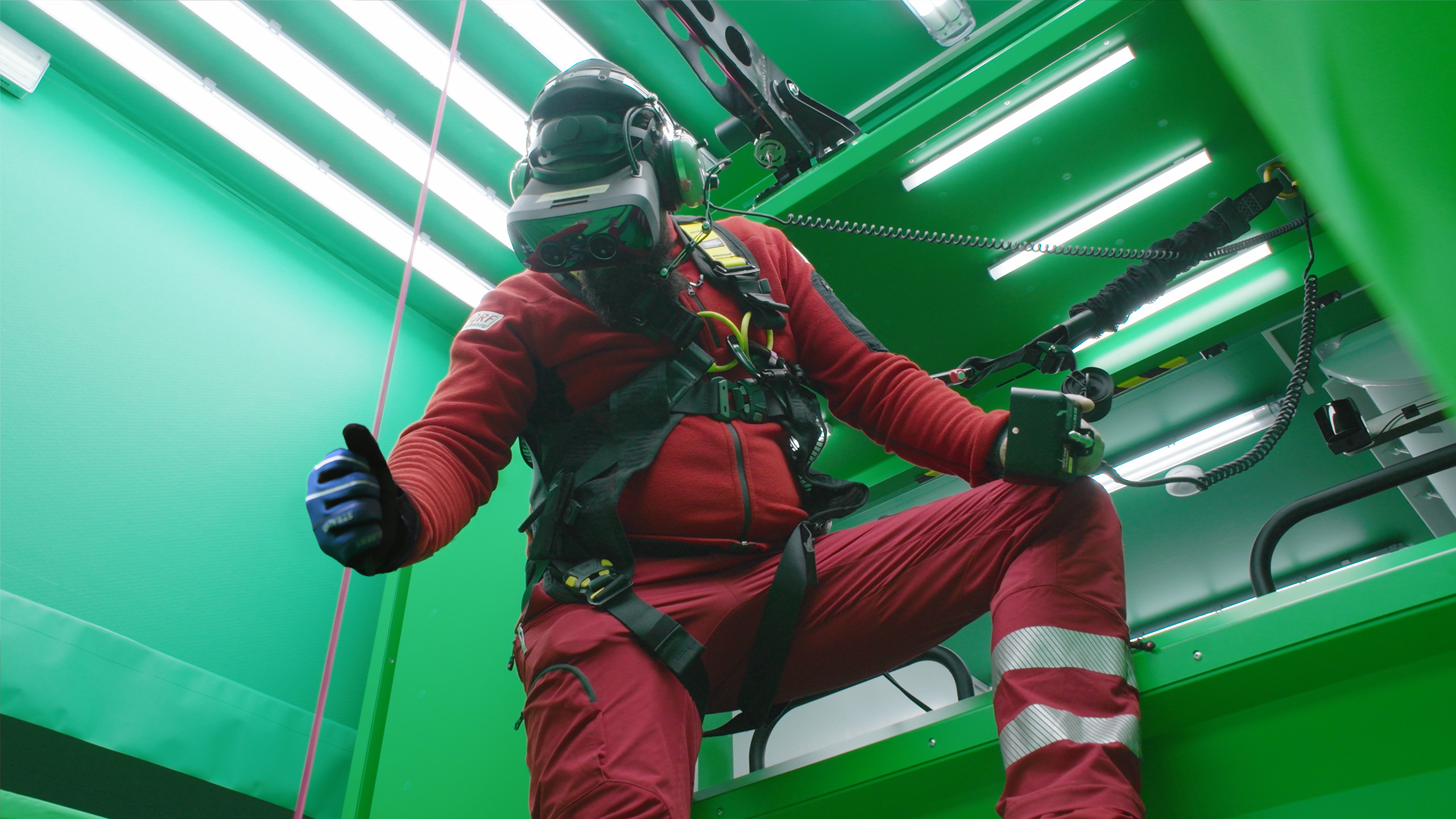
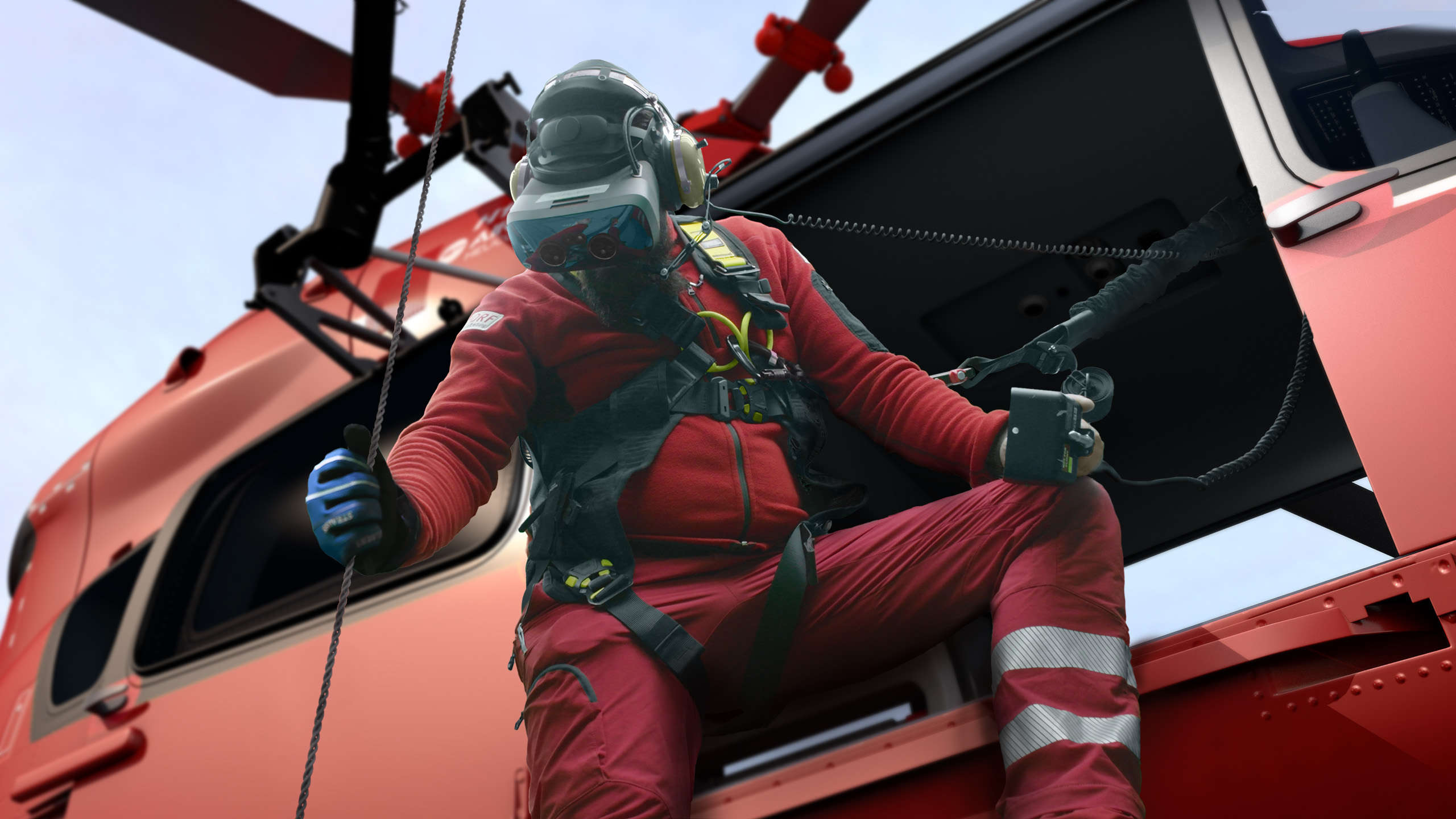
hoistAR® Helicopter Hoist Training Simulator. (Photo REISER)
A recent agreement with HeliOperations UK demonstrates this model in practice. REISER will deliver an AW139 Phase 8 Flight Training Device (FTD) based on its modular Next Generation FTD (NG-FTD) platform together with a hoistAR® system.
The devices can operate independently or together for coordinated pilot and hoist-operator training. They will support HeliOperations’ seven-year Basic Flight Training programme for German Navy pilots preparing to operate the NH90 Sea Lion and Sea Tiger, complementing live flying on the AW139. The project illustrates the core principle: match each objective to the right environment and connect devices where crew coordination is decisive.
Full qualification
The German Federal Aviation Office (Luftfahrt-Bundesamt, LBA) has fully qualified the H145D3 XR-SIM as an FTD Level 3. It combines a Varjo head-mounted mixed-reality display with a full-scale, fully haptic cockpit, Multi-Crew Cooperation (MCC) capability, and roll-on/roll-off modularity.
Following a further LBA assessment at Lufthansa Aviation Training in Frankfurt in July 2026, the system was declared “ready for training” and regular operations for DRF Akademie began. This move from qualification to operational use shows mixed reality progressing beyond the demonstrator stage into authority-assessed professional training.
In 2026, EASA introduced a capability-based FSTD framework under Regulation (EU) 2026/781 and CS-FSTD Issue 1. Scheduled to become applicable on 30 April 2028, it introduces the FSTD Capability Signature as a standardised description of device features and fidelity levels, along with an optional task-to-tool methodology for matching capabilities to training objectives.
The framework explicitly accommodates XR and supports competency-based training. It does not lower the bar for XR; it makes that bar more transparent, capability-based, and training-specific.
Beyond individual devices, an integrated training ecosystem also requires a digital layer. REISER’s simplAIR® learning management system helps training organisations structure training across roles and locations, capture interaction data, and identify individual needs, allowing instructors to tailor interventions more precisely.
Drawing on its reverse-engineering-based development approach and extensive aviation experience, REISER also provides tailored training solutions for land systems and selected maritime applications.
Taken as a whole, the range of training options forms a connected ecosystem in which each objective can be matched with the environment and technology best suited to it. In this context, XR does not replace established methods; it adds value where its flexibility, immersion, and scalability meet a specific training need.
Integrated with physical fidelity, instructor-led methodology, data-driven learning, and established simulation standards, XR becomes a practical force multiplier for pilot, crew, and maintenance readiness.
Find out more about REISER’s XR training solutions

You may also like
More from Industry Spotlights
-
![Patria OPTIME and ILIAS: Orchestrating operational readiness across every domain]()
Patria OPTIME and ILIAS: Orchestrating operational readiness across every domain
Patria OPTIME is a sustainment concept that integrates MRO and lifecycle services into one solution, powered by the ILIAS digital defence platform
-
![“Start planning much earlier”: delivering defence support in an era of disruption]()
“Start planning much earlier”: delivering defence support in an era of disruption
In Conversation… The geopolitical landscape is increasingly uncertain, with the UK and its allies confronting the most unpredictable international environment for decades. To adapt, defence readiness must begin long before assets reach the front line, forging a resilient support enterprise that can thrive in a time of ongoing disruption, argue the partners of Team ORION.
-
![Patria NEMO Navy: Unlocking unmatched versatility and protection for modern naval forces]()
Patria NEMO Navy: Unlocking unmatched versatility and protection for modern naval forces
The Patria NEMO Navy mortar system marks a revolutionary advance in maritime defence technology, offering unparalleled benefits to customers who demand performance, adaptability and safety in their naval operations.
-
![“Communicating at mission speed”: why data security is essential for operational success]()
“Communicating at mission speed”: why data security is essential for operational success
In conversation… Everfox’s Chairman and Chief Executive Officer Dave Wajsgras and Managing Director, International, Colin McKinty discuss the critical importance of information security in defence, minimising insider risk and the company’s international growth strategy with Shephard’s Andrew White.
-
![“Engage with the operational problem”: how software innovation can boost UK defence]()
“Engage with the operational problem”: how software innovation can boost UK defence
In Conversation… Shephard’s Andrew White talks to Zafer Şen, CEO and co-founder of OBSS, about the future of command-and-control software in the age of artificial intelligence, and his company’s ambitions in the UK defence market.
-
![“A survivable architecture”: why resilient communications are no longer a luxury]()
“A survivable architecture”: why resilient communications are no longer a luxury
In Conversation… Military communications must adapt to a rapidly evolving battlespace, characterised by decentralised forces and an increasingly contested electromagnetic spectrum. To survive and thrive, it is vital to prioritise resilient systems and networks, Faisal Munir, President – Mission-Critical Communications at L3Harris Technologies, told Shephard’s Gerrard Cowan.