“Creating a decision advantage”: how C-UAS is evolving to reduce the operator burden
In Conversation… Speaking to Shephard’s Gerrard Cowan, Dr Brian Shand, Director – Advanced Concepts & Technology at L3Harris, explains how, as operators face growing numbers of low-cost drones, C-UAS providers must focus on reducing operator workload, transforming fragmented sensor data into effective decision-making.


This In Conversation interview is brought to you by Shephard in partnership with L3Harris Technologies.
For much of the past decade, the debate around counter-uncrewed aerial systems (C-UAS) capabilities has focused on detection. This of course remains a priority today, Shand noted, because “if a threat cannot be detected, little else matters”.
Indeed, huge progress has been made in sensing technologies, he said. But the challenge is evolving: the widespread availability of drones, combined with their increasingly diverse threat profiles, has fundamentally changed the landscape.
“A low-cost drone can create a high-consequence problem,” Shand explained. “Whether conducting surveillance of a military installation, supporting the targeting process for hostile forces, disrupting activity at critical infrastructure or threatening deployed forces, the effect is often disproportionate to the size and cost of the platform itself.”
Against this backdrop, the problem now lies in managing information, assessing intent and taking action quickly enough to be effective, he said. “Increasingly, the challenge is not whether a system can see a potential threat, it is whether operators can understand what they are seeing and respond quickly enough to make a difference.”
The workload problem
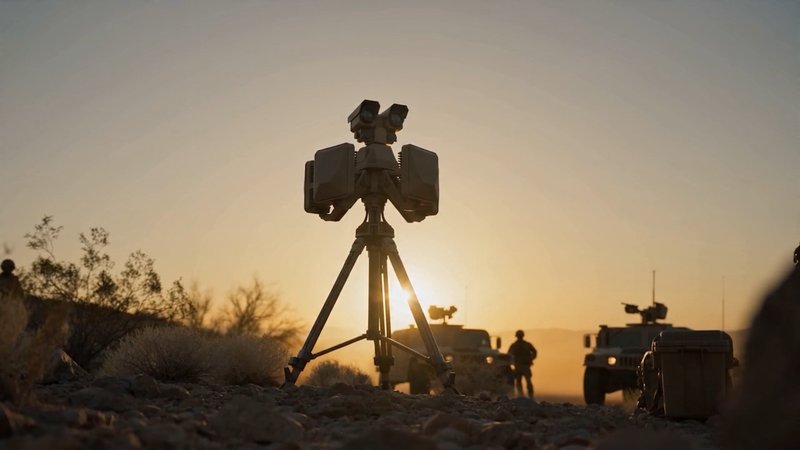
Modern C-UAS systems draw information from multiple sources, including radar, radio frequency (RF) sensing, electro-optical/infrared (EO/IR) systems and acoustic sensors. Naturally, each of these techniques can contribute valuable information about activity in the surrounding airspace. For example, a radar may detect an object and provide tracking information; RF could identify control signals, video downlinks or emitter locations; and EO/IR can help verify and identify a target.
However, the sheer volume of detection possibilities risks overwhelming operators with information unless handled carefully, Shand warned. For example, multiple layers of sensors can generate duplicate tracks, display conflicting information and create growing numbers of alerts.
“While the intention is to improve awareness, the result can be an increased workload for operators already working under time pressure,” he said.
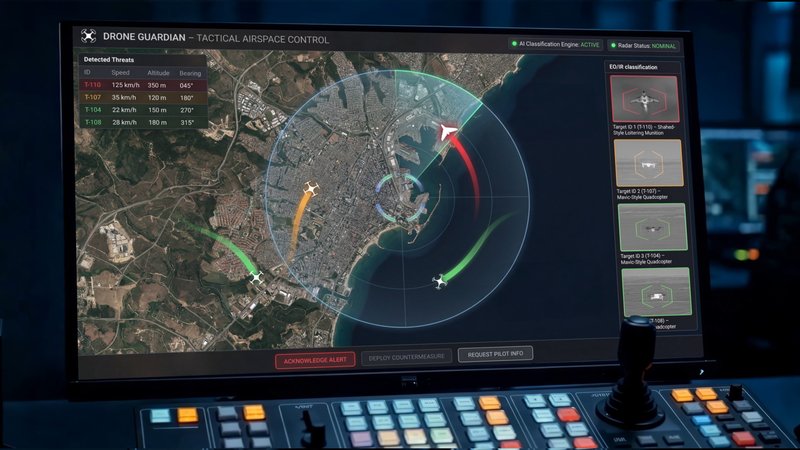
This is why sensor data fusion and correlation are now crucial, and attention is shifting from raw detection performance to information management. The question is not how much data a system can collect, but whether that data helps operators make better informed and timely decisions, as Shand frames it.
“A system that generates ten alerts for one object creates workload,” Shand noted. “A system that correlates those alerts into a trusted operating picture creates decision advantage.”
System architecture solutions
Operators are rarely able to focus on a single task, noted Shand. This means the human in the loop is becoming the most constrained resource in the C-UAS landscape, leading to significant manpower pressures in both military and security environments.
“Personnel may be monitoring security systems, communications networks, airspace activity and wider operational requirements, while simultaneously assessing potential drone threats,” he explained.
Against this backdrop, organisations increasingly need capabilities that can be operated by small teams without creating additional staffing demands. The fact that operators work within wider security and defence networks means that systems need to assume they are already busy and help identify what genuinely requires attention.
This reality places greater emphasis on system design. However, many sources of workload originate within the architecture itself, with operator burden often wrongly treated as a training challenge or a user interface issue. Duplicate detections, manually managed sensor workflows, repeated alarms and poorly correlated data all add to the cognitive load.
“The industry has spent years improving detection capability, but equal attention must now be given to helping operators manage complexity without becoming overwhelmed by it,” argued Shand.
Detect-to-alert workflows
Reducing that burden is about more than simply displaying information more clearly, he explained. Instead, effective solutions are built on systems that can automate routine tasks, correlate data before it reaches the operator, and prioritise information according to operational relevance.
This is one of the drivers behind autonomous detect-to-alert workflows, as utilised in L3Harris’ Drone Guardian C-UAS system. This approach can automatically identify potential threats, pull together available sensor information and present operators with higher-confidence alerts that warrant attention. Crucially, constant monitoring is not required.
“The objective is not to remove people from decision-making; it is to ensure their time is spent on assessment and response rather than data management,” said Shand.
In terms of technology innovation, artificial intelligence (AI) is playing a growing role as C-UAS systems process increasing volumes of data from multiple sensors, gaining significant advantages in classification, correlation and prioritisation.
Applied appropriately, AI can assist with target identification and anomaly detection. It can help reduce false alarms, accelerate verification processes and improve the consistency of decision support.
However, its increased use also reflects the same underlying challenge facing C-UAS more widely: helping operators manage increasing volumes of information without adding to their workload. “In practice, its value is often found in supporting human judgment rather than replacing it,” Shand said.
Managing complexity
The technology must empower operators to identify, prioritise and respond to threats with greater speed and confidence, so the most effective applications are often those that remove repetitive tasks from their workflows while preserving human responsibility for authorisation, proportionality and response decisions.
“Achieving that consistently depends not only on algorithms, but also on the architecture that connects sensors, software and operators together,” Shand said.
An adaptable architecture is crucial as the drone threat continues to evolve at a rapid pace, far faster than procurement cycles. Providers must demonstrate the flexibility to integrate new technologies, incorporate existing assets and revise their protection models over time.
No organisation wants to replace an entire C-UAS capability every time a new sensor or effector becomes available, Shand emphasised. “The goal should be an open architecture that can adapt as threats change and technologies mature,” he added. “That ability for a C-UAS system to adapt is as important as the capability deployed on day one.”
Drone Guardian evolution
These demands have influenced the design of solutions such as Drone Guardian. By integrating information from multiple sensor sources and presenting it in a coherent form, the system helps operators focus on the response to the threat rather than manually managing data.
“The objective is straightforward: reduce operator burden, improve situational understanding, and support faster, more informed action,” Shand said. The intent is to “increase the value of capabilities that can be incorporated into existing operations without creating significant additional staffing demands”.
In this context, autonomous detection, multi-sensor correlation, AI-enabled decision support and interoperable architectures are not separate trends. They are all responses to the same challenge: managing information complexity without overwhelming the people responsible for making key decisions, he added.
“Detection remains essential, but detection alone does not create protection,” Shand explained. “The real challenge is turning information into understanding and understanding into action. The systems that can do that most effectively will define the next generation of C-UAS capability.”
The future of C-UAS
The next phase of effective C-UAS will therefore be defined by those systems that provide the clearest understanding of what is happening, where a threat is going and what response is appropriate, Shand said.
“The challenge shifts from sensing alone to decision-making under pressure,” he added. “Reducing operator burden is no longer simply a usability objective – it is an operational requirement.”
C-UAS systems have become “exceptionally good at finding things in the airspace”, he said. The challenge now is ensuring operators can make sense of what they see, identify threats and take decisive action in a timely, accurate and efficient way.
Due to the array of uncrewed systems deployed in the modern battlespace, no one C-UAS system can meet the needs of all military users against all drone threats, Shand noted. A layered approach of interoperable systems is required for force and infrastructure protection, combining sense-and-defeat capabilities. Here, Drone Guardian can work alongside VAMPIRE™ kinetic systems and Wraith Shield™ as a radio-as-a-sensor solution that leverages the untapped potential of communication devices themselves.
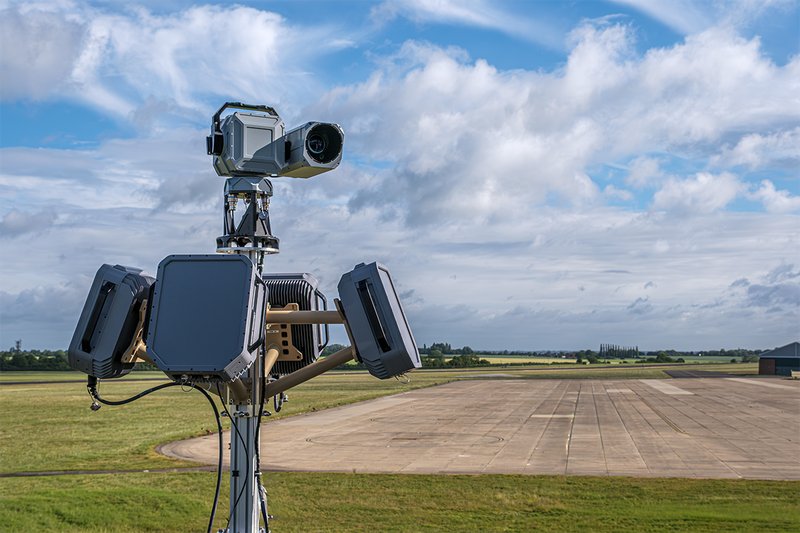
As platforms, sensors and threat tactics continue to evolve, effectiveness will depend less on individual technologies and more on how information is fused, prioritised and presented, Shand concluded.
“Ultimately, the value of a C-UAS system is not measured by how much information it collects. It is measured by how effectively it enables operators to understand a situation, make a decision and then take action.”

More from Industry Spotlights
-
![“Start planning much earlier”: delivering defence support in an era of disruption]()
“Start planning much earlier”: delivering defence support in an era of disruption
In Conversation… The geopolitical landscape is increasingly uncertain, with the UK and its allies confronting the most unpredictable international environment for decades. To adapt, defence readiness must begin long before assets reach the front line, forging a resilient support enterprise that can thrive in a time of ongoing disruption, argue the partners of Team ORION.
-
![Patria NEMO Navy: Unlocking unmatched versatility and protection for modern naval forces]()
Patria NEMO Navy: Unlocking unmatched versatility and protection for modern naval forces
The Patria NEMO Navy mortar system marks a revolutionary advance in maritime defence technology, offering unparalleled benefits to customers who demand performance, adaptability and safety in their naval operations.
-
![“Communicating at mission speed”: why data security is essential for operational success]()
“Communicating at mission speed”: why data security is essential for operational success
In conversation… Everfox’s Chairman and Chief Executive Officer Dave Wajsgras and Managing Director, International, Colin McKinty discuss the critical importance of information security in defence, minimising insider risk and the company’s international growth strategy with Shephard’s Andrew White.
-
![“Engage with the operational problem”: how software innovation can boost UK defence]()
“Engage with the operational problem”: how software innovation can boost UK defence
In Conversation… Shephard’s Andrew White talks to Zafer Şen, CEO and co-founder of OBSS, about the future of command-and-control software in the age of artificial intelligence, and his company’s ambitions in the UK defence market.
-
![“A survivable architecture”: why resilient communications are no longer a luxury]()
“A survivable architecture”: why resilient communications are no longer a luxury
In Conversation… Military communications must adapt to a rapidly evolving battlespace, characterised by decentralised forces and an increasingly contested electromagnetic spectrum. To survive and thrive, it is vital to prioritise resilient systems and networks, Faisal Munir, President – Mission-Critical Communications at L3Harris Technologies, told Shephard’s Gerrard Cowan.
-
![Orchestrating operational readiness across every defence domain]()
Orchestrating operational readiness across every defence domain
Are all systems ready for the next mission? Have upgrades been applied? Are all assets aligned to deploy together, on time and fully prepared? In modern defence operations, readiness is no longer measured platform by platform. It is measured by how well people, assets, data and decisions move together — across land, sea and air.