Dominating the spectrum: ASELSAN’s EW capabilities take center stage at MSPO 2026
ASELSAN is showcasing its advanced electronic warfare (EW) capabilities at MSPO 2026, highlighting technologies designed to detect, analyse, disrupt and deceive threats across increasingly contested electromagnetic environments.


Enjoy free access to this sponsored article, all content provided by ASELSAN
Modern air operations increasingly depend on the ability to understand and control the electromagnetic spectrum, denying an opponent the effective use of its sensors while protecting friendly forces.
This capability is becoming critical as air defense systems grow more complex. Surveillance and fire control radars, command-and-control (C2) networks and data links combine to create a layered defensive architecture.
Penetrating such an architecture is not simply a case of neutralizing individual sensor nodes: forces must be able to detect, classify, disrupt or deceive multiple emitters in dense electromagnetic environments with rapid response times.
ASELSAN has developed its electronic warfare portfolio through more than four decades of work in electronic support, electronic attack and the integration of EW systems across land, air and naval platforms.
At MSPO 2026, the company is showcasing its broader electronic warfare portfolio, highlighting capabilities designed to operate in complex and contested electromagnetic environments.
From detection to electronic attack
ASELSAN’s KORAL family demonstrates the company’s approach to ground-based electronic support and electronic attack.
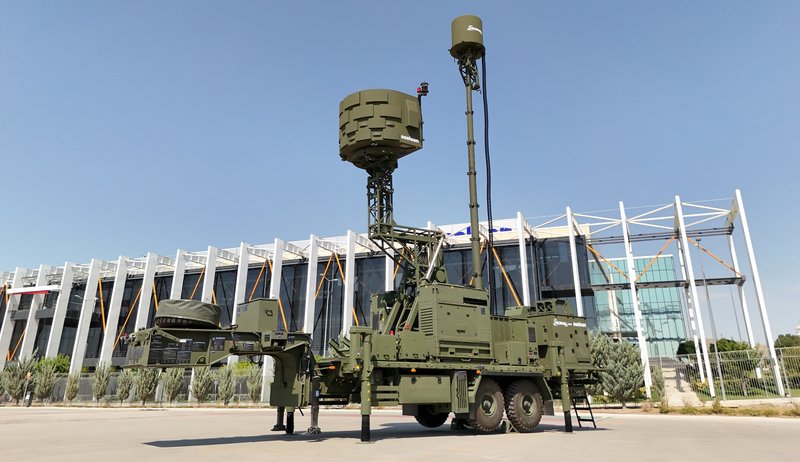
The KORAL 200 system exemplifies this approach to ground-based EW. The mobile system combines electronic support and attack capabilities to enable suppression of enemy air defenses (SEAD) missions.
Its electronic support element detects and analyses radar emissions and determines the direction and position of those emitters. It is designed to identify established and emerging threat signals, including those encountered in dense continuous-wave and high pulse-repetition-frequency environments. This information is then used to build the electronic order of battle and inform the electronic attack response.
KORAL 200’s attack subsystem meanwhile employs phased-array antennas, high-output solid-state amplifiers and a Digital Radio Frequency Memory (DRFM) architecture. It can apply multiple jamming and deception techniques simultaneously, with beam steering supporting rapid reactions to changing threats.
The system also incorporates tools for operations planning and data file generation, alongside post-mission analysis of recorded signals. This allows operators to treat EW as a continuing intelligence cycle: preparing for known threats, adapting during an operation and using collected information to refine future missions.
Countering radars
KORAL AD 100 complements this capability by addressing airborne radars as well as land- and surface-based emitters. Its electronic support and attack subsystems are installed on a mobile platform, allowing the system to reposition if the local tactical situation changes.
The electronic support subsystem provides passive early warning, identifying, classifying and tracking emitters in azimuth and elevation. Once a threat has been identified, KORAL AD 100 can employ high-power jamming and deception techniques, including generation of false targets, to suppress an adversary’s radar performance, reduce its effective detection and tracking ranges or mislead the sensor.
Its ability to operate against airborne radars is particularly relevant in contested airspaces. By degrading the radar picture available to hostile aircraft, the EW system can protect friendly platforms without relying on kinetic engagement.
Integration with wider friendly radar and air defense systems enables KORAL AD 100 to operate as one element of a layered architecture such as ASELSAN’s own STEEL DOME.
Together, KORAL 200 and KORAL AD 100 demonstrate how electronic support and attack can help open and preserve an air corridor. By locating emitters, building situational awareness and applying countermeasures, such systems can create uncertainty for an adversary while giving commanders greater freedom of action.
A broader EW portfolio
The KORAL family forms part of a wider ASELSAN EW portfolio developed to address threats across the electromagnetic spectrum. The company’s capabilities span electronic support, electronic attack, signals intelligence and the integration of EW technologies with broader combat architectures.
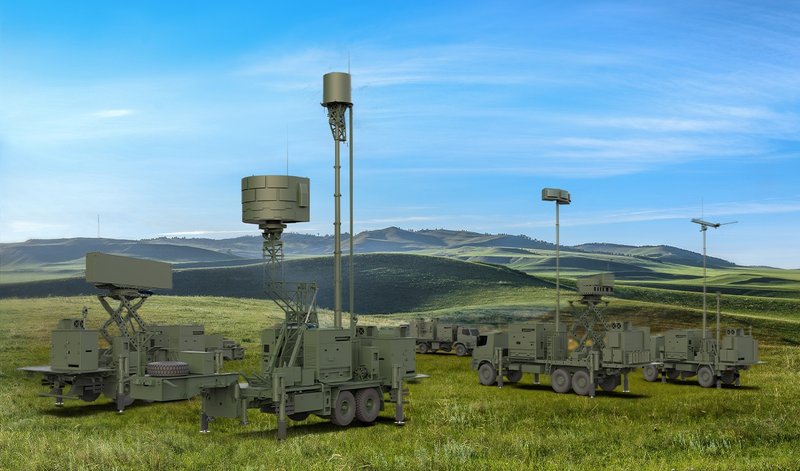
This approach reflects a shift in EW from standalone systems towards increasingly connected capabilities that can share information, support decision-making and contribute to integrated operations.
At MSPO 2026, ASELSAN is showcasing these EW technologies alongside its broader portfolio of air defense, radar, UAV, naval and underwater systems, offering visitors an opportunity to explore how its technologies can contribute to integrated defense architectures. The exhibition comes at a particularly relevant time, following the US$410 million EW contract signed between ASELSAN and Poland last year, underscoring the growing importance of EW capabilities in the Polish defense landscape.


More from Industry Spotlights
-
![“Start planning much earlier”: delivering defence support in an era of disruption]()
“Start planning much earlier”: delivering defence support in an era of disruption
In Conversation… The geopolitical landscape is increasingly uncertain, with the UK and its allies confronting the most unpredictable international environment for decades. To adapt, defence readiness must begin long before assets reach the front line, forging a resilient support enterprise that can thrive in a time of ongoing disruption, argue the partners of Team ORION.
-
![Patria NEMO Navy: Unlocking unmatched versatility and protection for modern naval forces]()
Patria NEMO Navy: Unlocking unmatched versatility and protection for modern naval forces
The Patria NEMO Navy mortar system marks a revolutionary advance in maritime defence technology, offering unparalleled benefits to customers who demand performance, adaptability and safety in their naval operations.
-
![“Communicating at mission speed”: why data security is essential for operational success]()
“Communicating at mission speed”: why data security is essential for operational success
In conversation… Everfox’s Chairman and Chief Executive Officer Dave Wajsgras and Managing Director, International, Colin McKinty discuss the critical importance of information security in defence, minimising insider risk and the company’s international growth strategy with Shephard’s Andrew White.
-
![“Engage with the operational problem”: how software innovation can boost UK defence]()
“Engage with the operational problem”: how software innovation can boost UK defence
In Conversation… Shephard’s Andrew White talks to Zafer Şen, CEO and co-founder of OBSS, about the future of command-and-control software in the age of artificial intelligence, and his company’s ambitions in the UK defence market.
-
![“A survivable architecture”: why resilient communications are no longer a luxury]()
“A survivable architecture”: why resilient communications are no longer a luxury
In Conversation… Military communications must adapt to a rapidly evolving battlespace, characterised by decentralised forces and an increasingly contested electromagnetic spectrum. To survive and thrive, it is vital to prioritise resilient systems and networks, Faisal Munir, President – Mission-Critical Communications at L3Harris Technologies, told Shephard’s Gerrard Cowan.
-
![Orchestrating operational readiness across every defence domain]()
Orchestrating operational readiness across every defence domain
Are all systems ready for the next mission? Have upgrades been applied? Are all assets aligned to deploy together, on time and fully prepared? In modern defence operations, readiness is no longer measured platform by platform. It is measured by how well people, assets, data and decisions move together — across land, sea and air.