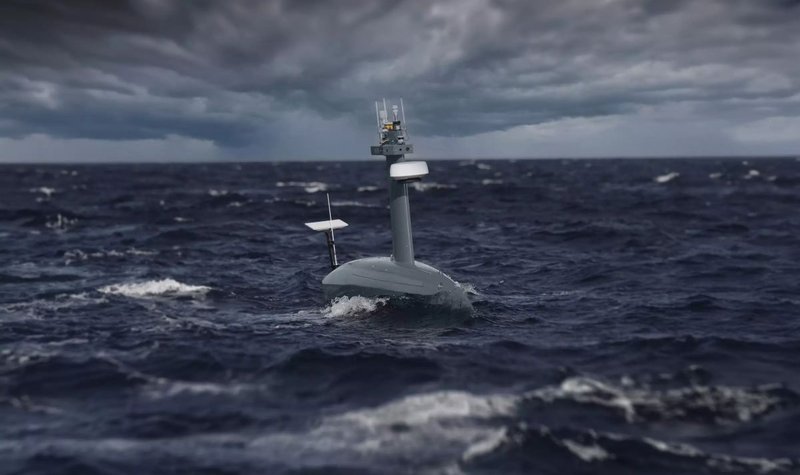
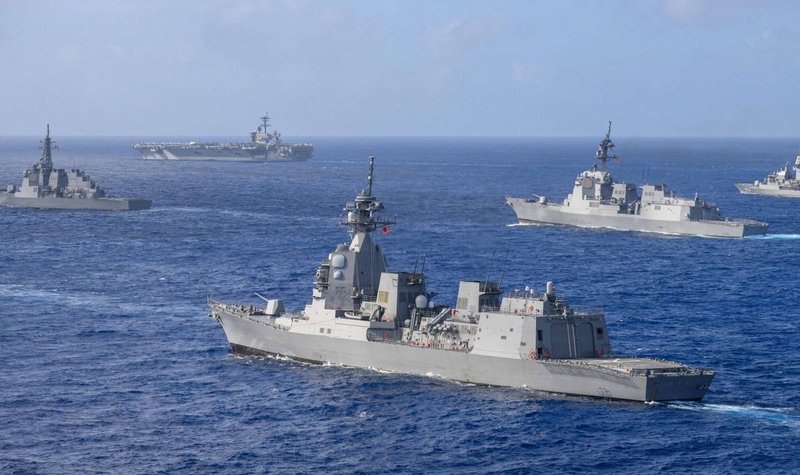
In October 2026, the US Navy sent an uncrewed surface vessel to sea with a carrier strike group for the first time. It is a step forward for hybrid operations, but it raises an awkward question: what happens to the drones if the ship controlling them is lost?
Uncrewed ground vehicles have been put on show featuring weapons ranging from machine guns to rockets since the turn of century, but the Russo-Ukrainian War has seen them take to the battlefield. At the same time, the US Marine Corps coastal defence system is heading for full rate production.
Roman Köhne, CEO of Rheinmetall's Weapon and Ammunition Division, discusses the company's announcements at Eurosatory 2026, including developments in defence technology, precision systems, industrial ...
At Eurosatory 2026, Pearson Engineering's Group CEO Ian Bell talked about the company's role in delivering specialist armoured engineering, route-clearance and demining capabilities to military custom...
UMS Skeldar announced that it has joined forces with JetLease, a private aircraft leasing company, to launch the first global leasing product for its V-200 …
Hydroid has delivered its first new generation Remus 100 autonomous underwater vehicle (AUV) to the Naval Oceanographic Office. The Remus AUV is able to be …
Last month the AV500W rotary-winged UAV from the AVIC Helicopter Research and Development Institute in Jingdezhen, Jiangxi Province performed its maiden flight and conducted a …
Dutch company Delft Dynamics displayed its new DroneCatcher counter UAS system for the first time at DSEI 2017. First unveiled on 8 September by the Netherlands …
Orbital ATK has unveiled its Tactical Robotic Exterminator (T-REX) counter-unmanned aerial system (C-UAS) concept at DSEI in London. The T-REX concept, displayed in a scale-model …
Leonardo is well into Phase 2 of its Rotary Wing Unmanned Air System (RWAS) capability concept demonstrator (CCD) for the UK Ministry of Defence (MoD) …