“No single technology is enough”: why an integrated approach to uncrewed warfare is essential
In Conversation… Ahmet Akyol, CEO of ASELSAN, talks to Shephard’s Gerrard Cowan about how the rapid evolution of uncrewed aerial systems (UAS) is transforming the battlespace, with militaries focused on both deploying these platforms to maximum effect and developing the defensive systems needed to counter them.


This In Conversation interview is brought to you by Shephard in partnership with ASELSAN.
For ASELSAN, the future of drone warfare will be determined by innovations in artificial intelligence (AI), autonomy and advanced decision-support systems, according to Akyol. Recent conflicts have “fundamentally reshaped the way we think” about air defence, he said, pointing to the widespread use of low-cost drones, first-person view systems, fibre-optic controlled UAS, loitering munitions, swarm attacks and more.
“Traditional air defence architectures alone are no longer sufficient,” warned Akyol. “The threat environment has become highly dynamic, unpredictable and extremely fast-moving, making it increasingly difficult for conventional man-in-the-loop systems to react within the required timeframe.”
Farnborough focus
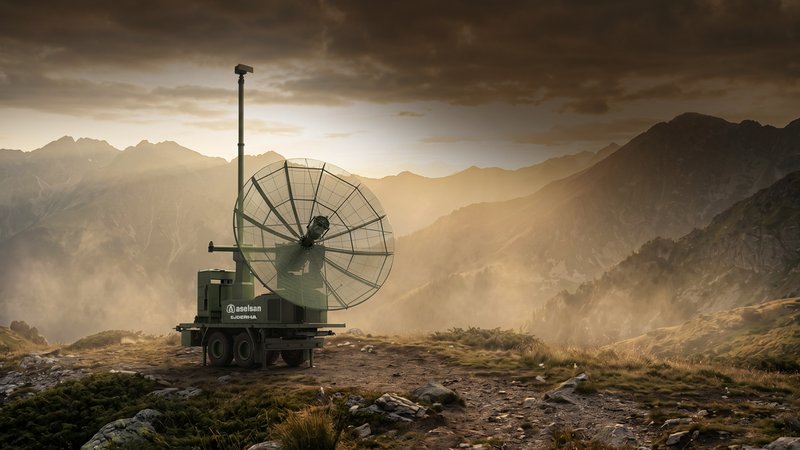
Meeting these operational demands will be a key theme for ASELSAN at the upcoming Farnborough International Airshow, said Akyol. The Turkish company will present a significant focus on air and drone defence, with systems such as KORKUT Near Field Air Defense System, ŞAHİN 40mm Physical Disposal System, GÖKBERK Laser Weapon System, EJDERHA HPEM Anti-Uav Countermeasure System, GÖKALP UAV Prevention System, ALP Early Warning Radar Systems and KALKAN Air Defense Radar on display.
This is part of ASELSAN’s wider focus on the air-land battle, Akyol noted. ASELSAN provides a range of payloads and mission systems for both crewed and uncrewed platforms, including electro-optical (EO) sensors such as the ASELFLIR series and airborne radars such as MURAD AESA and the FULMAR family.
The company is also addressing the evolving battlespace through its development of electronic warfare (EW) and signals intelligence (SIGINT) payloads, he said, including the ANTIDOT pod; avionics systems such as TOYGUN, KARAT, and TULGAR; and a growing family of precision-guided munitions, including GÖZDE, LGK, KGK and the TOLUN family.
The vision is to deliver integrated and interoperable capabilities across domains, Akyol emphasised.
“Whether it is a UAV carrying ASELSAN payloads, a combat aircraft equipped with our sensors and avionics, or an air defence system protecting critical assets, every capability we develop is designed to contribute to a connected, layered and future-ready battlespace.”
Layered architecture
A fast-moving threat profile and the need for an integrated approach has directly shaped ASELSAN’s product development roadmap, Akyol explained. The company’s philosophy regarding air defence, for instance, is based on a layered and fused architecture, rather than relying on a single technology pillar.
“Every sensor and every effector brings a unique operational advantage against different types of aerial threats. By combining advanced surveillance radars, AI, EW, directed-energy weapons and kinetic effectors within a unified command-and-control (C2) architecture, the system can automatically evaluate incoming threats and assign the most appropriate response in real time.”
This was demonstrated during a live counter-UAS (CUAS) exercise near Ankara in June 2026, Akyol added, which was attended by delegations from more than 20 nations. It included a wide range of systems, such as the AURA 200-G surveillance radar, which provided long-range detection, tracking and classification of incoming threats.
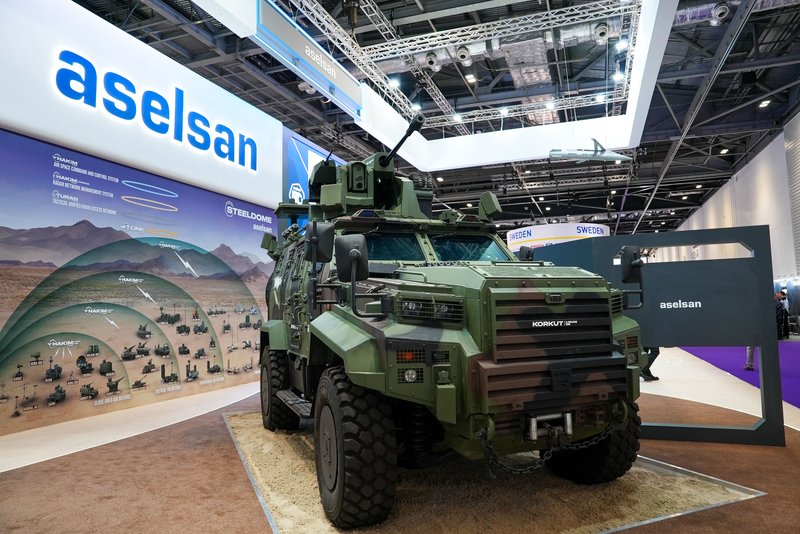
Meanwhile, the İHTAR system conducted AI-supported threat assessment, while electronic attack and soft-kill functions were also displayed; the demonstration featured EJDERHA’s microwave technology and GÖKBERK, which neutralises targets through precise laser engagements, alongside KORKUT 25 and ŞAHİN kinetic airburst solutions.
The exercise involved both wireless and fibre-optic-controlled drones, as well as swarm attacks, “replicating the complex threat scenarios observed in modern conflicts,” as Akyol explained.
Scalable technology
Such a wide-ranging approach is essential to meet a UAS challenge that is evolving at an unprecedented pace, Akyol said: “No single technology can effectively address this entire threat spectrum. That is why ASELSAN approaches CUAS not as an individual product, but as a scalable and integrated defence ecosystem.”
ASELSAN’s method is to develop solutions that are effective, simple and affordable, he stressed. A scalable CUAS architecture must deliver operational performance while also being practical and easy to operate, not to mention capable of sustainable production at scale.
He pointed to DRONEDEF, an AI-supported integrated CUAS architecture that operates as the lowest layer of Türkiye’s STEEL DOME air defence system. This combines sensors, AI, EW, directed-energy weapons, kinetic effectors and autonomous interceptors under a unified C2 architecture, enabling operators to select the most appropriate response depending on threat type, operational environment and mission priorities.
However, scalability is not limited to the architecture itself, Akyol stressed. The company is not just investing in advanced technologies, but in the infrastructure required to respond rapidly to large-scale operational demands.
“Future conflicts will require high-volume deliveries within increasingly compressed timelines,” Akyol said. “We are continuously expanding our industrial capacity to ensure that our CUAS solutions can be produced, delivered and sustained at the pace required by modern armed forces.”
Payload innovation
ASELSAN’s work on CUAS is only one aspect of its work in the uncrewed space. The company also develops advanced payloads for drones, noted Akyol, covering sensing, surveillance, EW, communications and precision engagement.
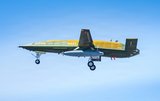
They are developed in close cooperation with platform manufacturers, he noted, such as Baykar and Turkish Aerospace Industries. The payloads are integrated into UAS including AKINCI, ANKA, ANKA III, AKSUNGUR and KIZILELMA platforms, as well as future-generation systems currently under development.
Additionally, Akyol highlighted the operational impact of precision-guided munitions, with ASELSAN’s portfolio having “accumulated extensive operational experience and continuing to evolve based on real-world user feedback and emerging mission requirements.”
“Equally importantly, our systems are designed with an open and scalable architecture, allowing payload configurations to be adapted according to customer-specific needs, platform constraints and operational concepts.”
Such technology must be built with future needs in mind, he said. Crucially, autonomy is playing an expanding role across the payload space. “ASELSAN is therefore investing heavily in AI, sensor fusion and next-generation mission systems that will enable UAVs to operate more independently, remain on station longer and execute a wider range of missions.”
New approach
Armed forces are also taking a fundamentally new approach to precision strike, added Akyol. As demonstrated by the wars in Ukraine and the Middle East, “success is no longer determined solely by the sophistication of individual weapons, but also by the ability to sustain high-intensity operations with scalable, cost-effective and readily available precision capabilities.”
ASELSAN has adapted a dual-track approach to precision effects, he said, reflecting operational needs and the dynamics of modern warfare. Firstly, he said ASELSAN’s guidance kit portfolio – including LGK, KGK and GÖZDE – “provides a cost-effective way to convert conventional unguided munitions into precision-guided assets”.
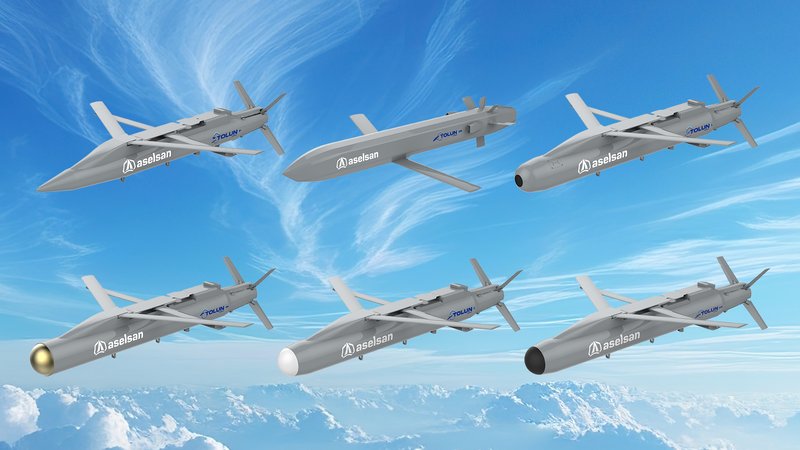
Second, ASELSAN is advancing its TOLUN munition family to address increasingly demanding operational scenarios. For example, the integration of the SADAK-4T smart quad rack enables TOLUN to significantly increase the strike density of aerial platforms, while TOLUN-P provides a stand-off range of up to 100km against hardened targets.
“The continued expansion of the family with imaging infrared, laser-guided and EW variants further enhances mission flexibility by enabling moving-target engagement and EW capabilities,” Akyol added.
Building resilience
UAS are part of an increasingly complex threat environment, noted Akyol, where conventional aircraft, cruise missiles, ballistic missiles, loitering munitions and drones can all appear simultaneously in the same operational scenario.
“In such an environment, resilience can no longer be achieved through a single air defence system. What nations need is an integrated architecture capable of detecting, assessing and neutralising threats across multiple layers.”
This is the mindset that drove the development of STEEL DOME, Akyol noted, which brings together radars, EO systems, EW capabilities and weapons within a unified operational framework in three layers: sensors, C2 and effectors. Individual systems – such as the HAKİM AI-supported C2 “brain” and a range of hard- and soft-kill capabilities – combine into a unified network, he said.
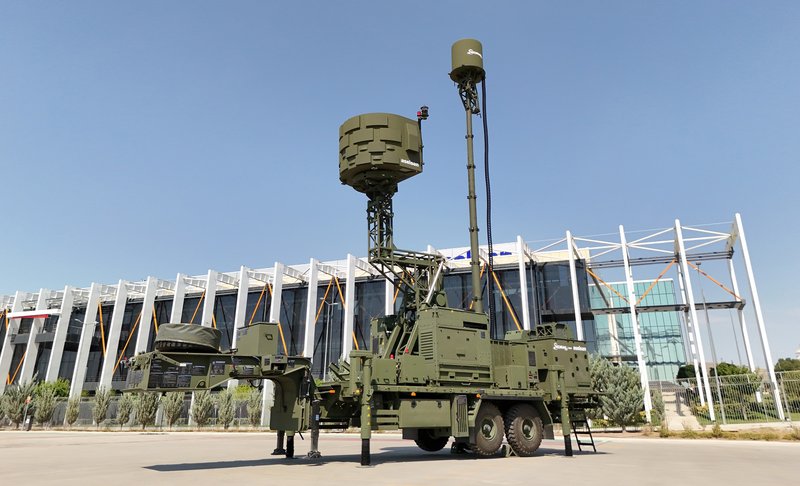
STEEL DOME is continuously evolving, Akyol emphasised, expanding its capabilities with new systems such as the GÖKALP autonomous kinetic drone destruction system, KORAL AD air defence EW system, and the ILGAR communications EW package.
STEEL DOME is particularly relevant in today’s security environment due to its system-of-systems approach, he added. “Kinetic and non-kinetic capabilities operate together through a secure military-grade communications backbone, creating a common air picture and enabling the most appropriate response to each threat.
“This allows operators to employ jamming, electronic attack, directed-energy weapons or kinetic interceptors in a coordinated and cost-effective manner.”
Future-ready ecosystem
Looking ahead, emerging technologies such as AI, cognitive EW, autonomy, advanced sensor fusion and resilient communications will be increasingly important, noted Akyol. Ultimately, airborne solutions must deliver much more than individual capabilities, he said.
“By integrating sensors, EW systems, precision-guided munitions and counter-drone technologies into a common operational ecosystem, we enable operators to see first, understand first, decide first and act first. We believe this ability to transform information into timely and effective action will be one of the defining factors in future air operations.”
Ultimately, the objective is to deliver precision effects that combine technological superiority, industrial scalability and strategic independence, he said, emphasising the company’s commitment to sovereign capabilities by producing all systems indigenously.
“Regardless of global supply chain disruptions or political embargoes, we can provide our customers with a reliable and uninterrupted supply of high-volume precision-strike capabilities.”
This transformation will take centre stage at Farnborough, Akyol said, with ASELSAN exhibiting a broad portfolio of airborne mission systems and integrated and layered air defence solutions.
“Whether it is enabling next-generation UAVs and combat aircraft with advanced sensing, targeting and EW capabilities, or helping nations build resilient and integrated air defence architectures through solutions such as STEEL DOME, our objective remains the same: delivering operationally proven, interoperable and future-ready technologies,” he concluded.

More from Industry Spotlights
-
![Patria OPTIME and ILIAS: Orchestrating operational readiness across every domain]()
Patria OPTIME and ILIAS: Orchestrating operational readiness across every domain
Patria OPTIME is a sustainment concept that integrates MRO and lifecycle services into one solution, powered by the ILIAS digital defence platform
-
![“Start planning much earlier”: delivering defence support in an era of disruption]()
“Start planning much earlier”: delivering defence support in an era of disruption
In Conversation… The geopolitical landscape is increasingly uncertain, with the UK and its allies confronting the most unpredictable international environment for decades. To adapt, defence readiness must begin long before assets reach the front line, forging a resilient support enterprise that can thrive in a time of ongoing disruption, argue the partners of Team ORION.
-
![Patria NEMO Navy: Unlocking unmatched versatility and protection for modern naval forces]()
Patria NEMO Navy: Unlocking unmatched versatility and protection for modern naval forces
The Patria NEMO Navy mortar system marks a revolutionary advance in maritime defence technology, offering unparalleled benefits to customers who demand performance, adaptability and safety in their naval operations.
-
![“Communicating at mission speed”: why data security is essential for operational success]()
“Communicating at mission speed”: why data security is essential for operational success
In conversation… Everfox’s Chairman and Chief Executive Officer Dave Wajsgras and Managing Director, International, Colin McKinty discuss the critical importance of information security in defence, minimising insider risk and the company’s international growth strategy with Shephard’s Andrew White.
-
![“Engage with the operational problem”: how software innovation can boost UK defence]()
“Engage with the operational problem”: how software innovation can boost UK defence
In Conversation… Shephard’s Andrew White talks to Zafer Şen, CEO and co-founder of OBSS, about the future of command-and-control software in the age of artificial intelligence, and his company’s ambitions in the UK defence market.
-
![“A survivable architecture”: why resilient communications are no longer a luxury]()
“A survivable architecture”: why resilient communications are no longer a luxury
In Conversation… Military communications must adapt to a rapidly evolving battlespace, characterised by decentralised forces and an increasingly contested electromagnetic spectrum. To survive and thrive, it is vital to prioritise resilient systems and networks, Faisal Munir, President – Mission-Critical Communications at L3Harris Technologies, told Shephard’s Gerrard Cowan.