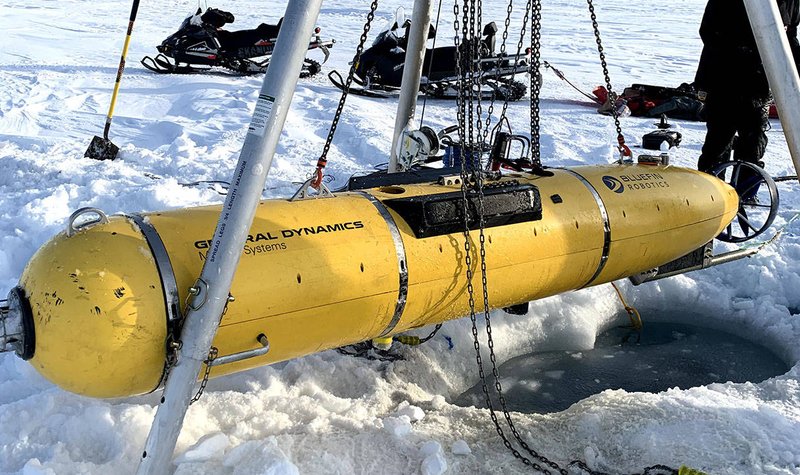
The changing Arctic environment is creating new challenges for submarine detection, driving demand for distributed sensors, uncrewed underwater vehicles and real-time acoustic modelling.
A wave of acquisitions is bringing specialist autonomy and underwater technology under the umbrella of larger defence contractors. As a result, navies may gain faster access to capability, but not necessarily a broader choice of suppliers.
The US is seeking to station Aegis Ashore on Guam, its westernmost territory, by 2026. The purpose is to give ballistic missile protection for the strategically important …
A future addition to the Lithuanian mine countermeasure (MCM) fleet, the UK RN’s former Hunt-class MCMV HMS Quorn (pictured above in 2011), will complete a …
Naviris will conduct a midlife upgrade (MLU) feasibility study into the four Horizon-class frigates in the French Navy, under a contract signed with OCCAR on …
The US Maritime Administration (MARAD), which is responsible for the support of strategic sealift capability to the USN, has ‘the bare minimum’ of vessels required …
US Naval Sea Systems Command has awarded Raytheon Missiles & Defense a $125.88 million contract modification to provide six Enterprise Air Surveillance Radar (EASR) low-rate initial …
Ukraine continues to expand its armed forces with the help of the US, with the acquisition late last year of additional Javelin antitank missiles being …
Thales has completed the first operational configuration mission sets of the joint France-UK mine countermeasure capability being developed under the Maritime Mine Countermeasures programme. In …