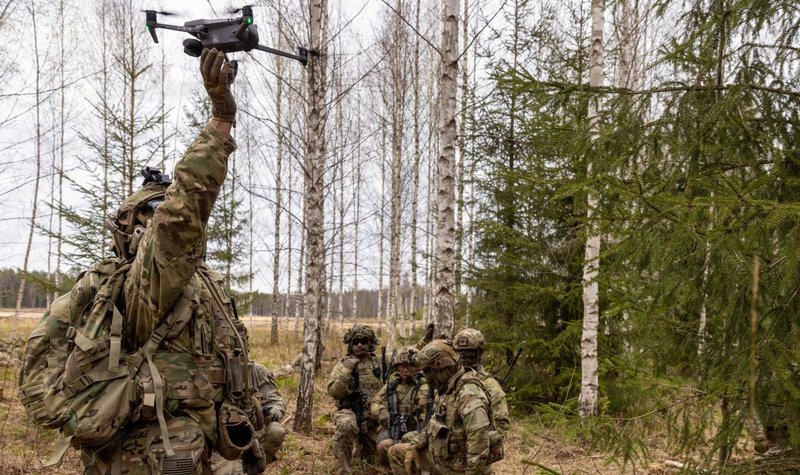
Western armies continue to test uncrewed ground vehicles, but wider procurement will depend on turning ambitions for autonomy into defined operational roles and funded requirements.
Framework contracts and leasing options aim to shorten acquisition timelines, while manufacturing partnerships could help suppliers scale production to meet allied demand.
Roman Köhne, CEO of Rheinmetall's Weapon and Ammunition Division, discusses the company's announcements at Eurosatory 2026, including developments in defence technology, precision systems, industrial ...
New photos have revealed that the Rwandan Army operates the Chinese-made Norinco SH3 122mm self-propelled howitzer (SPH), in the first confirmed export of the platform. …
Russia has recently delivered the final batch of BTR-80 armoured personnel carriers (APC) to the Bangladesh Army. The vehicles were delivered by the Military Industrial …
The Boeing Missile Defense team has installed the 44th interceptor for the country’s Ground-Based Midcourse Defense (GMD) system, the company announced on 7 November. The …
Raytheon and Saab are teaming up to cooperate on the development of new weapons systems for infantry forces to meet near-term US and international requirements, …
Harris Corporation has completed development of a fully digital Mission Data Unit designed for its navigation payload for Lockheed Martin’s Global Positioning System (GPS III) …
The Defense Advanced Research Projects Agency (DARPA) has selected Northrop Grumman to collaborate on the development of a graph processor chip that aims to enhance …
The Alliance for ESSOR (a4ESSOR) has received a $58 million contract from the Organisation for Joint Armament Cooperation (OCCAR) to start a new phase of …