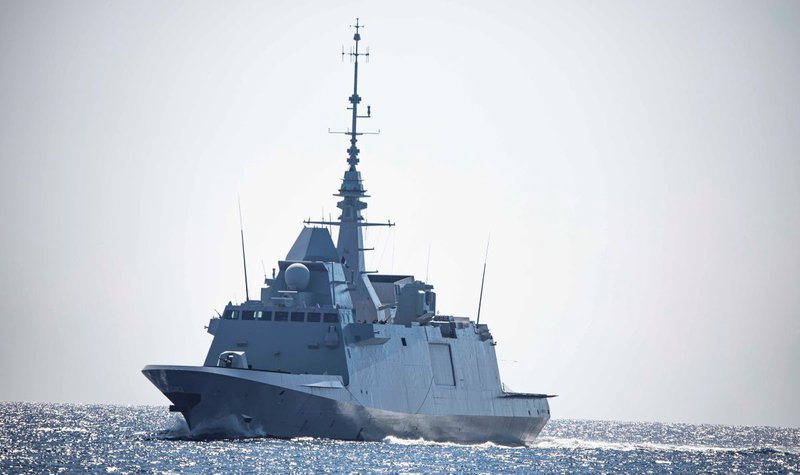
New interceptors and launchers could help navies preserve missile stocks during prolonged escort operations. Yet lower engagement costs will only improve merchant protection if the weapons are available where ships need defending.
Western armies continue to test uncrewed ground vehicles, but wider procurement will depend on turning ambitions for autonomy into defined operational roles and funded requirements.
New details are emerging about the Franco-British collaboration on a Future Combat Air System (FCAS) as the programme readies for the transition from planning and …
Liquid Robotics has signed a multi-year agreement with the National Oceanic and Atmospheric Administration (NOAA’s) Office of National Marine Sanctuaries (ONMS) for the protection of …
Kinetics Drive Solutions' transmissions have been selected by Science Applications International (SAIC) for the Amphibious Assault Vehicle (AAV) Survivability Upgrade programme, the company announced on …
South Korea’s third-generation digital Tactical Information Communication Network (TICN) for the brigade-and-below level has now been fielded, with the Republic of Korea Army (ROKA) exhibiting …
Boeing HorizonX, Boeing's technology commercialisation venture, has announced an investment in Near Earth Autonomy, a Pittsburgh-based company that develops technologies for autonomous flight. Together the …
The New Zealand Army has selected US company Barrett to fulfil a requirement for two types of new sniper rifle: the 12.7mm M107A1 anti-materiel rifle …
Lockheed Martin has received two contracts from Boeing to upgrade the Infrared Search and Track 21 (IRST21) sensor system used on the US Navy's F/A-18E/F …
Busan-based S&T; Motiv unveiled a new 9mm ‘Smart Gun’ capable of identifying the shooter’s identity and which saves information regarding the angle of fire, direction and …
The Sweden-based company Saab outlined its defence radars, Giraffe and Arthur, for the South Korean and regional market at last week’s Seoul ADEX. The South Korean …