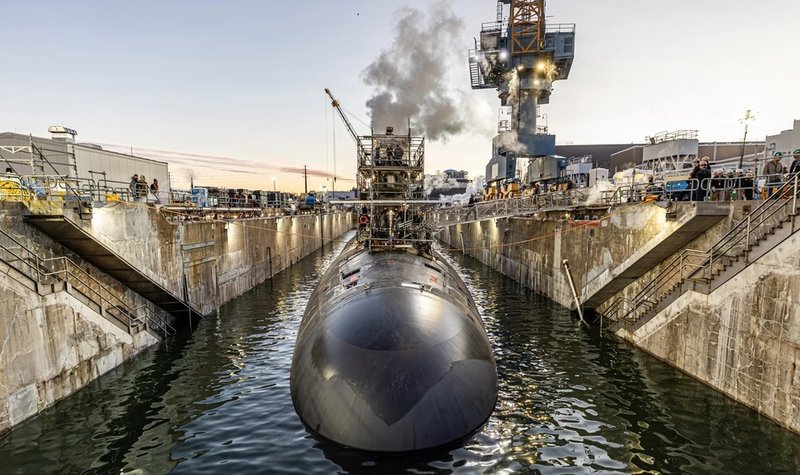
NAVSEA is exploring AI-assisted design for a larger, stealthier submarine with increased weapons capacity and uncrewed-system integration, with lead-boat procurement envisaged from 2040.
A six-ship home order, agreements with Saab, Naval Group and Babcock and spare yard capacity underpin the group’s first Euronaval bid for smaller European navies.
Harris and L3 Technologies, two American companies specialising in military communications and technology, announced their merger on Sunday, giving birth to a giant in the …
Australia’s Defence, Science and Technology (DST) is supporting an effort to advance a new corrosion-resistant coating technology that cuts the build-up of algae and barnacles …
Designed specifically to destroy US aircraft carriers, the DF-21D anti-ship ballistic missile (ASBM) is one of China’s key anti-access area denial weapons. However, how it would …
Royal Navy Type 23 frigate, HMS Kent, has returned to service following an 18 month refurbishment programme. Carried out by Babcock, the overhaul will sustain …
Raytheon has been selected to advance in the US Army’s Lower Tier Air and Missile Defense Sensor (LTAMDS) competition, the company announced on 8 October. …
RUAG Defence has received a contract to upgrade the broadband transmission system (BTS) of the routing network for the Swiss armed forces in Switzerland. Under …
Taiwan’s Indigenous Defense Submarine (IDS) programme is now cracking on after almost two decades of inertia. However, the effort has raised eyebrows in media and …
Textron Systems has received a task order from the US Naval Air Systems Command to provide sea-based ISR services, the company announced on 4 October. …
Azure Summit Technology has received a second delivery order to provide software-definable, radio frequency (RF) transceivers to the US Navy. The order is a part …
Construction of the second Kormoran II-class minehunter has commenced and the Polish Navy is now moving forward with the long term effort to enhance its …