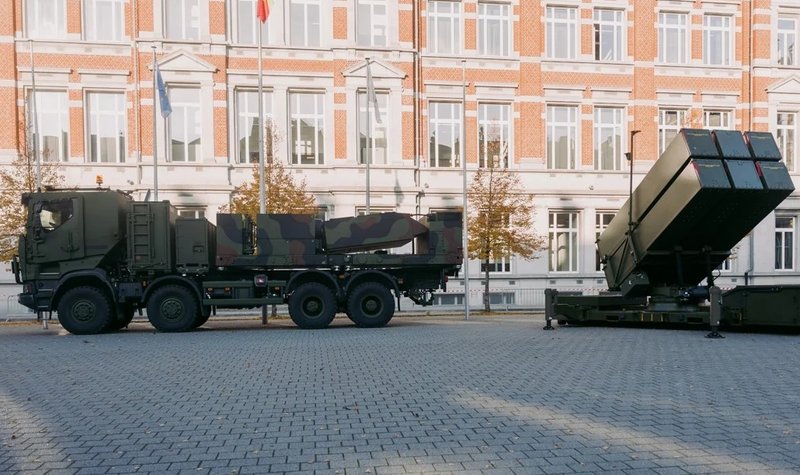
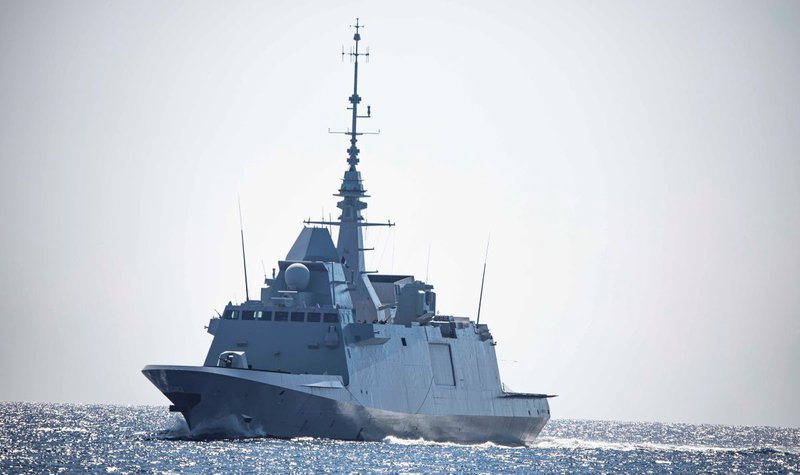
New interceptors and launchers could help navies preserve missile stocks during prolonged escort operations. Yet lower engagement costs will only improve merchant protection if the weapons are available where ships need defending.
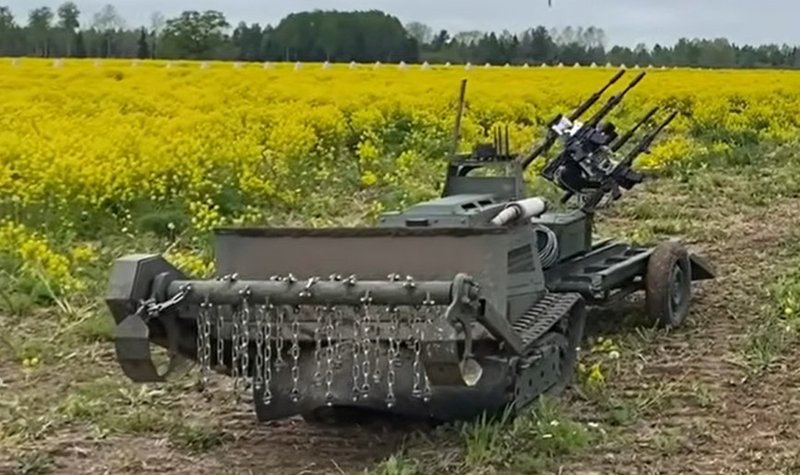
Western armies continue to test uncrewed ground vehicles, but wider procurement will depend on turning ambitions for autonomy into defined operational roles and funded requirements.
The export variant of Thales’ Software Defined Radio (SDR), Synaps, has been demonstrated live for the first time to potential customers from 20 nations. The …
The Russian Navy has strengthened its tactical ballistic missile (TBM) inventory by adding its first brigade equipped with the new 9K720 Iskander-M (NATO SS-26 Stone) system.The …
GlobalSim has announced that it has been placed under contract by the US Army Reserve Command (USARC) to provide a number of different training simulators to …
Curtiss-Wright is aiming to expand its display business in the ground vehicle market and the company is currently in discussions with a number of potential …
Safran Electronics and Defense’s JIM Compact multifunction infrared binocular has been selected by an undisclosed NATO country, the company announced on 21 November. JIM Compact …
Saab has received a contract to deliver a mass field feeding capability to the South African National Defence Force, the company announced on 20 November. …
Otokar has submitted its proposal for the serial production of the Altay main battle tank (MBT) to the Turkish Undersecretariat for Defence Industries (SSM), the …
With global defence forces continuing to develop autonomous technologies, recent demonstrations of such capabilities are helping to inform decision makers on the readiness of such …
Beretta Defense Technologies (BDT) unveiled its new PMX 9x19 mm submachine-gun (SMG) at the Milipol internal security exhibition near Paris. Development work on the PMX …