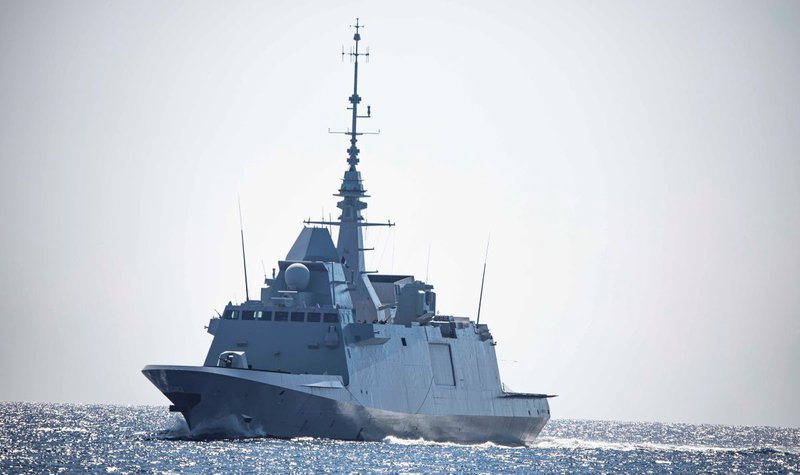
New interceptors and launchers could help navies preserve missile stocks during prolonged escort operations. Yet lower engagement costs will only improve merchant protection if the weapons are available where ships need defending.
Western armies continue to test uncrewed ground vehicles, but wider procurement will depend on turning ambitions for autonomy into defined operational roles and funded requirements.
LiquidPiston has received an additional $2.5 million funding from DARPA to continue development of its 30kW X4 rotary diesel engine prototype, the company announced on …
Russia on 22 June predicted the global chemical weapons watchdog would present ‘pseudo evidence’ in a report on an alleged chemical attack on the Syrian …
General Atomics Aeronautical Systems (GA-ASI) has carried out successful lightning tests on its second full-scale MQ-9B in Poway, California, the company announced on 19 June. …
Al Seer Marine has signed a cooperation agreement with Iceland’s Rafnar to collaborate on USV technologies. The companies will initially work to convert Rafnar’s Embla …
The Pentagon will prepare to house up to 20,000 unaccompanied migrant children on military bases, a US military spokesman said on 21 June. The decision …
The US delivered its first shipment of F-35 stealth fighter jets to Turkey on 21 June, despite tensions with the country and US lawmakers' opposition. …
ADS - a member of the Rheinmetall Group - is continuing to develop its active protection system (APS), the ADS Gen-3 with new certifications and future …
Kongsberg Defence and Aerospace has signed a contract with the Norwegian Defence Materiel Agency for cooperation on the Naval Strike Missile (NSM), the company announced …
A dual-use rotorcraft still successfully marketed around the world, the Mi-26 - also known under its NATO reporting name Halo - has undergone some dynamic …
The Australian Army, in partnership with the Defence Innovation Hub, has awarded three contracts worth a combined $2.2 million for the development of new defence …