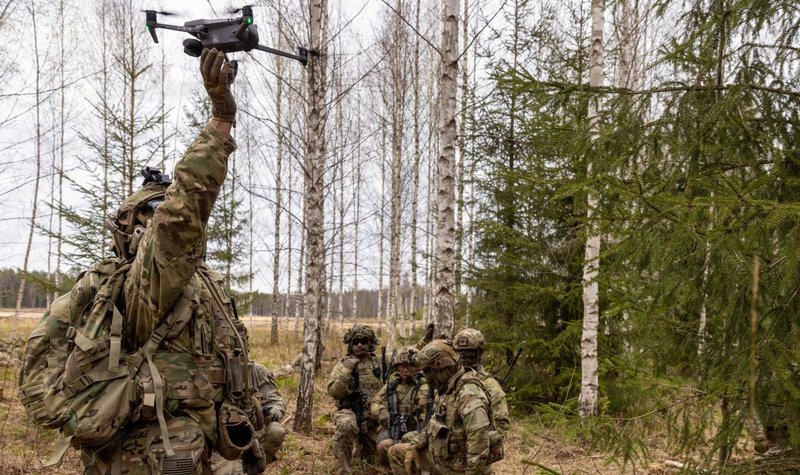
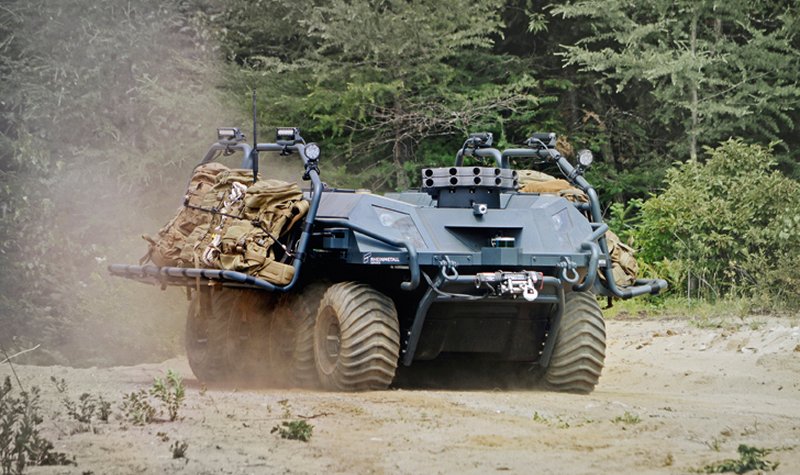
Western armies continue to test uncrewed ground vehicles, but wider procurement will depend on turning ambitions for autonomy into defined operational roles and funded requirements.
Framework contracts and leasing options aim to shorten acquisition timelines, while manufacturing partnerships could help suppliers scale production to meet allied demand.
Roman Köhne, CEO of Rheinmetall's Weapon and Ammunition Division, discusses the company's announcements at Eurosatory 2026, including developments in defence technology, precision systems, industrial ...
At Eurosatory 2026, Pearson Engineering's Group CEO Ian Bell talked about the company's role in delivering specialist armoured engineering, route-clearance and demining capabilities to military custom...
Southampton-based BMT has released details on its new next generation hull-form for autonomous operations, the Pentamaran. It will be capable of performing commercial and defence …
Israel-based Elbit Systems has, on 12 April, confirmed that it secured a $20 million contract from two Latin American customers to upgrade their Hermes 900 …
The Israeli Navy has terminated a programme to use unarmed and armed unmanned surface vessels (USVs) for maritime patrol missions. Unmanned underwater systems remain under …
Boeing Australia has reached two key milestones in its Loyal Wingman – Advanced Development Programme for the RAAF. These include ‘weight on wheels’ and ‘aircraft …
Reporting to the US Assistant Secretary of Defense Special Operations/Low-Intensity Conflict (ASD SO/LIC), the Combating Terrorism Technical Support Office (CTTSO) is tasked with identifying and developing …