Frontline requirements spur demand for Switchblade


AeroVironment reported on 15 May that it has been awarded a new Lethal Miniature Aerial Missile Systems (LMAMS) contract from the US Army, with deliveries of its single-operator Switchblade loitering munition to begin in September 2020.
The latest $146 million deal includes $76 million for the first year of Switchblade systems procurement awarded by the US Army Tactical Aviation and Ground Munitions project office. This is to meet an urgent operational requirement for frontline US forces.
The contract includes two additional one-year options (currently unfunded) that extend the period of performance until April 2023.
AeroVironment was originally selected to meet the LMAMS requirement in June 2011.
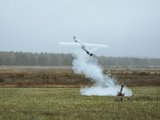
The combat-proven Switchblade is backpackable and can be rapidly deployed from ground platforms, including a six-pack launcher.
AeroVironment Tactical Missile Systems senior product line general manager Brett Hush said: ‘We will continue to enhance the capabilities of this battle-proven product, and stand ready with a proven supply chain and customer support system in order to respond effectively to US and allied customers’ needs.’
Related Equipment in Defence Insight



More from Air Warfare
-
![Leonardo details Proteus’s path to autonomous anti-submarine missions for the Royal Navy]()
Leonardo details Proteus’s path to autonomous anti-submarine missions for the Royal Navy
Leonardo’s integration of Shield AI’s Hivemind software could enable its Proteus uncrewed helicopter to conduct independent anti-submarine warfare missions, supporting the Royal Navy’s plans for a future hybrid air wing.
-
![European funding and NATO interoperability could shape Polish helicopter plans]()
European funding and NATO interoperability could shape Polish helicopter plans
Poland is seeking to update its transport helicopters as part of a wider military aviation modernisation programme, with EU funding requirements and NATO interoperability key considerations.
-
![October crewed air review: Israel’s Apache deal bets on crewed aviation in an uncrewed age]()
October crewed air review: Israel’s Apache deal bets on crewed aviation in an uncrewed age
Israel’s $1 billion Apache helicopter order highlights the continued demand for crewed attack aviation, while growing integration with uncrewed systems could shape future modernisation and procurement decisions.