How Pearson Engineering combines tradition with innovation for the demining mission (Video)
At Eurosatory 2026, Pearson Engineering’s Group CEO Ian Bell talked about the company’s role in delivering specialist armoured engineering, route-clearance and demining capabilities to military customers around the world.


Brought to you in Partnership with Pearson Engineering
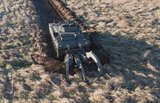
Based in Newcastle, UK, and exporting to more than 35 armed forces globally, Pearson Engineering has built a reputation for providing mobility and survivability solutions tailored to customer requirements. The company supports customers with a range of engineering equipment, including mine ploughs, rollers and route-clearance systems, alongside training, maintenance and in-service support.
The interview explores how the threat posed by modern landmines and explosive hazards is evolving, with increasingly sophisticated, remotely controlled and scatterable systems creating new challenges for armed forces. In response, Pearson Engineering is investing heavily in next-generation technologies, including autonomy, robotics and artificial intelligence.
A key focus is the company’s internally developed Threat Sense capability, designed to help operators identify potential hazards before vehicles enter dangerous areas. The discussion also highlights the growing role of autonomous and robotic systems in mine clearance and humanitarian demining, enabling larger areas to be cleared more safely and efficiently.



More from Studio
-
![How laser weapons could transform the economics of European air defence (Podcast)]()
How laser weapons could transform the economics of European air defence (Podcast)
Former UK Defence Secretary Lord John Hutton examines how drones, missiles, laser weapons and procurement pressures are reshaping European air defence.
-
![Ukraine experience forces rethink of counter-UAS doctrine]()
Ukraine experience forces rethink of counter-UAS doctrine
A panel session at Eurosatory 2026 brought together industry, academia and the French armed forces to assess how Ukraine’s battlefield reality is reshaping counter-UAS (CUAS) technology, air defence doctrine and Western procurement priorities.
-
![Networked advantage: keeping unmanned systems in the loop with battlefield radio technology]()
Networked advantage: keeping unmanned systems in the loop with battlefield radio technology
Unmanned systems are powerful intelligence, surveillance and reconnaissance (ISR) assets and communication tools, but are often isolated from wider networks, limiting their potential. Industry is now tackling this challenge, empowering UxVs to act as integrated nodes across domains.
-
![Air defence at scale: Europe’s challenge of cost, integration and sustainability]()
Air defence at scale: Europe’s challenge of cost, integration and sustainability
The evolution of aerial threats is driving renewed investment in ground-based air defence across Europe. Yet beyond capability, a more pressing challenge is emerging: how to sustain air defence at scale, as rising costs, limited stockpiles and industrial production constraints place increasing pressure on existing structures.
-
![The path to a safer future – why technological innovation is key to successful mine clearance]()
The path to a safer future – why technological innovation is key to successful mine clearance
Landmines continue to present a persistent and constantly evolving global threat, and advances in technology are improving how the challenges posed by minefields are managed, while reducing risks to human life. The growing capabilities of autonomous and robotic systems, coupled with advanced sensor capabilities, are now fuelling industry’s responses to this pervasive danger.