From Chokepoints to the Deep: ASELSAN’s Naval Vision at EURONAVAL
From deployable ship defence to autonomous sea and underwater vehicles, ASELSAN is preparing for a new era of naval security.


Enjoy free access to this sponsored article, all content provided by ASELSAN
The seas are changing, and so are the threats facing those who operate on them. Busy shipping lanes and narrow straits remain vital to global trade, while offshore assets and underwater infrastructure face new risks. At the same time, unmanned vehicles are changing how naval forces gather intelligence, protect critical areas and engage threats. ASELSAN is responding with a portfolio that brings together deployable ship defence, remote-controlled naval weapons and autonomous surface and underwater systems. At EURONAVAL, the company is showcasing these capabilities as part of its response to the evolving demands of maritime security.
For commercial vessels passing through sensitive maritime chokepoints, protection can be difficult to provide with conventional shipboard systems alone. ASELSAN’s GÖKDENİZ Close-In Weapon System (CIWS) is now being presented in a deployable configuration, bringing an established naval defence capability to a wider range of vessels and critical facilities.
Housed in a container with its own power supply and operator workspace, the system can be installed on civilian or military vessels, used for the required mission, then removed and transported to another location. This offers a practical option where protection needs to be put in place quickly and moved as priorities change.
GÖKDENİZ combines twin 35mm guns, search radar and an integrated tracking platform to detect, track and engage threats, either autonomously or under manual control. Its targets include anti-ship missiles, aircraft, helicopters, UAVs and unmanned surface vehicles. With ASELSAN’s 35mm ATOM airburst ammunition, the system creates a cloud of fragments in the target’s path, helping achieve effective engagements without relying on large numbers of rounds.
The new configuration adds a different kind of flexibility to the system: the ability to bring close-in defence to where it is needed, rather than tying it to a single platform.
Unmanned at the Surface, Autonomous Below
The next challenge is to extend maritime awareness and reach without placing personnel in harm’s way. ASELSAN’s TUFAN unmanned surface vehicle and KILIÇ family of autonomous underwater vehicles are designed to do just that, operating in two domains where threats and opportunities are rapidly evolving.
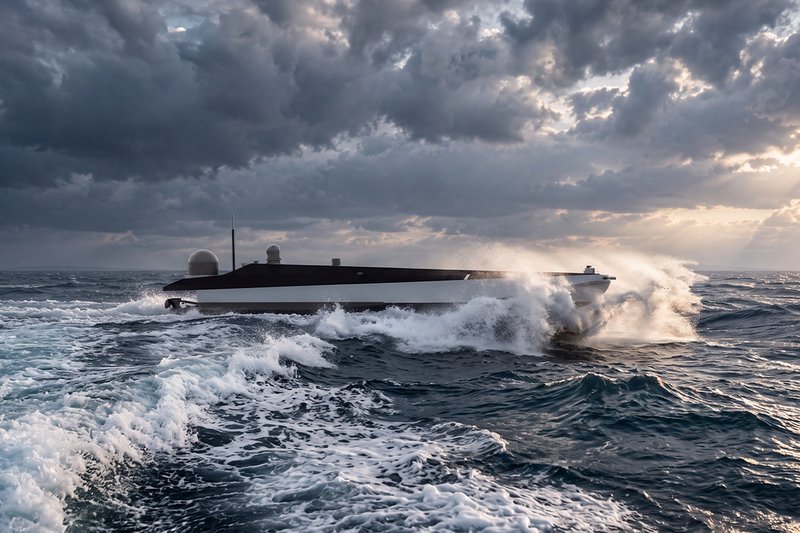
TUFAN supports reconnaissance, surveillance and strike missions. Its autonomous navigation and obstacle avoidance capabilities help it operate in changing sea conditions, while its ability to work alone or alongside other vehicles opens the door to coordinated missions involving multiple unmanned platforms.
Below the surface, KILIÇ 10 provides a compact, rapidly deployable option for tactical missions. KILIÇ 200 offers greater endurance and payload capacity for more demanding tasks, including missions involving maritime targets, ports, offshore assets and underwater infrastructure.
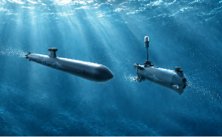
Together, the family reflects a growing focus on autonomous systems that can be deployed in numbers, assigned different tasks and coordinated to meet changing operational needs.
For ASELSAN, the ambition goes beyond individual platforms. Türkiye’s geography offers a natural advantage in maritime operations, and the company is working to turn that advantage into capability, with the goal of establishing Türkiye as a recognised global name in kamikaze unmanned surface vehicles.
SMASH 30: Ready for a Changing Threat Picture
Ships must also contend with threats that are smaller, faster and harder to track. ASELSAN’s SMASH 30, the latest addition to its established Remote Controlled Stabilised Naval Weapon System family, is designed to meet this changing demand.

The 30mm system combines remote operation and stabilised aiming with AI-assisted target detection, classification and tracking. Integration with ASELSAN’s ATOM 30 programmable smart ammunition, alongside increased elevation and ammunition capacity, supports engagements against both surface targets and mini or micro UAVs. Its electro-optical director and ballistic computation capabilities help maintain accuracy against moving targets, even when the host vessel is underway.
A Broader View of Maritime Security
These systems address different challenges, but their purpose is closely linked: protect vessels and critical assets, extend operational reach and give naval forces more options when conditions change. From moving close-in defence to a vessel that needs it, to deploying autonomous vehicles on or beneath the water, ASELSAN is investing in technologies shaped by the realities of future maritime operations.
The next era of naval security will depend not on a single platform, but on having the right capability in the right place, at the right time. ASELSAN’s expanding portfolio is designed to help make that possible.



More from Industry Spotlights
-
![Patria OPTIME and ILIAS: Orchestrating operational readiness across every domain]()
Patria OPTIME and ILIAS: Orchestrating operational readiness across every domain
Patria OPTIME is a sustainment concept that integrates MRO and lifecycle services into one solution, powered by the ILIAS digital defence platform
-
![“Start planning much earlier”: delivering defence support in an era of disruption]()
“Start planning much earlier”: delivering defence support in an era of disruption
In Conversation… The geopolitical landscape is increasingly uncertain, with the UK and its allies confronting the most unpredictable international environment for decades. To adapt, defence readiness must begin long before assets reach the front line, forging a resilient support enterprise that can thrive in a time of ongoing disruption, argue the partners of Team ORION.
-
![Patria NEMO Navy: Unlocking unmatched versatility and protection for modern naval forces]()
Patria NEMO Navy: Unlocking unmatched versatility and protection for modern naval forces
The Patria NEMO Navy mortar system marks a revolutionary advance in maritime defence technology, offering unparalleled benefits to customers who demand performance, adaptability and safety in their naval operations.
-
![“Communicating at mission speed”: why data security is essential for operational success]()
“Communicating at mission speed”: why data security is essential for operational success
In conversation… Everfox’s Chairman and Chief Executive Officer Dave Wajsgras and Managing Director, International, Colin McKinty discuss the critical importance of information security in defence, minimising insider risk and the company’s international growth strategy with Shephard’s Andrew White.
-
![“Engage with the operational problem”: how software innovation can boost UK defence]()
“Engage with the operational problem”: how software innovation can boost UK defence
In Conversation… Shephard’s Andrew White talks to Zafer Şen, CEO and co-founder of OBSS, about the future of command-and-control software in the age of artificial intelligence, and his company’s ambitions in the UK defence market.
-
![“A survivable architecture”: why resilient communications are no longer a luxury]()
“A survivable architecture”: why resilient communications are no longer a luxury
In Conversation… Military communications must adapt to a rapidly evolving battlespace, characterised by decentralised forces and an increasingly contested electromagnetic spectrum. To survive and thrive, it is vital to prioritise resilient systems and networks, Faisal Munir, President – Mission-Critical Communications at L3Harris Technologies, told Shephard’s Gerrard Cowan.