How European countries plan to overcome Ukraine war supply chain issues
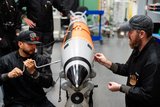
Investment in industrial capabilities will be required in the short term. (Photo: EDA)
To refill stockpiles and ensure the readiness of their armies, European Defence Agency (EDA) member states are seeking ways to overcome supply chain obstacles and strengthen industrial capacity.


The war in Ukraine and the speed at which equipment and ammunition have been expended in the conflict are causing a boom of sorts in the defence market.
However, the decision to provide thousands of military items to the troops of President Zelensky has depleted the reserves of several countries and exposed serious supply chain issues worldwide, including in Europe.
To refill stockpiles and ensure the readiness of their armies, European Defence Agency (EDA) member states have been seeking ways to overcome these obstacles and strengthen industrial capacity.
This comprises several measures including increasing investment in production capacities, conducting military development
Our news & analysis is now part of Defence Insight®
A Basic-level or higher Defence Insight subscription is now required to view this content.



More from Defence Notes
-
![US speeds up B61-13 nuclear bomb production as programme moves further ahead of schedule]()
US speeds up B61-13 nuclear bomb production as programme moves further ahead of schedule
The US government plans to accelerate production even further after achieving key B61-13 milestones months ahead of schedule, as the programme advances amid growing US-China strategic competition.
-
![Canada’s C$2 billion ACSV deal reinforces new defence industrial strategy as allies align]()
Canada’s C$2 billion ACSV deal reinforces new defence industrial strategy as allies align
General Dynamics Land Systems-Canada is the country’s first strategic partner under the Defence Industrial Strategy’s Strategic Partnership Framework, an effort to provide companies with confidence to invest and boost the defence labour force.
-
![New UK armed forces minister frames High North defence as vital to “homeland security”]()
New UK armed forces minister frames High North defence as vital to “homeland security”
The UK’s Minister for the Armed Forces Louise Sandher-Jones made her first appearance in the role before the House of Commons Defence Committee this week to highlight efforts to improve capability in the High North.
-
![Canada seeks to strengthen industrial ties with the US on classified programmes]()
Canada seeks to strengthen industrial ties with the US on classified programmes
Ottawa explores expanding defence-industrial cooperation with Washington into sensitive programmes, an approach that could reshape NORAD modernisation, strengthen North American supply chains and create new opportunities for defence contractors.