Why Russia has lost over three times as many ground vehicles as Ukraine
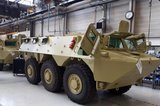
A Russian armoured vehicle captured by Ukrainian forces. (Photo: Ukranian MoD)
A total of 7,629 Russian land systems have been destroyed, damaged, abandoned or captured by Ukraine, according to open-source figures, representing 78.6% of losses in the conflict.


From the start of the Ukraine conflict in February up until 22 November, nearly 10,000 ground systems and platforms were destroyed, damaged, abandoned or captured according to open-source intelligence defence analysis website Oryx.
A total of 7,629 units belonged to Russian forces, which represents 78.57% of losses in the conflict. In other words, for every single Ukrainian system neutralised, Putin’s troops have losses of 3.66 platforms (see table below).
To date, Russian losses comprise 1,988 trucks and utility vehicles; 1,754 IFVs, 1,503 tanks, 718 armoured fighting vehicles, 270 APCs; 245 engineering vehicles and equipment; and 167 infantry mobility vehicles among others.
The Ukrainian side,
Our news & analysis is now part of Defence Insight®
A Basic-level or higher Defence Insight subscription is now required to view this content.

More from Land Warfare
-
![AUSA 2026: industry looks to make commercial platforms a military reality]()
AUSA 2026: industry looks to make commercial platforms a military reality
With a production rate of more than 10 million vehicles annually, the US commercial car and vehicle manufacturing base is second only to China. Defence companies are looking at how the vehicles, technology and manufacturing capability can support programmes.
-
![With changing patterns in Middle Eastern procurement, is Europe missing out?]()
With changing patterns in Middle Eastern procurement, is Europe missing out?
Traditional suppliers are struggling to meet the Middle East’s armoured vehicle modernisation needs, creating opportunities for South Korean manufacturers and regional defence industries.
-
![AUSA 2026: CUAS market expands as suppliers target new threats and operational requirements]()
AUSA 2026: CUAS market expands as suppliers target new threats and operational requirements
New developments from MARSS, MyDefence, Mountain Horse Solutions and Rafael suggest that future counter-drone protection will increasingly depend on combining advanced detection, rapid interception and integrated defensive networks.