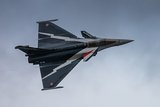
Eurosatory 2026 to highlight changing defence priorities
Photo: COGES Events
Eurosatory 2026 will reflect a defence sector shaped by conflict, rising military spending, uncrewed systems and growing demand for sovereign defence capabilities.


Brought to you in association with COGES Events
Eurosatory 2026 takes place at a time of significant change for the defence sector, defined by geopolitical uncertainty, technological innovation and rising investment.
As armed forces and industry adapt to a rapidly evolving battlespace, the Paris event is expected to offer insights into the platforms, systems and operational concepts shaping future procurement priorities.
Organisers describe this year’s edition as the most ambitious in the exhibition’s history, with the event expanding into Hall 4 and covering more than 185,000m². A redesigned demonstration zone will feature trench warfare scenarios, three-dimensional drone manoeuvres and close-quarters battle scenarios intended to reflect the realities of contemporary conflict.
Charles Beaudouin, general manager of Eurosatory and chairman of COGES Events, said the exhibition would bring together manufacturers, startups and sector experts to address evolving defence and security requirements, while highlighting trends including multidomain superiority, remote engagement, land manoeuvre, air mobility, crisis management and industrial resilience.
The defence landscape has been transformed in recent years by the wars in Ukraine and the Middle East, concerns over Russian aggression and shifting relations between the US and Europe.
Against this backdrop, European defence spending has increased sharply. The Stockholm International Peace Research Institute recorded a 14% rise in European military spending in 2025 to $864 billion, describing this as the main contributor to a 2.9% increase in global military expenditure.

Photo: COGES Events
The impact of this investment is expected to be visible across Eurosatory, with uncrewed systems likely to be among the most prominent themes. France’s uncrewed aerial vehicle (UAV) market alone is now valued at more than $11 billion.
While UAS will be a core focus, CUAS technologies will also feature heavily, including radars, electronic warfare systems and effectors.
Digitisation of the battlespace is also expected to be a key theme, particularly networking technologies required for multidomain operations. Artificial intelligence and autonomy are likely to receive attention for their impact on communications, situational awareness and electronic warfare.
Conventional capabilities will also remain central to the show. Main battle tanks (MBTs), armoured fighting vehicles (AFVs), helicopters and combat aircraft continue to dominate military planning and procurement.
Land systems are likely to attract particular attention as European armies continue to recapitalise their armoured fleets in response to the war in Ukraine and wider concerns about regional security.
According to Shephard’s Defence Insight, programmes worth an estimated $82 billion covering 4,221 MBTs are forecast across 19 European programmes over the next decade, excluding Russia. Much of this demand is being driven by countries on NATO’s eastern flank seeking to replace ageing Soviet-era equipment or expand existing armoured capabilities.
The report notes that near-term procurement activity is expected to focus on upgraded platforms such as the Leopard 2A8 and South Korea’s K2. The renewed emphasis on armoured warfare reflects lessons drawn from Ukraine, where tanks, artillery and uncrewed systems have all played central roles in a conflict that has reshaped military planning across Europe.
The future of European combat aircraft is expected to be a major talking point, particularly following uncertainty around the New Generation Fighter (NGF) element of the Future Combat Air System.
Helicopters are also expected to feature prominently, with a $1.4 billion market opportunity for the replacement or upgrade of European military rotorcraft. MBTs, AFVs and other new or upgraded ground platforms are also likely to be displayed, including potential first unveilings.
Beyond equipment, Eurosatory will also provide a forum for discussions around multinational cooperation, industrial resilience, defence funding and the balance between collaborative procurement and sovereign capability.
The protection of critical infrastructure, grey-zone threats, drone incursions and cyber risks are also expected to be key discussion points as military and security requirements increasingly overlap.
Europe is becoming a larger target market for companies ranging from specialist small and medium-sized enterprises (SMEs) to major primes. Industry is expected to use Eurosatory to outline how it will meet demand through investment, local partnerships and support for European sovereignty requirements.
Follow all the news from the show at Shephard’s Eurosatory news portal.


More from Eurosatory 2026
-
![Eurosatory 2026: BAE Systems’ new digital fires system to be ready for demonstration this year]()
Eurosatory 2026: BAE Systems’ new digital fires system to be ready for demonstration this year
BAE Systems is presenting its Next Generation Indirect Fire Control System at Eurosatory 2026. It is designed to connect large calibre guns with wider sensor and effector networks to provide targeting information more quickly.
-
![Eurosatory 2026: What has become of the Main Ground Combat System?]()
Eurosatory 2026: What has become of the Main Ground Combat System?
The Main Ground Combat System has had a troubled life. With repeated delays and competition on the horizon, the programme may be approaching the end of the road.
-
![Eurosatory 2026: France seeks strategic autonomy with Long-Range Ground Strike system]()
Eurosatory 2026: France seeks strategic autonomy with Long-Range Ground Strike system
As countries across Europe strive to acquire new multiple-launch rocket systems (MLRS) off the shelf, France has opted to develop its own to ensure it maintains domestic capability.
-
![Eurosatory 2026: has the time finally come for Oshkosh’s hybrid electric JLTV?]()
Eurosatory 2026: has the time finally come for Oshkosh’s hybrid electric JLTV?
Oshkosh Defense’s hybrid electric Joint Light Tactical Vehicle offers the standard benefits of this type in scenarios such as silent watch and silent running as well as providing power for recharging systems. The company is arguing its 115kW power opens other roles too, particularly counter-drone.
-
![Upgrades and fresh orders reinforce demand for Dassault’s Rafale fighter jet (updated 2026)]()
Upgrades and fresh orders reinforce demand for Dassault’s Rafale fighter jet (updated 2026)
The French-made aircraft is lining up potentially huge orders in Asia, with the latest F5 platform designed to keep the jet relevant in the modern battlespace until the 2040s.
-
![Eurosatory 2026: new and improved vehicles and counter-drone technology foreshadowed]()
Eurosatory 2026: new and improved vehicles and counter-drone technology foreshadowed
Eurosatory is the world’s largest defence show with more than 2,000 exhibitors listed and more than 43,000 visitors expected, as the show expands to a floorspace of 185,000m². Uncrewed systems and effectors to defeat them, as well as 4x4 vehicles, are all set to be focal points at the event.