Air defence at scale: Europe’s challenge of cost, integration and sustainability
Recent conflicts have highlighted the need to field a layered air defence system, with multiple classes of effector to deal with different threats, including interceptor missile launchers such as NASAMS. (Photo: Norwegian Navy via US DoD)
The evolution of aerial threats is driving renewed investment in ground-based air defence across Europe. Yet beyond capability, a more pressing challenge is emerging: how to sustain air defence at scale, as rising costs, limited stockpiles and industrial production constraints place increasing pressure on existing structures.


Brought to you with support from Rafael Advanced Defense Systems
Modern air defence is increasingly judged not only by interception performance against advanced threats, but also by the ability to sustain operations at scale over time – requiring a deliberate balance between capability, endurance and smart allocation of defensive resources.
From ballistic and cruise missiles to low-cost drones and loitering munitions, recent conflicts have demonstrated that modern air defence systems must contend with both high-end weapons and mass, unsophisticated threats simultaneously, placing new demands on detection, tracking and interception capabilities.
Operations in the Persian Gulf during the recent US-Iran conflict reinforce this trend, with coordinated ballistic missile, cruise missile and UAS attacks placing sustained pressure on defensive systems, sensors and command-and-control networks.
This evolving threat environment is driving investment in layered and integrated air defence architectures, with an increasing emphasis on linking sensors and effectors across multiple domains to improve responsiveness and efficiency.
This shift is reflected in broader economic trends, with the global air defence systems market currently estimated at around $45-50 billion and projected to exceed $65 billion by the end of the decade, representing steady annual growth of around 5-7%. Rising geopolitical tensions are driving demand, as are the proliferation of UAS and advanced missile threats, leading to increased investment in integrated air and missile defence across NATO and allied nations.
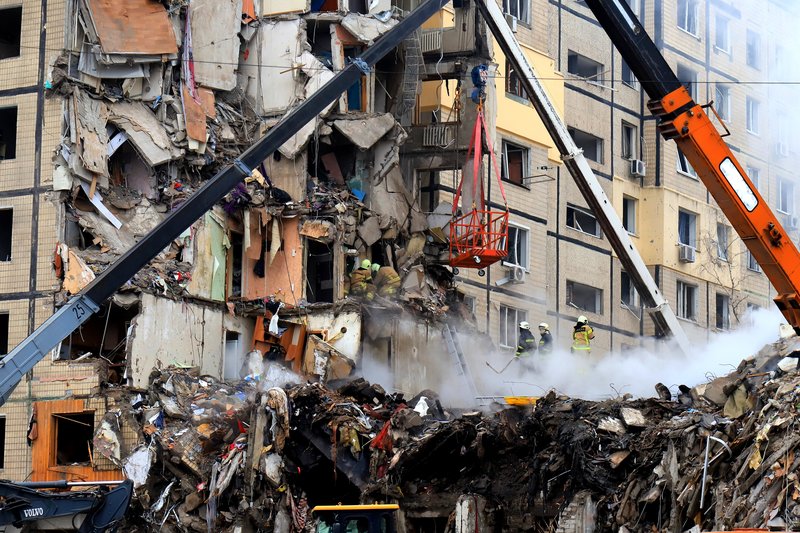
The Ukraine war has provided some stark lessons in the importance of effective defences against drones and cruise missiles. (Photo: Shutterstock)
Independent defence analyst Edward Hunt notes that, against this background and in light of the fundamental shift in relations between the US and the rest of NATO, Europe will place increased emphasis on funding and developing its own air defence systems.
As manufacturing and research capacity will likely be unable to keep pace with forecast demand, it may also seek new industrial partnerships with nations that have first-hand experience of air defence operations, such as Israel or even Ukraine.
The need to expand production capacity and secure resilient supply chains is also encouraging greater emphasis on industrial partnerships, technology transfer and multinational manufacturing arrangements designed to accelerate interceptor and system availability.
Sustainability and the cost of interception
Recent operational experience in Europe and the Persian Gulf suggests that performance alone is no longer the defining challenge. The ability to sustain defensive operations over time – under conditions of repeated, large-scale attack – is becoming an increasingly critical constraint, particularly as interceptor costs, stockpile limitations and industrial capacity come under pressure.
Recent operations in the context of Iranian missile and UAV activity highlight the intensity with which modern air defence systems may be employed, underlining the importance of pre-conflict stockpile planning and resilient industrial support alongside operational capability.
Analysis from organisations such as RUSI and IISS has underscored the implications of sustained munition expenditure and the resulting pressure on these stockpiles and industrial capacity.
At the same time, the proliferation of low-cost drones and decoys is sharpening attention on cost-per-engagement considerations, reinforcing the importance of layered architectures that match defensive effectors to threat complexity.
This issue extends beyond simple cost-per-kill calculations, particularly where relatively inexpensive UAS can threaten or degrade high-value strategic assets and sensor networks.
This dynamic is forcing a reassessment of how such systems are structured, with greater emphasis on layered architectures that can allocate lower-cost effectors to less complex threats, preserve high-end interceptors for critical targets and improve sustainability against large-scale ballistic and air-breathing attacks.
Recent discussions across the air defence sector have reinforced the view that no single system can address the full spectrum of aerial threats, from low-cost UAS to ballistic missiles. Instead, layered combinations of kinetic interceptors, electronic warfare, counter-UAS capabilities and directed-energy weapons are increasingly viewed as essential to sustaining effective air defence coverage during high-intensity operations.
Ensuring sufficient magazine depth, diversifying supply chains, and addressing cost-per-shot challenges are emerging as central considerations for future air defence planning.
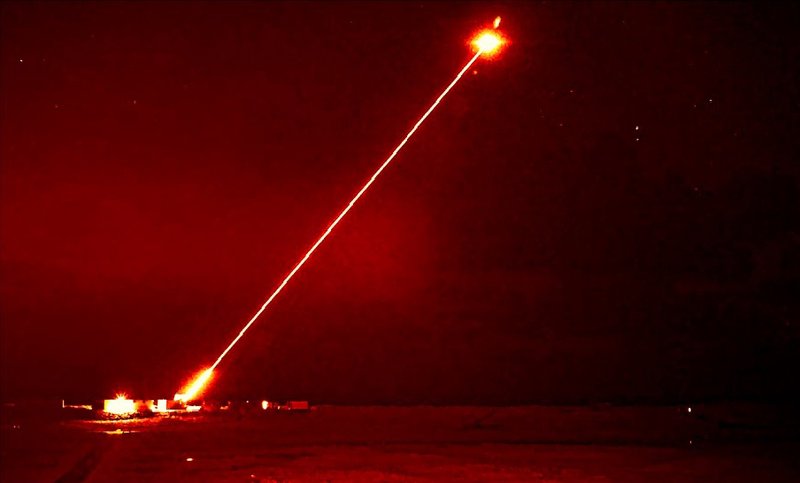
Many European nations are beginning to view high-energy laser systems as an essential complementary layer within their air defence networks. (Photo: UK MoD Crown Copyright)
In parallel, European interest is expanding toward complementary solutions – such as high-energy laser (HEL) weapons and mobile SHORAD – to augment existing interceptor-based architectures and improve overall cost-efficiency under high-volume attack.
Unlike conventional interceptors, HEL weapons offer a near-unlimited magazine depth and significantly lower cost per engagement, making them particularly attractive against mass drone and rocket attacks.
As explored in a recent Shephard Defence Podcast episode, HEL systems are increasingly being viewed as a complementary layer within integrated air defence architectures, particularly for countering low-cost UAS and saturation attacks.
Hunt meanwhile comments that even a single military or strategic installation could require hundreds of interceptors to defend it should it become a primary target of attack, and that new solutions, both kinetic and non-kinetic, will be required as the current balance seems to be favouring the attacker.
Integration and interoperability challenges
Concurrently, governments across Europe need to achieve sufficient interoperability and integration among multiple air defence systems manufactured by different original equipment manufacturers, enabling seamless networked sensors and effectors without any loss of coverage.
Dr Peter Magill, land analyst for Shephard Defence Insight, suggests that progress in this area is likely to accelerate, particularly as recent operational events reinforce the importance of integrated air and missile defence. However, achieving seamless interoperability across national and corporate boundaries remains a complex technical and political challenge.
This is reflected in procurement trends across Europe, with a growing emphasis on mobile SHORAD systems and platforms designed to counter UAS and low-altitude threats. Programmes such as Norway’s acquisition of NOMADS and the Netherlands’ integration of Skyranger capabilities illustrate a broader shift towards more flexible and cost-effective solutions.
At the same time, large-scale procurement plans – such as Germany’s potential acquisition of hundreds of Skyranger systems – highlight the scale at which some nations are now seeking to rebuild short-range air defence capacity.
Additional developments, including the use of advanced airburst munitions and the adaptation of legacy platforms for counter-UAS roles, further demonstrate how existing technologies are being reconfigured to address emerging threats.
Multinational integration and structural constraints
In February 2025, NATO launched a pair of multinational GBAD initiatives to “strengthen deterrence and defence” across member states.
First, 15 partner nations signed an agreement to develop “more efficient solutions to lower-level air threats” (i.e. below 500ft). Participants include Belgium, Denmark, Estonia, Finland, France, Greece, Latvia, Lithuania, the Netherlands, Norway, Portugal, Romania, Spain, Turkey and the UK. Those nations plus the Czech Republic also launched another initiative focused on development of “passive air surveillance” to identify incoming threats undetectable by active capabilities including as radars and satellites.
Such efforts align with broader analytical assessments that emphasise the importance of sensor integration and data-sharing across multinational networks, particularly in high-intensity environments where reaction times are compressed.
Meanwhile, NATO also continues to develop the Modular GBAD concept, launched in 2023, which aims to “counter air threats at very short, short and medium range”; as well as the Multinational Ammunition Warehousing Initiative (MAWI), designed to “reinforce and streamline the prepositioning and management of ammunition stockpiles”.
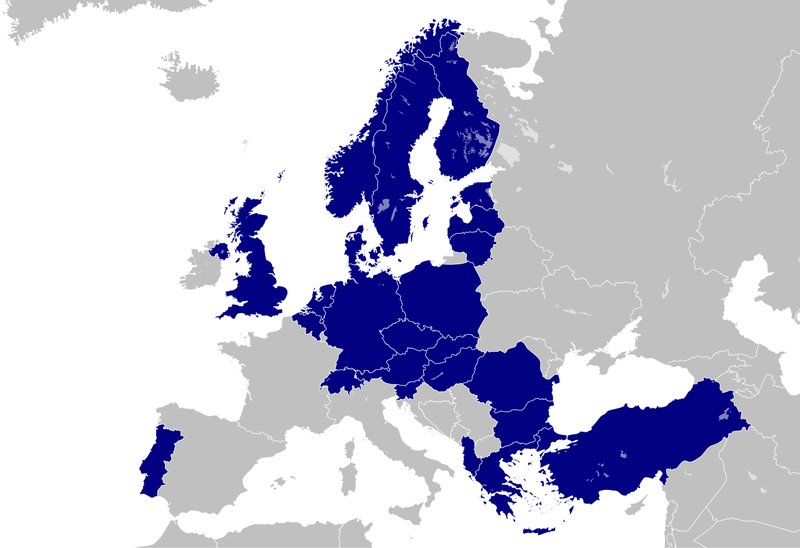
The European Sky Shield Initiative is one solution to the fragmented nature of air defence coverage on the continent, but questions remain over funding and commitment levels among its participant nations (shown in blue on the map). (Image: Wikimedia Commons)
Another important programme pursued across the continent is the European Sky Shield Initiative (ESSI), which Magill described as a potential mechanism for addressing fragmentation in European air defence capability.
Although 24 European nations currently support it, questions remain around funding, participation and long-term implementation, particularly given differing national priorities and industrial interests. Magill notes that some major actors, including France, have yet to commit to the initiative fully.
More broadly, the challenges associated with multinational integration reflect structural constraints within European defence cooperation, where political alignment, industrial competition and funding models can all adversely affect delivery timelines.
Hunt meanwhile notes that while a core NATO backbone ensures a high degree of interoperability, national priorities will vary considerably, affecting the emphasis placed on VSHORAD measures versus long-range missile defence, for example.
He suggests it would be more effective to adopt a “cluster” approach whereby nations with similar threat concerns collaborate on specific issues, but with all such groupings falling under ESSI or a similar umbrella. Mutually beneficial and interoperable aspects can then be shared as required.
Given the institutional inertia and trade-offs inherent in complex multinational initiatives – not to mention questions over the future of NATO itself – many individual nations will prefer to adopt available off-the-shelf or developmental systems to fill long-standing or newly identified capability gaps within much shorter timeframes.
This is especially important in the context of the “grey zone” disruption caused by UAS to critical infrastructure, which has become an actual or potential threat in many European countries.
While investment in air defence capabilities across Europe is accelerating, recent experience suggests that effectiveness will increasingly depend on sustainability as much as performance. Ensuring sufficient stockpiles, strengthening industrial capacity and improving integration across national systems will be critical to maintaining credible defences in a high-intensity threat environment.
For more insight into the challenges of providing effective air defence, listen to this special edition of the Shephard Defence Podcast
Explore Rafael’s full suite of air defense solutions.




More from Studio
-
![Integrated approach: transforming vehicle communications for a new era of warfare]()
Integrated approach: transforming vehicle communications for a new era of warfare
In the modern battlespace, military intercom systems can no longer operate in isolation. They must instead be integrated with the wider tactical network, gaining operational advantages through secure communications with dismounted soliders and other assets across domains.
-
![Active protection systems: from optional upgrade to operational requirement]()
Active protection systems: from optional upgrade to operational requirement
As battlefield threats multiply, active protection systems are becoming increasingly important for armoured vehicle survivability – but cost, integration challenges and evolving drone threats will determine how widely they can be deployed.
-
![How laser weapons could transform the economics of European air defence (Podcast)]()
How laser weapons could transform the economics of European air defence (Podcast)
Former UK Defence Secretary Lord John Hutton examines how drones, missiles, laser weapons and procurement pressures are reshaping European air defence.
-
![How Pearson Engineering combines tradition with innovation for the demining mission (Video)]()
How Pearson Engineering combines tradition with innovation for the demining mission (Video)
At Eurosatory 2026, Pearson Engineering's Group CEO Ian Bell talked about the company's role in delivering specialist armoured engineering, route-clearance and demining capabilities to military customers around the world.
-
![Ukraine experience forces rethink of counter-UAS doctrine]()
Ukraine experience forces rethink of counter-UAS doctrine
A panel session at Eurosatory 2026 brought together industry, academia and the French armed forces to assess how Ukraine’s battlefield reality is reshaping counter-UAS (CUAS) technology, air defence doctrine and Western procurement priorities.
-
![Networked advantage: keeping unmanned systems in the loop with battlefield radio technology]()
Networked advantage: keeping unmanned systems in the loop with battlefield radio technology
Unmanned systems are powerful intelligence, surveillance and reconnaissance (ISR) assets and communication tools, but are often isolated from wider networks, limiting their potential. Industry is now tackling this challenge, empowering UxVs to act as integrated nodes across domains.