Intelligence innovation: From data overload to decision advantage (Podcast)
As militaries face an overwhelming flow of data, the challenge is shifting from collection to delivering fast, actionable insights that drive decision-making. Advances in AI and data integration are helping armed forces move beyond siloed systems to generate real-time intelligence across domains and allies.


Brought to you in partnership with Rafael
Listen on Apple Podcasts, Amazon Music, Spotify and more.
Data has long been a critical resource in the battlespace, but the challenges and opportunities are evolving.
In the multidomain environment, the priority is not simply collecting information; instead, intelligence must be transformed into a driver of decision-making and a tool for understanding the adversary’s intentions.
The modern battlefield “is drowning in data and information”, said ‘Director Y’ from the Intelligence and C4ISR Systems Division at Rafael.
This deluge means it is no longer a matter of gathering intelligence into databases; instead, militaries must ensure they can deliver actionable insights from that data.
In this context, it is critical to quickly access information and swiftly derive insights, said Director Y.
“We need to shorten the timeline between first encountering sensor information and how we understand the enemy’s intentions,” he explained.
Moving beyond silos
Gideon Weiss, Rafael’s VP of BD and marketing, said the challenge must be addressed on two major levels, with both long-term and short-term applications of data. The long-term focus centres on identifying the major trends: an adversary’s plans over a particular period, their major challenges, etc.
In the short term, the focus comes down to “reaction time”, explained Weiss.
“It’s about how quickly we can understand what’s going on and put it into action. It could be a pre-emptive action and it could be offensive operations that we need to prepare.”
How can militaries exploit data effectively across domains and nations, while addressing their own security needs? First, it is crucial to look beyond the traditional ‘siloed’ approach to data.
This is particularly important against the backdrop of the multidomain battlespace, with assets across land, sea, air, space and cyber serving as sensor nodes in an increasingly integrated picture.
Director Y said this goes beyond the traditional concept of sensor fusion, which tended to focus more narrowly on command and control (C2) priorities.
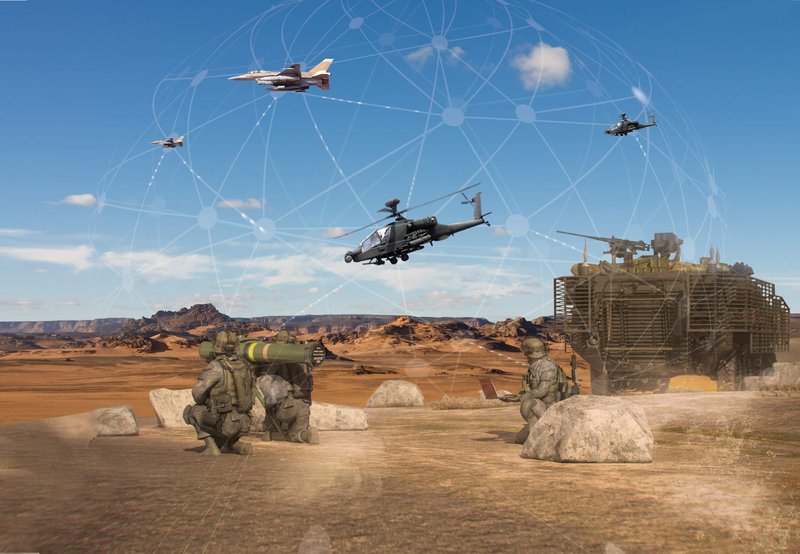
“We need to break those silos and work on a single plane with all the information available, generating real insights that we can push to the front lines,” he said. “This is very important, because sometimes the headquarters has everything, but nothing comes to the edge.”
Collaborative advantages
The modern data challenge is compounded by the multinational nature of conflict today, with multiple nations and organisations involved, creating a complex patchwork of scenarios and threats, as seen in the wars in Iran and Ukraine.
However, sharing intelligence and databases across organisations and between nations is extremely challenging, as the information is naturally sensitive. The goal is to build a fused, multi-domain database between different organisations and partners, said Director Y, which can include selected insights from national databases “and bring them into a shared playing field”.
Such a database would comprise information and intelligence that the nations involved are willing to share. However, it would bring technical challenges, both in terms of building the shared database and analysing the trends and insights it contains.
AI advantage
Artificial intelligence (AI) will play a vital role in overcoming these obstacles, helping to drastically speed the process of gaining insights from data.
This technology has applications on different levels, Director Y added. Machine learning tools can interpret images or define trends within vast databases of information. Large language models (LLMs), meanwhile, offer a more natural approach to interrogating information, simplifying the interaction with complex systems.
AI can also reduce the load on personnel, shortening the timeline for training and performing a range of tasks.
“They need intelligence officers, and they need more analysts, but they don’t have them. So instead of analysts, they will have an army of agents that will perform the work they need.”
While AI brings clear advantages, it does have the potential for biases and other issues, so must be monitored by humans. This means it is vital to build trust between the human operator and the machine, said Director Y.
First, the machine must be able to explain how it came to a decision, providing access to the raw data as needed. Additionally, it must be capable of adapting in a dynamic manner, with the ability to improve as it is corrected.
“When you ramp up a system at the beginning, there will be more mistakes. But the system learns the user, learns the analyst, and once corrected, it will adapt and will actually begin to understand your intent,” explained Director Y.
Crystal Ball
There are already examples underway that demonstrate the effectiveness of international interoperability built on AI and other advances. Director Y pointed to ‘Crystal Ball’, an information-sharing platform developed by Israel and the UAE through the International Counter Ransomware Initiative (CRI).
The concept addresses ransomware threats across industries through collaborative, threat-focused information sharing. There are currently 44 organisations involved from different nations, with Rafael helping to deliver the project.
This mechanism for sharing intelligence in the ransomware domain could be used in cyberspace and beyond, Director Y explained. “The ability to generate multinational trust is remarkable,” he said.
Intelligence is no longer a peripheral resource, concluded Weiss: it is a core element of the battlespace. As demonstrated by innovations like Crystal Ball and recent events in the Middle East, it is vital for allies to collaborate to make the most of the rapidly evolving intelligence picture.
“We need international, allied collaboration and interoperability to ensure that every nation can not only defend itself but can collaborate operationally with its allies.”
Explore Rafael’s full suite of intelligence and cyber solutions
Discover how Rafael is shaping the future of data-sharing, and breaking down information siloes in the multidomain battlespace.


More from The Shephard Defence Podcast
-
![Layered protection: How air defence is adapting to rising drone and missile threats (Podcast)]()
Layered protection: How air defence is adapting to rising drone and missile threats (Podcast)
A surge in aerial threats – from advanced missiles to low-cost drones – is reshaping the way militaries approach air defence, driving demand for flexible, multi-layered solutions.
-
![Energy evolution: How laser defence systems are powering the next phase of air defence (Podcast)]()
Energy evolution: How laser defence systems are powering the next phase of air defence (Podcast)
Laser-based air defence is moving from promise to deployment as global threats evolve. In this special podcast, we explore how high-energy laser systems are reshaping interception strategies.
-
![How satcom is shaping the future of fast, accurate warfare (Podcast)]()
How satcom is shaping the future of fast, accurate warfare (Podcast)
"Speed is the key advantage and accuracy is the key outcome": Amazon Kuiper Government Solutions’ Rick Freeman talks to Shephard’s Georgia Lewis about how space-as-a-service is transforming defence connectivity and access to satellite capabilities.
-
![Precision on Demand: The New Age of Loitering Weapons (Podcast)]()
Precision on Demand: The New Age of Loitering Weapons (Podcast)
Loitering munitions provide vital capabilities in the disrupted and unpredictable modern battlespace, from real-time ISR to a virtually “on demand” strike capability. Rafael is looking to the future of the technology, empowering systems to operate with increasing autonomy in hostile environments.
-
![Beyond Survivability: How Active Protection Systems Are Empowering Commanders (Podcast)]()
Beyond Survivability: How Active Protection Systems Are Empowering Commanders (Podcast)
As threats diversify and intensify, APS are proving essential not just for vehicle protection but also for enhancing operational freedom, effectiveness and mission success in contested environments.
-
![Combat-proven capabilities: How precision-strike systems are evolving for tomorrow’s battlespace (Podcast)]()
Combat-proven capabilities: How precision-strike systems are evolving for tomorrow’s battlespace (Podcast)
Combat-tested technology is being reshaped to counter A2/AD threats, reduce reliance on GPS and enable faster, more autonomous targeting in complex environments. In this special podcast, experts explain how the evolving threat landscape is shaping next-generation strike capabilities.