SOF Week 2026: DroneShield moves to double its production capacity in the US
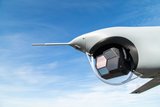
DroneSentry-X. (Photo: DroneShield)
The DroneShield US subsidiary is rapidly expanding its manufacturing footprint in the country and has expedited the process to double its domestic production capacity in at least four months.


The global counter-drone company DroneShield is moving aggressively to expand its manufacturing footprint in the US. Initially planned to require two years, the multimillion-dollar process to double its production capacity in the country is now intended to be concluded at least four months earlier.
Starting in September last year, the augmentation effort is now on track to be completed within the next six to nine months, according to the president of DroneShield’s American subsidiary, Ray Fitzgerald. He told Shephard that, in this timeframe, the new manufacturing equipment “will be up and banging on all cylinders”.
By expediting its
Our news & analysis is now part of Defence Insight®
A Basic-level or higher Defence Insight subscription is now required to view this content.


More from Air Warfare
-
![Czech Republic UAV focus: moderate market value masks limited supplier opportunities]()
Czech Republic UAV focus: moderate market value masks limited supplier opportunities
The Czech Republic’s shift towards smaller uncrewed aerial vehicles has reshaped its procurement priorities, leaving nearly three-quarters of the market unawarded. Yet with this value concentrated in just two programmes, the highest-value opportunities could contain a high level of risk.
-
![RAF Protector fleet grows as UK maritime surveillance role takes shape]()
RAF Protector fleet grows as UK maritime surveillance role takes shape
The RAF’s expanding Protector RG1 fleet could play a growing role in UK maritime surveillance following its first domestic operational sorties, with further aircraft deliveries scheduled through 2027.
-
![Leonardo details Proteus’s path to autonomous anti-submarine missions for the Royal Navy]()
Leonardo details Proteus’s path to autonomous anti-submarine missions for the Royal Navy
Leonardo’s integration of Shield AI’s Hivemind software could enable its Proteus uncrewed helicopter to conduct independent anti-submarine warfare missions, supporting the Royal Navy’s plans for a future hybrid air wing.
-
![Oshkosh and Grid Aero tie-up tests new model for scaling military UAS production]()
Oshkosh and Grid Aero tie-up tests new model for scaling military UAS production
By combining established manufacturing capacity with startup aircraft design, the partnership could offer an alternative approach to scaling military uncrewed aircraft production.