NATO boosts uncrewed usage and shifts on concept of operations based on lessons learned from Ukraine
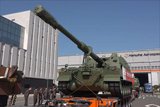
Crystal Arrow 2026 is taking place across large parts of Latvia. (Photo: author)
The war in Ukraine remains a focus of procurement, concepts of operation, tactics and training for NATO countries. The Crystal Arrow Exercise in Latvia, ongoing until 15 May, is a reflection of this.


Thousands of soldiers are taking part in NATO’s Crystal Arrow 2026 and Spring Warrior exercises in Latvia, which will see soldiers train in conventional warfare full-scale defensive operations alongside an evaluation of uncrewed equipment.
Around 2,500 soldiers and 500 pieces of equipment will take part in the Crystal Arrow 2026 exercise and the Spring Warrior exercise will involve more than 2,200 soldiers and around 300 pieces of equipment.
Crystal Arrow includes units from the Latvian Land Forces Mechanised Infantry Brigade, the NATO Multinational Brigade in Latvia, the National Guard’s 1st Riga Brigade, 2nd Vidzeme Brigade and 3rd Latgale Brigade. It
Our news & analysis is now part of Defence Insight®
A Basic-level or higher Defence Insight subscription is now required to view this content.




More from Land Warfare
-
![Billion-dollar Belgium deal for NASAMS creates multinational air defence system]()
Billion-dollar Belgium deal for NASAMS creates multinational air defence system
The National Advanced Surface-to-Air Missile System (NASAMS) is in service on five continents with more than 120 platforms delivered. The system will now form part of Belgium’s Blue Dome air defence system alongside new orders for Skyranger air defence and Thales radar systems.
-
![Poland land systems focus: €31 billion spending drive boosts domestic production ambitions]()
Poland land systems focus: €31 billion spending drive boosts domestic production ambitions
Poland’s potential €53 billion land procurement pipeline could give it one of Europe’s largest armoured vehicle fleets, with local production, technology transfer and future exports central to the strategy.
-
![A medium UGV market emerges as the US weighs up its options]()
A medium UGV market emerges as the US weighs up its options
The US is pursuing multiple UGV programmes, from commercial robotic platforms to new autonomy technologies. The combination of these efforts could prove key to turning ambition into operational capability.
-
![NATO looks for answers to overcome standards hurdles and improve procurement]()
NATO looks for answers to overcome standards hurdles and improve procurement
NATO is looking to artificial intelligence to provide integration between different C2 systems to create a common operational picture, potentially offering a faster route to interoperability than the slow-moving processes of NATO standards committees.