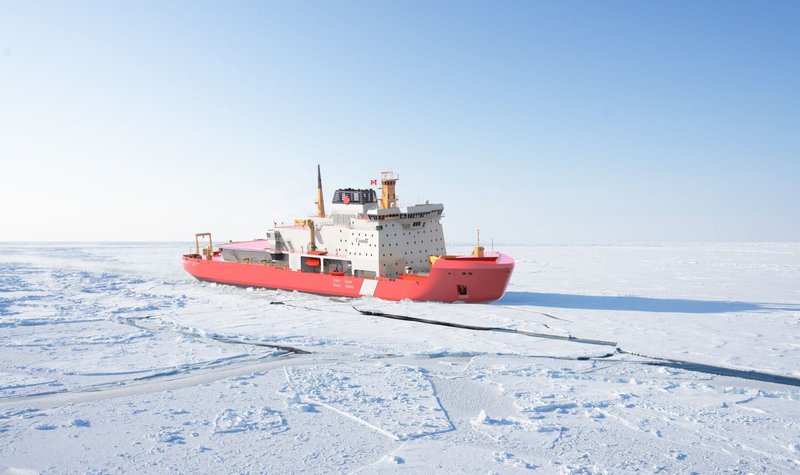
The Canadian Department of National Defence is evaluating communications and reconnaissance changes for CCGS Imnaryuaq’s expanded maritime security role, while retaining its 2032 acceptance target.
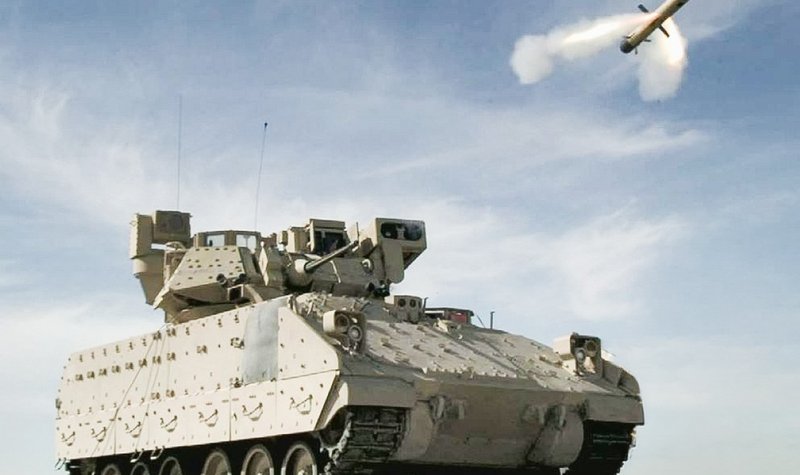
Rather than developing entirely new weapons, defence companies are looking to build on existing weapons and systems to deliver greater capability, control costs and accelerate fielding.
Israeli company Bird Aerosystems is close to inking a deal with its first customer for a newly-developed self-protection kit that shields an aircraft from heat-seeking …
Raytheon will produce next-generation encryption devices to protect military tactical data transmissions under a $32 million contract announced on 21 December. The system to be …
DataPath will provide satellite communications support services for the US Army's Global Tactical Advanced Communication Systems (GTACS) programme under a four-and-a-half-year contract estimated at $363 …
The first flight of the aircraft under development by Boeing and Saab for the US Air Force's (USAF's) T-X advanced pilot training programme has been completed, …
The Middle East region continues to play a major part in world politics, particularly when it comes to defence and security.Growing threats in the region …
Work on upgrading the Austrian Army’s GESI combat constructive simulation system is now complete and the system is ready for command and staff training, CAE …
Foreign military sales customers for the US F-16 aircraft are to benefit from improved tactical Link 16 communication capabilities for the aircraft. Rockwell Collins and …
The British Army’s multi-billion pound Watchkeeper unmanned aerial system (UAS) fleet should no longer be considered an ‘all-weather’ capability, following two crashes caused by flying …
Polaris has been selected to provide its DAGOR vehicle for Canada’s Ultra-Light Combat Vehicle (ULCV) requirement, the company announced on 20 December. The company will …