Defence activity propels Saab
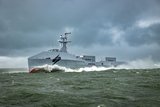
Saab obtained a follow-on capability order in Q3 2021 for the Swedish A26 Blekinge-class submarines. (Photo: Saab)
Nine-month financials reflect ‘high activity level in the defence business’ for Saab.


Saab posted a 29% year-on-year increase in orders for the nine months ended 30 September 2021, the Swedish defence and aerospace group announced on 22 October.
This total of SEK31.35 billion ($3.64 billion) was accompanied by an order backlog of SEK105 billion and a 19% headline increase in sales to SEK27.21 billion, which Saab stated was ‘driven by high activity level in the defence business’.
In Q3 alone, Saab won a large contract to modernise German Navy F123 frigates; a follow-on capability order for Swedish Navy A26 Blekinge-class submarines; an order from the US Army for Carl-Gustaf ammunition; and a contract to provide combat training solutions to Poland.
Operating income of SEK1.81 billion for the nine-month period exceeded the full-year 2020 total of SEK1.31 billion.
Micael Johansson, president and CEO of Saab, said that a weak civil aviation market, still affected by the impact of COVID-19, was more than offset by major defence orders in 2021 to date.
Johansson also referred to progress on the T-7A Red Hawk trainer aircraft programme in the US, where Saab is in the final stage of the Engineering, Manufacturing and Development phase.
However, he added: ‘The T-7A operations will continue to have a negative impact on earnings until we ramp up the production in West Lafayette.’



More from Defence Notes
-
![Patria OPTIME and ILIAS: Orchestrating operational readiness across every domain]()
Patria OPTIME and ILIAS: Orchestrating operational readiness across every domain
Patria OPTIME is a sustainment concept that integrates MRO and lifecycle services into one solution, powered by the ILIAS digital defence platform
-
![US military seeks common controllers for drones and robotic systems]()
US military seeks common controllers for drones and robotic systems
US Air Force, Army, Marine Corps and Special Operations Command initiatives signal demand for interoperable uncrewed systems control, creating opportunities for suppliers of hardware, software and integration services.
-
![“Engage with the operational problem”: how software innovation can boost UK defence]()
“Engage with the operational problem”: how software innovation can boost UK defence
In Conversation… Shephard’s Andrew White talks to Zafer Şen, CEO and co-founder of OBSS, about the future of command-and-control software in the age of artificial intelligence, and his company’s ambitions in the UK defence market.
-
![“Capital follows confidence” as defence courts private money]()
“Capital follows confidence” as defence courts private money
Outside investment and the direction in which venture money flows may reveal what defence will buy years before formal programmes begin.