Serco to support USN anti-terror effort under new technology services contract
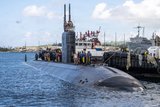
Under the contract Serco will also provide services for the Pentagon at naval bases across the globe.(Photo: Serco)
Serco has been awarded a $200 million contract by the US Naval Information Warfare Center Pacific to provide technology support services for anti-terrorism efforts, including deployment of the Physical Security Information Management System (PSIM).


Under the contract, Serco will continue to provide life-cycle sustainment of physical security/access control and C4I systems to ensure continuous operation and advancement of the PS2-EA, previously known as the Anti-Terrorism/Force Protection Electronic Surveillance Systems.
Additionally, Serco will provide these services for the Pentagon at naval bases across the globe. The scope of Serco’s work extends to installation, integration, testing and evaluation, maintenance, and supply/logistics support.
Additionally, Serco will be deploying the PSIM which is a smart coordinator that integrates data from various security systems and is designed to present information in a clear and accessible manner to the appropriate authorities.
Related Articles
UK looks to Serco to maintain and operate air defence radars
It is designed to provide security personnel with the tools needed to make informed decisions and efficiently manage a spectrum of security technologies, ensuring a robust and effective security ecosystem.
The contract is part of an eight-year, single-award IDIQ contract which was awarded in 2021 and has a five-year base period and one three-year option period with a contract ceiling value of $600 million. In June 2023 the company was awarded a $69 million contract to provide the same services.

You may also like
More from Naval Warfare
-
![Israeli Navy looks to expand as war reshapes future force requirements]()
Israeli Navy looks to expand as war reshapes future force requirements
Israel’s navy is preparing for a larger and more technically diverse role, but its ambitions could be impacted by supply chain restrictions, accelerating demand for domestic naval production as well as autonomous maritime capabilities.
-
![Quantum sensing gathers pace as navies eye undersea advantage]()
Quantum sensing gathers pace as navies eye undersea advantage
As AI dominates defence conversations, industry increasingly points to quantum sensing as the technology set to change submarine and uncrewed underwater vehicle operations.
-
![Competitive P17B tender marks a shift in Indian Navy frigate procurement]()
Competitive P17B tender marks a shift in Indian Navy frigate procurement
The Indian Navy's P17B programme is expected to combine greater weapons capacity with a competitive domestic construction model, although key systems could remain dependent on international supply chains.
-
![How France’s SNLE 3G programme is reshaping the naval nuclear industrial base]()
How France’s SNLE 3G programme is reshaping the naval nuclear industrial base
Extending far beyond a four-submarine replacement programme, France’s ballistic missile submarine effort is a decades-long industrial initiative designed to preserve the country’s ability to build and sustain nuclear-powered strategic platforms.
-
![Quantum Systems enters maritime domain with Baltic-focused USV and UUV]()
Quantum Systems enters maritime domain with Baltic-focused USV and UUV
Quantum Systems has launched into the maritime domain with Seavex and Subvex, aiming to close a Baltic Sea ISR gap opened by infrastructure sabotage.
-
![China’s mineral processing dominance exposes naval supply chain vulnerabilities]()
China’s mineral processing dominance exposes naval supply chain vulnerabilities
Competition for critical minerals, and China’s dominance of their processing, is emerging as a decisive factor in future naval procurement programmes.