South Korea air focus: $16.64 billion in as-yet-unawarded contracts up for grabs
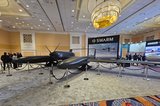
Manufactured by Korea Aerospace Industries (KAI), the KF-21 Boramae is a fighter aircraft that made its maiden flight in July 2022. (Photo: KAI)
South Korea’s military air market is the 12th largest in the world when it comes to unawarded procurement programmes, with an estimated US$7.50 billion potentially set to be awarded over the next decade.


New research from Shephard Defence Insight has revealed that South Korea’s military air market is worth an estimated US$53.19 billion. The findings also highlight the immediacy of the country’s as-yet-unawarded spending in the air domain, with a high proportion likely to be invested before the end of the 2020s.
Additionally, South Korea is expected to invest a comparatively high percentage of its future air spending on uncrewed aerial vehicles (UAVs), with partnerships with domestic suppliers representing one of the best opportunities for international manufacturers to access the country’s future UAV market.
Shephard’s analysis indicates that the value of unawarded opportunities for air programmes in South Korea is $16.64 billion. This positions the value of the nation’s air opportunities, which comprises fixed-wing aircraft, helicopters and UAVs, as the 12th largest in the world.
Related Articles
South Korea and Singapore partner with Shield AI to develop autonomous flight technologies
L3Harris selected for South Korea’s airborne early warning programme
AUSA 2025: GA-ASI and Hanwha to produce Gray Eagle STOL in South Korea
Compared with its regional rivals in Asia, the size of this open market makes the South Korean air market the third most valuable in the region, behind India ($83.26 billion) and Japan ($56.77 billion), but ahead of Australia ($12.04 billion), Taiwan ($8.77 billion), the Philippines ($8.07 billion) and Malaysia ($6.12 billion).
The most valuable open opportunities in South Korea are the Republic of Korea Air Force (ROKAF)’s $4.90 billion soon-to-be awarded procurement of four AEW&C aircraft; the $2.49 billion procurement of additional AH-64 Apaches; and the ROKAF’s forecasted $2.40 billion procurement programme to acquire loyal wingman UAVs that will operate alongside and augment the force’s KF-21 Boramae crewed fighter.
Ten-year spending plan
South Korea ranks 10th in the world regarding available air expenditure across the next decade (2025-2034), with an estimated $7.50 billion to be awarded.
This amount, however, will not be spent evenly across this period. South Korea’s forecasted annual spend in the air domain is expected to be frontloaded; beginning high at more than $1.2 billion per year until 2028, before reducing year-by-year to a low of about $250 million annually in 2032, 2033 and 2034.
As shown above, this spending pattern differs from the regional average of other Asian countries, which is expected to remain much more even, gradually rising throughout the 10 years. Compared to other nations, the immediacy of South Korea’s available air spending can be further evidenced when the 10-year period is split into two.
Of the country’s $7.50 billion available air spending over the next decade, $5.90 billion (78.7%) is expected to be awarded in the first five years, between 2025 and 2029. Compared to the other nations with the highest available air spend across this period, South Korea’s is the most frontloaded, with the UK and Spain – the second and third nations – estimated to spend a comparable 71.71% and 66.43% respectively in 2025-2029.
A prime example of the immediacy of the country’s available air domain spending is the previously mentioned $4.90 billion procurement contract that the ROKAF is expected to award for AEW&C aircraft in the next few months, having recently selected L3Harris’s Global 6500 aircraft, equipped with Israel’s ELTA sensor, as its next-generation early warning platform.
Helicopter and UAV focus
South Korea’s significant and soon-to-be awarded investment in AEW&C aircraft forms a major part of its total available $16.64 billion air spend on fixed-wing aircraft, at a projected $8.08 billion (48.60%). The fixed-wing aircraft category also includes crewed fighters and trainers.
While this represents a relatively large proportion of the country’s overall spend, South Korea only ranks eighth out of the 12 biggest forecasted spenders on this category. Regional rivals India and Japan are set to spend more than 70% of their respective as-yet-unawarded aircraft budget on fixed-wing crewed aircraft.
The comparably low spending on fixed-wing aircraft will allow South Korea to invest more in other capabilities. As shown above, the country is expected to invest $3.93 billion (23.60%) of its as-yet-uncontracted air spend on helicopters, which is the fourth-highest comparative spend on the capability out of the highlighted nations.
This follows years of minimal expenditure in this area, as the nation awaits deliveries from multiple contracts awarded earlier in the decade, including two batches of the domestically manufactured Light Armed Helicopter (LAH) and the CH-47F.
South Korea is forecasted to spend $4.62 billion (27.80%) on UAVs, representing the third-highest proportion to be invested on the category behind Saudi Arabia and Germany. Saudi Arabia looks set to invest $9.45 billion on a mammoth procurement programme to acquire an estimated 200 MQ-9Bs from General Atomics (GA), while Germany has various high-value drone opportunities including its loyal wingman requirement that Shephard values at $6 billion.
Uncrewed opportunities for international partners
The above data suggests that the value of South Korea’s UAV opportunities is disproportionately high compared to other top-spending nations in the air domain; a factor which has attracted many domestic and international suppliers. Other data supports this. Despite South Korea’s uncontracted air market being only the 12th largest in the world, the country’s uncontracted UAV market ranks eighth globally.
As shown above, most of South Korea’s unawarded UAV market value belongs to three programmes: the ROKAF’s aforementioned loyal wingman procurement worth $2.4 billion; the ROKAF’s $627.2 million acquisition of an estimated 40 stealth UCAVs under the Kaori-X programme; and the Republic of Korea Navy (ROKN)’s $437.6 million requirement to acquire carrier-based fixed-wing UAV assets.
Due to the highlighted value of unawarded UAV contracts in South Korea, which is evidently concentrated into these three efforts, it is unsurprising that two – the KF-21 loyal wingman and the carrier-based UAV effort – have attracted international partners. Korean Air Aerospace Division (KAL-ASD) and Korean Air Industries (KAI) are spearheading rival bids in the ROKAF’s loyal wingman programme, attracting international partnerships.
KAL-ASD initially offered the Korean Air UAV System – Loyal Wingman (KUS-LW) for the requirement, which was later developed into the Low Observable Wingman UAV System (LOWUS), first shown in February 2025 and, more recently, at ADEX 2025. In September 2025, Shephard reported that KAL-ASD had partnered with Anduril as part of the US company’s wider expansion into Asia-Pacific.
According to the company, the partnership will see the two work to co-develop UAVs, license existing Anduril products for use in the region, and “explore potential” for setting up a manufacturing and production facility in South Korea. Due to this deal, Shephard believes it is highly likely that the company’s Lattice autonomy system could be involved in KAL-ASD’s bid.
KAI’s bid took longer to reveal. In March 2025, Shephard reported that Shield AI had partnered with KAI, with the deal likely resulting in Hivemind autonomy software being incorporated into any KAI loyal wingman. At ADEX 2025, KAI revealed more information on its CCA offerings. It unveiled the medium CCA (MUCCA), a development of the unnamed UCAV it appeared to be developing for the requirement.
Similarly, the ROKN’s extensive UAV programme has also attracted international partners. The most likely bid for this requirement is General Atomics Aeronautical Systems (GA-ASI), which has partnered with Hanwha Aerospace to co-develop and co-produce the Gray Eagle STOL, which has already been tested from ROKN’s vessels. Indeed, Shephard reported at AUSA 2025 that the UAV would be built in South Korea in a newly established facility.
Smaller, already awarded procurements highlight the South Korean UAV market’s openness to international suppliers, particularly when partnering with domestic firms. Last year, the Defense Acquisition Program Administration (DAPA) contracted the Austrian company Schiebel to supply its Camcopter S-300 under a procurement estimated to be worth $107.5 million. The company partnered with Hanwha Systems, which was to integrate the UAV into the ROKN vessels.
Related Programmes in Defence Insight
KF-21 Loyal Wingman [South Korea]
Carrier Fixed-Wing UAV [South Korea]
Related Equipment in Defence Insight


More from Country-focused updates
-
![India’s rotary-wing capability gap grows as IMRH programme delays persist]()
India’s rotary-wing capability gap grows as IMRH programme delays persist
With IMRH and DBMRH potentially years from service, India faces a widening rotary-wing capability gap that could drive further foreign purchases even as HAL and Safran build the foundations of an indigenous successor.
-
![US Navy moves EA-18G Growler Block II electronic-attack upgrade into full-rate production]()
US Navy moves EA-18G Growler Block II electronic-attack upgrade into full-rate production
A US$184.25 million contract for Next Generation Electronic Attack Units advances the Growler’s modernisation as the US Navy confronts ageing systems, parts shortages and obsolescence.
-
![Australian industry programme builds pipeline for Virginia-class sustainment]()
Australian industry programme builds pipeline for Virginia-class sustainment
Australian businesses can now bid to support Virginia-class submarine sustainment in Western Australia, as momentum around the Henderson Defence Precinct also builds.
-
![South Korea, Japan and Turkey vie for US shipbuilding access in future frigate contest]()
South Korea, Japan and Turkey vie for US shipbuilding access in future frigate contest
Washington’s search for a foreign-built frigate could hand South Korea, Japan and Turkey a larger prize than a double-hull order: a foothold inside the US shipbuilding industrial base.