February drone digest: US manufacturers face the Gauntlet and find success abroad
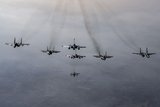
Through the DDP, the Trump administration is aiming to bolster US drone manufacturing to arm combat units with low-cost attack UAVs. (Photo: US Department of Defense)
The US launched the Gauntlet test in February as part of its accelerated attack drone procurement effort while also exploring various naval capabilities that could lead to procurements down the line. Shield AI’s V-Bat, meanwhile, has been stirring up global interest.


Earlier this month, the Pentagon issued an update on the Drone Dominance Program (DDP), a US$1.1 billion effort to acquire hundreds of thousands of first-person view (FPV) attack drones. The initiative is the tentpole programme under Defense Secretary Pete Hegseth’s push to increase the number of uncrewed aerial vehicles (UAVs) in the US armed forces.
The Pentagon announced that 25 companies were participating in an event dubbed “the Gauntlet”, which would see military operators flying and evaluating low-cost UAVs to help determine which companies would receive a share of $150 million in prototype delivery orders, to be awarded in March.
Later, the
Our news & analysis is now part of Defence Insight®
A Basic-level or higher Defence Insight subscription is now required to view this content.


More from Country-focused updates
-
![Canada assesses security equipment changes for Polar Icebreaker Imnaryuaq]()
Canada assesses security equipment changes for Polar Icebreaker Imnaryuaq
The Canadian Department of National Defence is evaluating communications and reconnaissance changes for CCGS Imnaryuaq’s expanded maritime security role, while retaining its 2032 acceptance target.
-
![India’s military integration drive faces interoperability hurdles]()
India’s military integration drive faces interoperability hurdles
Senior military leaders have highlighted the need for interoperable systems, common data standards and closer cooperation between India's armed services.
-
![All eyes on Royal Navy’s Type 93 market engagement as industry prepares bids]()
All eyes on Royal Navy’s Type 93 market engagement as industry prepares bids
Responses are due by 29 October as the Royal Navy tests the market, with BAE Systems’ Herne and MSubs’ Excalibur setting up a contest where payloads may decide the winner.
-
![US Navy’s MQ-25 Stingray approaches carrier-integration tests]()
US Navy’s MQ-25 Stingray approaches carrier-integration tests
Boeing has outlined its upcoming precision-landing and carrier-airspace trials as MQ-25 manufacturing shifts towards Illinois, with initial Lot 1 deliveries expected in 2029.