Brazil releases requirements for ASTROS simulator
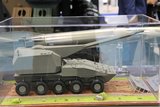
The SIS-ASTROS system will simulate the operation of all types of ammunition ASTROS fires. (Photo: Brazilian Army)
The new SIS-ASTROS system will enable improvements to Brazilian artillery training.


Having identified the need to improve its artillery training, the Brazilian Army on 7 January released operational requirements for a simulator system for the Artillery Saturation Rocket System (ASTROS).
The document with prerequisites was issued by Terrestrial Operations Command (COTER) in the Brazilian Army. Although it did not disclose a timescale for the project, COTER defined mandatory and optional features for the simulator.
Called SIS-ASTROS, the system must feature a control station for the simulation network; fixed and mobile stations; and seven operation cabins (one each for C2 vehicles, C2 posts and fire control units, plus four for universal multiple launcher vehicles).
‘The
Our news & analysis is now part of Defence Insight®
A Basic-level or higher Defence Insight subscription is now required to view this content.


More from Training
-
![Cubic tailors mortar simulator for the US Army]()
Cubic tailors mortar simulator for the US Army
The company’s mortar trainer received improvements based on soldier’s feedback.
-
![Saab expands footprint in the US]()
Saab expands footprint in the US
The company will operate in two new locations in the coming years to better support US services.
-
![How terrain management capabilities can improve military training]()
How terrain management capabilities can improve military training
This type of tool provides more realistic training easing the incorporation of new scenarios that accurately represent the threats of the battlefield.
-
![I/ITSEC 2024: Australian Army approaches second phase of countermining training]()
I/ITSEC 2024: Australian Army approaches second phase of countermining training
The Engineering Corps has been conducting individual instruction using FLAIM Systems’ Sweeper and should start collective deployments in 2025.
-
![I/ITSEC 2024: Zeiss introduces Velvet 4K SIM projector for night flight simulation]()
I/ITSEC 2024: Zeiss introduces Velvet 4K SIM projector for night flight simulation
The next-generation platform is motion-compatible and can be used in OTW and NVG applications.
-
![I/ITSEC 2024: Saab introduces UAV live training capability]()
I/ITSEC 2024: Saab introduces UAV live training capability
The system can be used to prepare soldiers for both drone offensive operations and CUAS missions.