Raytheon provides third-generation FLIR sensor


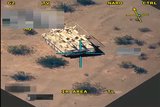
Raytheon has developed, produced and delivered its first third-generation FLIR sensor system for the US Army.
The 3rd Gen FLIR system provides individual troops with four fields of view and the ability to see across long- and mid-range IR bands. This enables users to see through darkness, fog, rain, smoke and snow conditions.
Sam Deneke, VP of land warfare systems at Raytheon, described the technology as a ‘breakthrough’. He compared the transition from second- to third-generation FLIR as ‘like moving from a standard tube television to high-definition 8K’.
As part of our promise to deliver comprehensive coverage to our Defence Insight and Premium News subscribers, our curated defence news content provides the latest industry updates, contract awards and programme milestones.

You may also like

More from Modernised Situational Awareness Special Report
-
![US augments EW defence with network modernisation]()
US augments EW defence with network modernisation
The US Army is working to modernise its tactical networks to enable expeditionary and mobile operations, and bolster its resilience against near-peer EW and cyber …
-
![Elbit trials mini-UAS on Seagull]()
Elbit trials mini-UAS on Seagull
Elbit Systems has integrated a mini-UAS on its Seagull USV. Trials in recent weeks were aimed at demonstrating an extra mission set for Seagull beyond …
-
![USAF orders Litening pods with colour capability]()
USAF orders Litening pods with colour capability
The USAF has placed an initial order with Northrop Grumman for the latest version of the Litening advanced targeting pod. The pod includes full-colour digital …
-
![Romanian Pumas light up Mali with BrightNite]()
Romanian Pumas light up Mali with BrightNite
The Romanian Air Force’s contribution to the UN-led peacekeeping mission in Mali has been greatly enhanced by the use of four BrightNite-equipped IAR 330 Puma …
-
![France aims to buy E-2D Advanced Hawkeye]()
France aims to buy E-2D Advanced Hawkeye
France intends to double its fleet of Hawkeye AEW&C; aircraft with a $2 billion potential FMS deal for three E-2D Advanced Hawkeye variants and related …
-
![Israel launches new satellite]()
Israel launches new satellite
Israel Aerospace Industries (IAI) announced on 6 July the successful launch of a new military satellite. Developed by IAI with the Space Administration in the …