How AI and robotics drive innovation in land-based defence
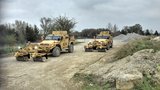
Pearson Engineering's Warrior-based WEEVIL platform has recently passed initial trial phases as a robotic minefield breaching asset. (Photo: Pearson Engineering)
The future on the frontlines: automation and AI isn’t just about improving efficiency or driving down labour cost - for Pearson Engineering it’s everything.


Enjoy free access to this sponsored article, all content provided by Pearson Engineering.
With a continuing investment programme of over £3 million in enhancing cutting-edge robotics facilities and software talent at their Armstrong Works site in Newcastle, Pearson Engineering are rolling out a suite of innovations that protect life and create edge in the battlefields of tomorrow.
Combining advanced robotics, AI and their unique engineering capabilities, they are delivering on their mission to help Britain preserve life and pursue victory.
Upgrade and upskill
Critical to delivering on the promise of automation and robotics is finding ways to upgrade and upskill the kit and personnel their partners have already invested in. A great example of this approach - taking what they already have, what already works, and using advanced engineering to make it better and save lives - is the new Minefield Breaching Modular Mission Payload.
The MBMMP, proven during trials in the United States, brings Pearson Engineering’s established mine clearance technology to robotic combat vehicles (RCVs), allowing for uncrewed ordnance clearing. The MBMMP can be fitted to a wide range of existing RCVs, meaning that Britain and her allies can repurpose existing technology to protect lives by removing the need for human operators being physically present. This approach maximises efficiency and flexibility whilst - most importantly - protecting allied troops from harm.
The potential of robotics to shape the conflicts of tomorrow can also been seen in the new Warrior-based WEEVIL, which has recently passed initial trial phases as a robotic minefield breaching asset. WEEVIL comprises a specially adapted full-width mine plough, building on Pearson Engineering’s decades of expertise in the field of minefield breaching to provide an optimised solution for Warrior, a much lighter vehicle than typical hosts.
The vehicle and plough are controlled by Pearson Engineering’s BEACON remote-control system which is designed to convert legacy vehicles into uncrewed platforms, also integrated and tested on the US Army’s Assault Breacher Vehicle (ABV). What this means on the battlefield is fewer lives at risk and massively increased capacity to clear ordnance and to restore conflict zones to safety. As the then Minister for the Armed Forces Luke Pollard commented at the time of the programme launch:
“It won’t be a moment too soon when we no longer have to send our people directly into harm’s way to clear minefields. This kit could tackle the deadly threat of mines in the most challenging environments, while being remotely operated by our soldiers several miles away. It demonstrates British innovation, by British organisations, to protect British troops.”
Threat neutralisation
And Pearson Engineering’s ambitions for improving the safety of British and allied soldiers don’t stop with developing crewless solutions for clearance. They are bringing together their unparalleled understanding and experience of ordnance clearance with the promise of AI to map and neutralise threats.
Their Threat-Sense technology uses deep learning algorithms to autonomously detect anti-tank and anti-personnel mines and indicate where threats are present - no matter the terrain. It works by simultaneously analysing video streams, in real time, giving users the tactical edge on the battlefield and keeping them safe from hidden harms.
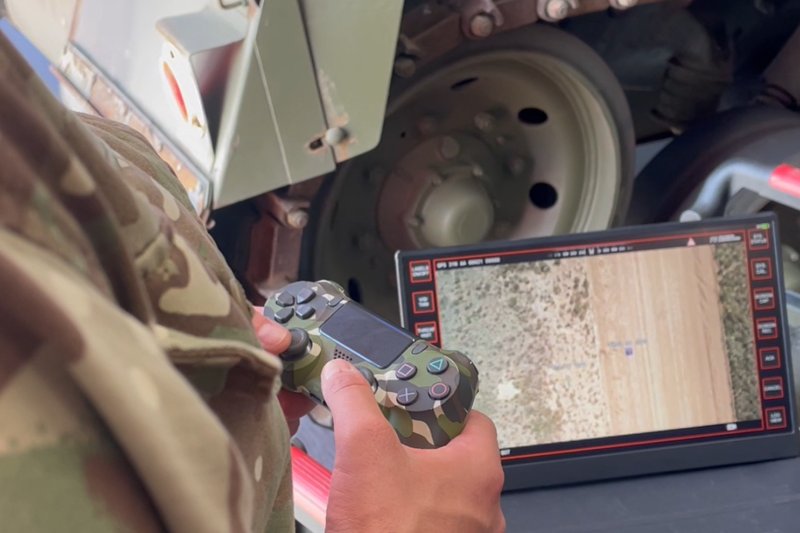
Threat-Sense already protects on the ground, but now Pearson Engineering are working with partners to ensure that it can protect from the skies too. In collaboration with Skydio, the leading US-based manufacturer of autonomous drones, they are integrating Threat-Sense into uncrewed systems. The partnership delivers enhanced battlefield awareness by looking ahead of ground forces, identifying and mapping explosive surface-laid threats in real-time.
This marks a significant step forward in battlefield safety and autonomous reconnaissance for allied forces and is another example of Pearson Engineering’s success in marrying their deep experience with cutting-edge innovation.
As Pearson Engineering’s CEO Ian Bell commented, celebrating the fact that the Skydio collaboration is approved for NATO use:
“Threat-Sense was designed to give soldiers critical situational awareness in mine-threat environments. Partnering with Skydio allows us to extend that capability into the air, offering a new layer of force protection and intelligence that’s both autonomous and operationally proven. This is another example of our ongoing programme of innovation in robotics and AI delivering vital tactical advantage to allied forces.”
Smart application
The battlefield will always be a dangerous place. But through the smart application of robotics and AI Pearson Engineering can reduce the threat to British soldiers, to their allies and to non-combatants.
As the global leader in mine clearance technologies, Pearson Engineering believe not only are they best placed to develop the technology of the future, but also that they have a responsibility to do so. That is why they are investing in the innovation that keeps allied forces safer today and safer tomorrow. Whether it is through interoperable upgrades to existing vehicles, new collaborations to reduce risk to life or integrating their technology with exciting advances in drone technology - they never stand still. Because to stand still in technology is to cede the advantage to the enemy.
For Pearson Engineering and their customers, innovation is a matter of life and death. Find out more here.


More from Industry Spotlights
-
![Patria OPTIME and ILIAS: Orchestrating operational readiness across every domain]()
Patria OPTIME and ILIAS: Orchestrating operational readiness across every domain
Patria OPTIME is a sustainment concept that integrates MRO and lifecycle services into one solution, powered by the ILIAS digital defence platform
-
![“Start planning much earlier”: delivering defence support in an era of disruption]()
“Start planning much earlier”: delivering defence support in an era of disruption
In Conversation… The geopolitical landscape is increasingly uncertain, with the UK and its allies confronting the most unpredictable international environment for decades. To adapt, defence readiness must begin long before assets reach the front line, forging a resilient support enterprise that can thrive in a time of ongoing disruption, argue the partners of Team ORION.
-
![Patria NEMO Navy: Unlocking unmatched versatility and protection for modern naval forces]()
Patria NEMO Navy: Unlocking unmatched versatility and protection for modern naval forces
The Patria NEMO Navy mortar system marks a revolutionary advance in maritime defence technology, offering unparalleled benefits to customers who demand performance, adaptability and safety in their naval operations.
-
![“Communicating at mission speed”: why data security is essential for operational success]()
“Communicating at mission speed”: why data security is essential for operational success
In conversation… Everfox’s Chairman and Chief Executive Officer Dave Wajsgras and Managing Director, International, Colin McKinty discuss the critical importance of information security in defence, minimising insider risk and the company’s international growth strategy with Shephard’s Andrew White.
-
![“Engage with the operational problem”: how software innovation can boost UK defence]()
“Engage with the operational problem”: how software innovation can boost UK defence
In Conversation… Shephard’s Andrew White talks to Zafer Şen, CEO and co-founder of OBSS, about the future of command-and-control software in the age of artificial intelligence, and his company’s ambitions in the UK defence market.
-
![“A survivable architecture”: why resilient communications are no longer a luxury]()
“A survivable architecture”: why resilient communications are no longer a luxury
In Conversation… Military communications must adapt to a rapidly evolving battlespace, characterised by decentralised forces and an increasingly contested electromagnetic spectrum. To survive and thrive, it is vital to prioritise resilient systems and networks, Faisal Munir, President – Mission-Critical Communications at L3Harris Technologies, told Shephard’s Gerrard Cowan.