The US is pursuing multiple UGV programmes, from commercial robotic platforms to new autonomy technologies. The combination of these efforts could prove key to turning ambition into operational capability.
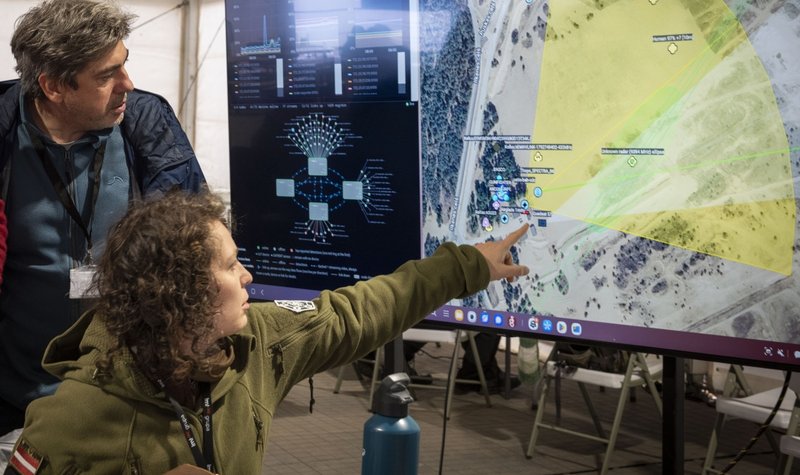
NATO is looking to artificial intelligence to provide integration between different C2 systems to create a common operational picture, potentially offering a faster route to interoperability than the slow-moving processes of NATO standards committees.
Roman Köhne, CEO of Rheinmetall's Weapon and Ammunition Division, discusses the company's announcements at Eurosatory 2026, including developments in defence technology, precision systems, industrial ...
As the German Army considers the future direction of its next-generation Command, Control (C2) and Communications capabilities, interested industry players are positioning to provide mounted …
Grant Turnbull, editor at Shephard Media, highlights some of the key technologies at this year's AUSA, including short range air defence systems, UGVs and active …
Science Applications International Corp. (SAIC) has announced it will develop combat vehicle prototypes to meet the US Army’s Mobile Protected Firepower (MPF) requirement. The announcement on 5 …
Saudi Arabia and Russia have signed a principal agreement that could lead to a significant arms deal between the two countries, potentially valued at $3 …
As Shephard prepares for this year's AUSA exhibition in Washington DC, Land Warfare International editor Grant Turnbull sits down with Beth Maundrill to discuss the …
As the US Army looks to retain its overmatch capabilities with various new vehicle programmes ad modernisations, Shephard looks at some of the key developments for the …
Rheinmetall has entered into a global cooperation agreement with Paravan to advance autonomous driving technologies. The companies will work to develop semi- and fully autonomous …
General Dynamics Ordnance and Tactical Systems (GD-OTS) has received a $17 million contract from the US Army for production of the 40mm M781E1 Low Velocity …