NATO experiments with solutions to integrate networks, AI and uncrewed systems
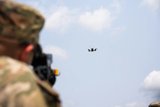
A crewed-uncrewed team tests networking systems during DiBaX 2025. (Photo: LMT)
During the latest edition of the NATO DiBaX, the alliance tested multiple capabilities to inform requirements for future efforts.


NATO member states have been pursuing diverse types of solutions to better integrate their communication networks with artificial intelligence (AI) and uncrewed capabilities in order to prepare troops and assets for deployment in future complex operational environments.
As part of its effort, the alliance concluded in November the latest edition of its annual Digital Backbone Experimentation (DiBaX 2025) at the Latvian National Armed Forces’ 5G test environment for defence innovations at Camp Ādaži.
The experiments were intended to support refining capability requirements for future programmes and advance interoperability towards equipment standardisation across the NATO nations.
Warren Low, director of DiBaX at NATO
Already have an account? Log in
Want to keep reading this article?


More from Defence Notes
-
![Golden Dome for America hits one-year mark but key questions remain on its progress]()
Golden Dome for America hits one-year mark but key questions remain on its progress
Integration issues, bureaucracy and undefined policies and authorities could hamper the full implementation of the “shield” to defend the US territory against aerial threats.
-
![US Air Force pushes Sentinel’s initial capability to early 2030s despite China’s nuclear progress]()
US Air Force pushes Sentinel’s initial capability to early 2030s despite China’s nuclear progress
While the US struggles to modernise the 50-year-old land leg of its nuclear triad, China has been rapidly developing and fielding new nuclear capabilities.
-
![New opportunities for defence firms as EU steps up support for Ukraine]()
New opportunities for defence firms as EU steps up support for Ukraine
The European Commission is looking for startups and other innovators to address challenges across the land, air and sea domains.
-
![Why small guns have been critical to layered CUAS architectures]()
Why small guns have been critical to layered CUAS architectures
Multiple countries have been deploying small arms as the last line of drone defence due to their multiple operational and tactical advantages.
-
![Singapore Airshow 2026: ST Engineering hints at export success for AME assault rifle family]()
Singapore Airshow 2026: ST Engineering hints at export success for AME assault rifle family
The Singapore-based technology company unveiled its new rifle family at this week’s airshow. Chen Chuanren spoke with the ST Engineering’s head of small arms to find out more about how the weapons have been refined.
-
![High tension in the High North – a wake-up call for NATO’s future Arctic defence efforts?]()
High tension in the High North – a wake-up call for NATO’s future Arctic defence efforts?
Any potential ‘Arctic Sentry’ mission would be months in the planning, but with tensions high in the region given the US’s push for Greenland, NATO countries will need to continue to emphasise their commitment to the region, analysts have said.