How the use of artificial intelligence will affect the US Coast Guard’s acquisitions
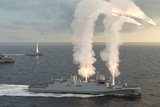
Human-machine teaming will be a critical element of the USCG’s future purchases. (Image: US Air Force)
The USCG is pursuing AI tools to improve the way the service conducts its procurement and fielding processes.


The US Coast Guard (USCG) is seeking artificial intelligence (AI) tools as part of its effort to reduce bureaucracy and accelerate the procurement and fielding of capabilities. The acquisition “Superhighway” will look to use future AI solutions to enhance the efficiency and quality of the management processes of acquisition programmes.
In order to identify potential suppliers for the AI high-velocity systems, the branch issued a request for information (RfI) on 21 November, with a deadline of 2 December. According to the solicitation papers, the service is pursuing “commercially available and emerging technologies that can address specific challenges” within automation and standardisation of its current
Our news & analysis is now part of Defence Insight®
A Basic-level or higher Defence Insight subscription is now required to view this content.


More from Naval Warfare
-
![Quantum Systems enters maritime domain with Baltic-focused USV and UUV]()
Quantum Systems enters maritime domain with Baltic-focused USV and UUV
Quantum Systems has launched into the maritime domain with Seavex and Subvex, aiming to close a Baltic Sea ISR gap opened by infrastructure sabotage.
-
![Suppliers await next step in Australia’s mine warfare transition]()
Suppliers await next step in Australia’s mine warfare transition
Australia’s mine countermeasure capability remains in flux as the Huon-class nears retirement, but accelerated investment in autonomous systems is opening a path for industry.
-
![Can the US Navy ask Indo-Pacific allies to do more while training with them less?]()
Can the US Navy ask Indo-Pacific allies to do more while training with them less?
As the Iran War draws US ships and marine corps units away from the Indo-Pacific, curtailed exercises and a temporary carrier gap are exposing tensions between Washington’s demand for more self-reliant allies and the joint training needed to realise that ambition.
-
![How could Rheinmetall’s GMF 140 fit with ongoing programmes in North America?]()
How could Rheinmetall’s GMF 140 fit with ongoing programmes in North America?
With Canada committed to its River-class replacement and the USN pursuing a lower-cost frigate, Rheinmetall will need to demonstrate where the GMF 140 can fill a capability gap in the North American fleet.
-
![Australian industry programme builds pipeline for Virginia-class sustainment]()
Australian industry programme builds pipeline for Virginia-class sustainment
Australian businesses can now bid to support Virginia-class submarine sustainment in Western Australia, as momentum around the Henderson Defence Precinct also builds.