Joining forces: CAE and L3Harris Military Training (Sponsored)
CAE’s acquisition of L3Harris’ Military Training business, including Link, brings a storied history of the simulation industry together while paving the way for a bright future.


This article is brought to you by CAE.
It was nearly a century ago that Edwin Link invented the ubiquitous Link Fight Trainer, or “Blue Box”, the ground-breaking pilot trainer that arguably helped pave the way for allied victory in World War II. More than 500,000 allied pilots trained on the Link trainers, the pioneering predecessor to the flight simulators we know today.
Following in the footsteps of Link’s success came a fellow giant in the simulation and training world, Luther Simjian, a life-long inventor who, as well as inventing the ATM, founded Reflectone in 1939. During the Second World War, the company pioneered and developed state-of-the-art training equipment for aviators.
Last but not least, in 1947 Ken Patrick, an ex-Royal Canadian Air Force officer, founded Canadian Aviation Electronics, now simply known as CAE. Initially, the company focused on the repair and overhaul of communications equipment and then irreversibly entered the simulator business in 1952 after winning a contract from the Royal Canadian Air Force to provide flight simulators for the Avro Canada CF-100 Canuk.
These three pioneers started the companies that have collectively accumulated nearly 250 years of simulation and training experience, but their legacy is not over. Rather, their work is now being synchronised in a way not seen before, future-proofing a near quarter millennia that these three pioneers contributed to the simulation industry.
Founders of simulation
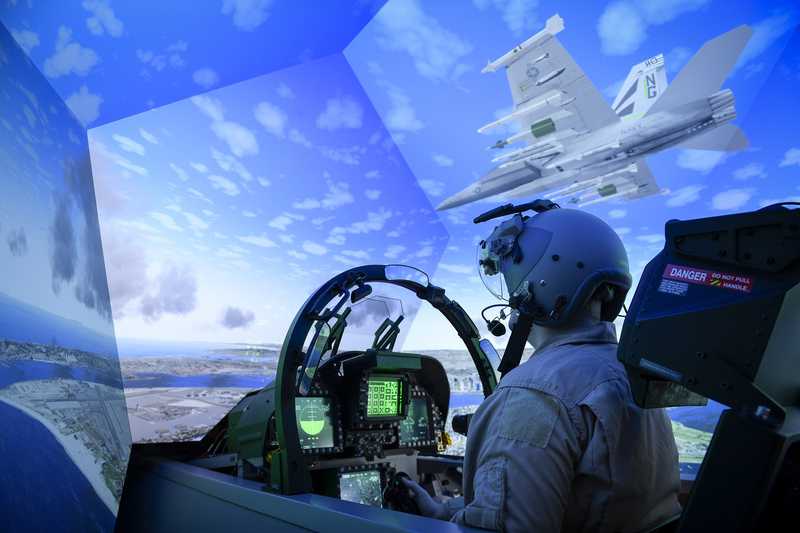
For the first time in the history of the training and simulation industry, the legacy of all three trailblazers now sit under one roof.
This began in 2001 when CAE purchased Reflectone, which BAE Systems owned at the time. Fast forward another 20 years and CAE’s largest acquisition ever – acquiring L3Harris’ Military Training business in 2021 – has brought the legacy Link under the CAE family once again.
“I take pride that we’re standing on the shoulders of giants. CAE Defense and Security is going to honour that legacy and continue to move forward as the only global, pure play, platform-agnostic training and simulation provider in the world,” said Dan Gelston, Group President, Defense & Security, CAE. “Recognizing history helps an organization better understand the present and prepare for the future. CAE’s combined history of innovation will help us deliver on the training required for today’s mission, while advancing the capabilities to prepare for tomorrow’s fight.”
This legacy also helps set CAE apart from competitors, boosting its already market-leading portfolio of training and simulation solutions. Training and simulation runs through CAE’s DNA – it’s our “raison d’être” -- and this focus positions CAE well for the company’s future.
The acquisition of L3Harris’ Military Training business, including Link and Doss Aviation, is highly complementary to what CAE already offers, as each of the company’s portfolios supplement that of the other, delivering critical mass within key target markets.
For example, in the air domain, CAE has a significant pedigree of experience in transport and tanker aircraft, while Link is a leader on fighter and bomber platforms. In the maritime domain, CAE specialises in surface ship training while Link brings subsurface training experience.
Additionally, Link focused primarily on the United States market and US foreign military sales while CAE was a global-oriented company with a significant footprint in many countries around the world. This established international presence will help CAE leverage the insertion of new technologies from Link into these markets.
“With this acquisition, we identified a unique opportunity, one that accelerated our strategy and incorporated a company that is highly complementary yet similar in culture, which was very important to us,” Gelston added.
Shaping the future
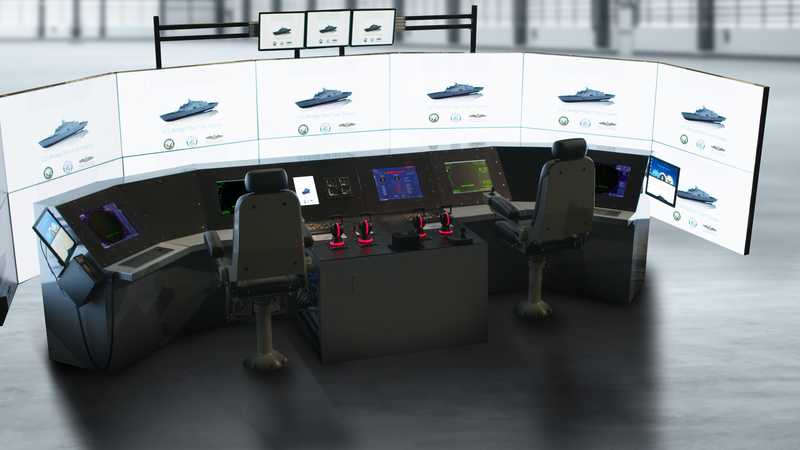
Looking to the future, there are a wealth of opportunities in defence and security for CAE as it looks to leverage its new and expanded strengths for its customers.
The acquisition has accelerated CAE’s presence in the vitally important U.S. market, doubling its size and making the company the largest platform-agnostic provider of training and simulation solutions.
The additional capabilities and platform experience also bolster CAE’s already strong international presence. There are significant opportunities in Canada, Europe, the Middle East and Indo-Pacific – all markets where CAE has a strong and established footprint.
It is CAE’s customer-focused training and simulation solutions - as well as its application of new disruptive technologies - that makes it a key contender in these markets.
This includes preparing defence and security forces for emerging threats, including near-peer adversaries that are at the forefront of strategic concern, as well as the pervasive threat of terrorism and asymmetric warfare that has defined much of the 21st century.
The integration of all of CAE’s capabilities and adoption of new technologies will be the facilitator of this success, in particular, CAE’s focus on enabling integrated multi-domain training incorporating full digital immersion that will increase customer’s access to high-fidelity synthetic environments.
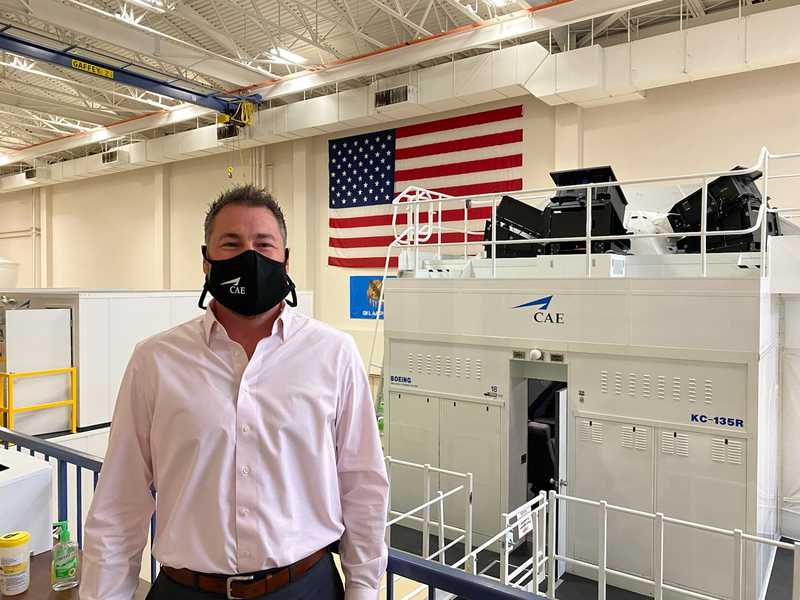
“The future is not just more training in simulators, but more training in synthetic environments,” Gelston noted. “The scale and complexity of multi-domain operations combined with time and cost considerations dictates the need for doing more in the virtual world.”
He adds it is no longer one platform and one domain in which operators need to conduct training. Instead, it must be a coordinated effort across multiple platforms, battlespaces and domains, and synthetic training is crucial to that.
“That’s why I’m excited about the [Link] acquisition, building on the legacy of our simulation and training founders that paved the way for where CAE is today,” Gelston added.
“As you look at our modelling and simulation experience and expertise, I think we have solidified our position as a company capable of helping our customers prepare for any fight they may face in the future.”



More from Industry Spotlights
-
![Orchestrating operational readiness across every defence domain]()
Orchestrating operational readiness across every defence domain
Are all systems ready for the next mission? Have upgrades been applied? Are all assets aligned to deploy together, on time and fully prepared? In modern defence operations, readiness is no longer measured platform by platform. It is measured by how well people, assets, data and decisions move together — across land, sea and air.
-
![Extending mission readiness: where XR adds real value in pilot, crew and maintenance training]()
Extending mission readiness: where XR adds real value in pilot, crew and maintenance training
Extended reality (XR) is becoming increasingly relevant in military aviation training, adding a flexible layer to an integrated ecosystem spanning the pilot, crew, and maintenance domains.
-
![Dominating the spectrum: ASELSAN’s EW capabilities take center stage at MSPO 2026]()
Dominating the spectrum: ASELSAN’s EW capabilities take center stage at MSPO 2026
ASELSAN is showcasing its advanced electronic warfare (EW) capabilities at MSPO 2026, highlighting technologies designed to detect, analyse, disrupt and deceive threats across increasingly contested electromagnetic environments.
-
![“Creating a decision advantage”: how C-UAS is evolving to reduce the operator burden]()
“Creating a decision advantage”: how C-UAS is evolving to reduce the operator burden
In Conversation… Speaking to Shephard’s Gerrard Cowan, Dr Brian Shand, Director – Advanced Concepts & Technology at L3Harris, explains how, as operators face growing numbers of low-cost drones, C-UAS providers must focus on reducing operator workload, transforming fragmented sensor data into effective decision-making.
-
![Shield the warfighter, win the fight (video)]()
Shield the warfighter, win the fight (video)
BAE Systems’ Intrepid Shield™ approach delivers full-spectrum electromagnetic protection to detect, exploit, and counter advanced threats.
-
![How joint ventures are expanding Rheinmetall's munitions portfolio (video)]()
How joint ventures are expanding Rheinmetall's munitions portfolio (video)
Roman Köhne, CEO of Rheinmetall's Weapon and Ammunition Division, discusses the company's announcements at Eurosatory 2026, including developments in defence technology, precision systems, industrial partnerships and future capability programmes.