Eurosatory 2026: Windracers highlights UK drone momentum
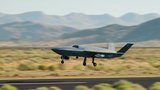
Windracers ULTRA has been deployed in Ukraine since 2023, where it has been used to support long-range logistics missions. (Photo: Windracers)
Windracers is using Eurosatory 2026 to showcase its ULTRA autonomous cargo aircraft following its selection for a major UK support package for Ukraine and growing government backing for drone operations.


Brought to you in association with Coges Events
British company Windracers is highlighting the operational maturity of its ULTRA autonomous aircraft at Eurosatory 2026 as demand for heavy-lift uncrewed aerial systems (UAS) continues to grow across defence and civil markets.
ULTRA is a dual-use autonomous platform capable of carrying payloads exceeding 150kg over distances of up to 2,000km. According to the company, the aircraft is currently operating in environments including Ukraine, the High North, Central Africa and the Scottish Highlands.
The Eurosatory appearance comes shortly after Windracers was selected as one of three primary suppliers under the UK government’s £752 million drone support package for Ukraine, announced in April. The package includes 120,000 drones intended to strengthen Ukrainian operational capability.
Windracers ULTRA has been deployed in Ukraine since 2023, where the platform has been used to support long-range logistics missions in contested environments.
Regulatory reform
The company has also been recognised as part of UK government efforts to accelerate drone adoption alongside advanced air mobility. In May, the Department for Transport announced almost £50 million of investment aimed at supporting drone regulation reform, digital infrastructure and the wider adoption of autonomous aviation technologies.
Windracers said these developments reflected growing recognition of the role autonomous aircraft can play in both military and civilian applications.
Stephen Wright, founder and chairman of Windracers, previously described regulatory reform and targeted investment as key enablers for scaling autonomous aviation operations.
The company positions ULTRA as a sovereign capability able to operate in challenging conditions while supporting a range of missions including defence logistics, humanitarian aid and remote supply operations.
As armed forces increasingly examine the lessons of Ukraine and seek resilient logistics solutions, autonomous cargo aircraft are expected to attract growing attention at Eurosatory alongside more traditional intelligence, surveillance and strike-focused drone systems.


More from Eurosatory 2026
-
![SYSNAV unveils GPS-independent soldier tracking system]()
SYSNAV unveils GPS-independent soldier tracking system
SYSNAV has launched its LocIndoor Blue Force Tracking solution at Eurosatory 2026, providing dismounted troops with positioning capabilities in GPS-denied environments.
-
![Eurosatory 2026: Milrem Robotics puts forward multi-layered defence concept for NATO's eastern flank]()
Eurosatory 2026: Milrem Robotics puts forward multi-layered defence concept for NATO's eastern flank
Autonomous systems developer Milrem has evolved a model for an interoperable robotised approach to the Eastern Flank Deterrence Initiative (EFDI), showing how uncrewed systems could provide a multi-layered defence architecture in the air and on land along NATO’s eastern borders.
-
![Eurosatory 2026: Vegvisir sets connectivity in contested environments in its sights]()
Eurosatory 2026: Vegvisir sets connectivity in contested environments in its sights
Maintaining connectivity in contested environments, where essential networks can easily be disrupted by enemy forces, has emerged as a key challenge in modern warfare. Estonian company Vegvisir aims to tackle that problem with a new Communications Module unveiled at Eurosatory.
-
![Eurosatory 2026: AM General highlights UGV and JLTV A2]()
Eurosatory 2026: AM General highlights UGV and JLTV A2
AM General is showcasing its autonomous ground vehicle and latest light tactical vehicle at Eurosatory 2026, highlighting counter-drone capabilities, modular mission systems and improvements in battlefield mobility.
-
![Eurosatory 2026: Arclin and BSST unveil lighter EOD suit as bomb disposal market burgeons]()
Eurosatory 2026: Arclin and BSST unveil lighter EOD suit as bomb disposal market burgeons
Arclin and BSST have developed a lighter explosive ordnance disposal (EOD) suit using Kevlar EXO technology to improve operator mobility while maintaining protection against fragmentation threats.