USAF plans major CCA expansion with new suppliers and billions in funding
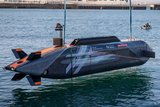
A YFQ-42A takes off during flight testing. (Photo: US Air Force)
US Air Force leaders say open architecture and broader industry participation will help deliver affordable autonomous wingmen capable of overwhelming future adversaries.


The US Air Force (USAF) intends to include new suppliers in the Collaborative Combat Aircraft (CCA) programme in an effort to reduce costs and ensure the future family of attritable, affordable, risk-tolerant autonomous systems will have an open architecture with relevant capabilities for tomorrow’s warfare.
“We have competition, open standards that allow us to bring in separate contracts for different pieces of the hardware, additional contractors from the avionics to the aircraft bodies themselves and engines,” the Secretary of the Air Force, Troy E Meink, explained in a session at the Senate Appropriation Committee on 9 June.
Part of the USAF’s Next
Our news & analysis is now part of Defence Insight®
A Basic-level or higher Defence Insight subscription is now required to view this content.

More from Country-focused updates
-
![Autonomy gives Turkey a chance to outflank established naval shipbuilders]()
Autonomy gives Turkey a chance to outflank established naval shipbuilders
Turkish shipbuilders have sold ships from Asia to Europe, but autonomy and swarm technology could give them a fairer fight against Western European rivals.
-
![France’s naval modernisation drives opportunities for European defence industry]()
France’s naval modernisation drives opportunities for European defence industry
Ahead of Euronaval 2026, major submarine, frigate and aircraft carrier programmes are driving investment, while future corvette replacements and growing interest in uncrewed vessels offer further opportunities for industry into the 2030s and beyond.
-
![Canada assesses security equipment changes for Polar Icebreaker Imnaryuaq]()
Canada assesses security equipment changes for Polar Icebreaker Imnaryuaq
The Canadian Department of National Defence is evaluating communications and reconnaissance changes for CCGS Imnaryuaq’s expanded maritime security role, while retaining its 2032 acceptance target.
-
![All eyes on Royal Navy’s Type 93 market engagement as industry prepares bids]()
All eyes on Royal Navy’s Type 93 market engagement as industry prepares bids
Responses are due by 29 October as the Royal Navy tests the market, with BAE Systems’ Herne and MSubs’ Excalibur setting up a contest where payloads may decide the winner.