Poland buys air and surface radar systems for $1.2 billion
Poland has requested an undisclosed number of ASRR aerostat systems. (Photo: Paweł Bejda on X)
Poland has remained steadfast in its commitment to bolstering its defence capabilities as it secured a freshly approved Airspace and Surface Radar Reconnaissance deal.


The US has approved a possible US$1.2 billion FMS to Poland for Airspace and Surface Radar Reconnaissance (ASRR) aerostat systems.
Poland has requested an undisclosed number of ASRR systems, airborne early warning (AEW) radars with Identification of Friend or Foe (IFF) capability, electronic sensor systems and other related equipment.
“The proposed sale will support the foreign policy goals and national security objectives of the United States by improving the security of a NATO Ally that is a force for political stability and economic progress in Europe,” the US State Department said.
Principal contractors of the deal will be Raytheon Intelligence and Space and Avantus Federal, a wholly owned subsidiary of QinetiQ.
“The negotiations will soon be completed, and the contract signed,” Paweł Bejda, Secretary of State at the Ministry of National Defence noted in a post on X. “Once the new systems are delivered by [Polish Armed Forces], sky monitoring will reach a completely new level.”
Dobre wieści zza oceanu. Departament Stanu USA zezwolił na sprzedaż Polsce 4 aerostatów rozpoznawczych. Wkrótce zakończenie negocjacji i podpisanie umowy. Po dostawie nowych systemów do #WojskoPolskie monitorowanie nieba wejdzie na zupełnie nowy poziom. pic.twitter.com/pIuFEYMv7f
— Paweł Bejda (@pawelbejda) February 7, 2024
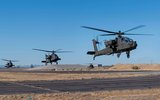
Poland has significantly increased its defence spending since Russia invaded Ukraine in 2022. Major procurements included armed Black Hawk and Apache attack helicopters, long-range air defence systems, HIMARS for $10 billion and various land platforms.

You may also like
More from Air Warfare
-
![October crewed air review: Israel’s Apache deal bets on crewed aviation in an uncrewed age]()
October crewed air review: Israel’s Apache deal bets on crewed aviation in an uncrewed age
Israel’s $1 billion Apache helicopter order highlights the continued demand for crewed attack aviation, while growing integration with uncrewed systems could shape future modernisation and procurement decisions.
-
![US Navy keeps Super Hornet production restart option open, but without defined cost or timetable]()
US Navy keeps Super Hornet production restart option open, but without defined cost or timetable
The US Navy plans to preserve Super Hornet and Growler tooling as production winds down, with restart costs unassessed and final F/A-18 deliveries expected in late 2027.
-
![Connecting the layers: how networks can secure the future of European air defence]()
Connecting the layers: how networks can secure the future of European air defence
The rise of drones has reshaped the threat landscape for all European militaries. For industry, future defensive strategies must carefully balance a mix of passive and active measures to address the evolving danger, based around a highly integrated and responsive network of sensors and effectors.
-
![October drone digest: France and Lithuania advance loitering munition procurements as global spending surges]()
October drone digest: France and Lithuania advance loitering munition procurements as global spending surges
Recent procurement developments in France and Lithuania highlight the growing demand for loitering munitions, with global annual spending forecast to increase nearly 50-fold between 2020 and 2029.
-
![Germany could secure greater influence through sixth-generation fighter partnership with Sweden and Spain]()
Germany could secure greater influence through sixth-generation fighter partnership with Sweden and Spain
Germany is assessing potential pathways for a future sixth-generation fighter capability, including discussions with GCAP partners and Sweden.
-
![Quantum Systems details 480km/h Ukrainian interceptor as production scales up]()
Quantum Systems details 480km/h Ukrainian interceptor as production scales up
Quantum Systems’s Ukraine-made interceptor SPYS is thought to cost approximately 10 times less than Russia's jet-powered uncrewed aerial systems and is being produced at scale.