India readies private sector push as AMCA moves towards 2028 prototype
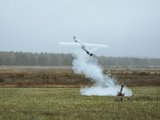
AMCA Mk1 prototype testing is underway, as HAL readies its next-generation fighter fleet. (Photo: Neelam Mathews)
India’s stealth fighter ambitions gain fresh momentum as HAL opens the door to private sector involvement in AMCA Mk1A structural assembly, with strategic support growing for next-gen propulsion and sensor technologies.


The recent India–Pakistan conflict, combined with Pakistan’s anticipated induction of 40 Chinese J-35 stealth fighters from late 2024 to 2027, signals a short-term leap in its radar-evading capabilities – posing a fresh challenge to India’s air superiority.
In a strategic response, Hindustan Aeronautics Ltd (HAL) has issued an Expression of Interest (EOI) inviting Indian private-sector participation in manufacturing structural assemblies for the Advanced Medium Combat Aircraft (AMCA) Mk1A programme. The proposed production schedule will align with the phased retirement of ageing Mirage 2000 and Jaguar fleets.
The submission of EOIs, expected by mid-August, coincides with ongoing revisions to the
Our news & analysis is now part of Defence Insight®
A Basic-level or higher Defence Insight subscription is now required to view this content.




More from Air Warfare
-
![Oshkosh and Grid Aero tie-up tests new model for scaling military UAS production]()
Oshkosh and Grid Aero tie-up tests new model for scaling military UAS production
By combining established manufacturing capacity with startup aircraft design, the partnership could offer an alternative approach to scaling military uncrewed aircraft production.
-
![European funding and NATO interoperability could shape Polish helicopter plans]()
European funding and NATO interoperability could shape Polish helicopter plans
Poland is seeking to update its transport helicopters as part of a wider military aviation modernisation programme, with EU funding requirements and NATO interoperability key considerations.
-
![Poland air focus: $8.27 billion UAV market highlights value of long-term supplier relationships]()
Poland air focus: $8.27 billion UAV market highlights value of long-term supplier relationships
Poland’s growing investment in UAVs highlights how recurring procurement contracts and continuous technological development can provide suppliers with sustained opportunities beyond initial acquisitions.
-
![October crewed air review: Israel’s Apache deal bets on crewed aviation in an uncrewed age]()
October crewed air review: Israel’s Apache deal bets on crewed aviation in an uncrewed age
Israel’s $1 billion Apache helicopter order highlights the continued demand for crewed attack aviation, while growing integration with uncrewed systems could shape future modernisation and procurement decisions.