DSEI 2025: The fighter market shift to Manned-Unmanned Teaming (MUM-T)
A KF-21 Boramae aircraft. (Photo: Poder Aereo)
Manned-Unmanned Teaming (MUM-T) capabilities is set to become a market differentiator for fighter aircraft, allowing 4.5-5th generation platforms to remain relevant to the battlefield.


With the extensive development of C4I systems, electronic warfare and other avionics, the aircraft has evolved into a system hub. While the global primes work to achieve a sixth-generation capability, it remains crucial that the defence industry continues to develop the 4.5-5th generation market, ensuring existing platforms remain appealing and able to keep up with modern battlefield requirements.
The broader concept of Manned-Unmanned Training (MUM-T) began to gain popularity, particularly within the US Air Force, more than 10 years ago, as a force multiplier that can increase the lethality and survivability of fighter aircraft. Today, this pathway is becoming increasingly vital to ensuring that 4.5-5th generation aircraft remain marketable and competitive well into the next decade.
MUM-T programmes will become a key sales differentiator for military customers looking to acquire a command hub rather than just a platform; those exhibiting concrete pathways to achieving this capability will set the market curve.
What is MUM-T?
Over a decade ago, the US Army Aviation Centre (USAACE) put forward the following definition of MUM-T: “The synchronised employment of soldier, manned and unmanned air and ground vehicles, robotics and sensors to achieve enhanced situational understanding, greater lethality and improved survivability.”
In the years since, the defence industry has emphasised that the importance of MUM-T is the added ability for manned aircraft to interact with uncrewed aerial vehicles (UAVs) during various Levels of Interoperability, extending the benefits of UAVs to fixed-wing platforms.
European market
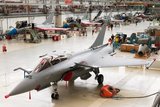
At present, no existing European fighter aircraft has achieved operational MUM-T. However, the Rafale, Gripen and Eurofighter Typhoon have set out programmes that aim to achieve MUM-T capabilities in the 2030s.
In October 2024, Sebastien Lecornu, the Minister of France’s Armed Forces, announced the F5 standard for the Rafale which will be supplemented with a new uncrewed combat aerial vehicle (UCAV). This could be acquired through a procurement programme which Shephard Defence Insight values at an estimated US$3.96 billion.
At the Paris Air Show 2025, Dassault Aviation revealed a UCAV that could meet this requirement: a stealthy UCAV design that draws upon the company’s previous work on the nEUROn demonstrator.
The French Navy also has a requirement for a similar platform to operate alongside its Rafale M fighter. It included a photograph of the nEUROn on a plan for its carrier air wing, showcasing the drone in the 2040 and 2045 sections of a presentation.
In 2024, Airbus commenced the System and Teaming Advanced Research (STAR) programme focused on achieving MUM-T capabilities, specifically with regards to being able to remotely control loyal wingmen.
Market implications
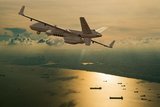
As the wait for the sixth-generation aircraft continues, a clear pathway towards achieving MUM-T abilities is likely to become a baseline requirement for fighter aircraft bids and an increasingly emphasised selling point. Earlier this month at MSPO 2025, Boeing added the Ghost Bat UAV to an offer of the F-15EX to Poland’s Ministry of National Defence.
To make bids more competitive, the market could see a greater integration of UCAVs and fixed-wing in offers put forth to military clients to ensure Collaborative Combat Aircraft (CCA) capabilities.
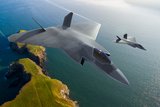
This approach may even extend further than a one-tiered MUM-T approach. For example, South Korea intends to augment its future KF-21 crewed fighter with up to four loyal wingman aircraft, which, in turn, will be augmented by up to four air-launched effect (ALE) or adaptable aerial platforms (AAP), resulting in a two-tiered MUM-T fighter squadron.
Across the three programmes – the KF-21 procurement, the forecasted loyal wingman procurement and the ALE procurement – Shephard Defence Insight estimates a combined value of $13.89 billion.
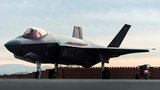
Recently declassified documents from the Canadian government indicated the nation is looking into acquiring combat drones to support its fleet of F-35 aircraft. Industry could be set to start focusing more on showcasing aircraft compatibility with existing and developing UAV capabilities. As a result, the domain will see a more frequent approach of comparing the ecosystem afforded by fighter platforms beyond traditional EW and C4I systems.
Upgrade programmes present opportunity
Consequently, for existing fleets of 4.5-5th generation aircraft, a new market opportunity in the next decade will likely be MUM-T upgrade programmes. As the battlefield evolves and multidomain operations continue to be a NATO priority, MUM-T capabilities will be critical to battlefield success. But with sixth-generation programmes facing face possible delays and likely a high price tag, transforming existing fleets will be a good option to keep past generation fleets up to date.
At DSEI 2025, BAE Systems and QinetiQ revealed that a demonstration was completed this year using a Typhoon tactical display replica and the Banshee drone in a synthetic environment. Simpson highlighted the partnership is focused on exploring how Link 16 can be used “to bridge the gap between the crewed component and the new generations of drones”.
Greater investment and more frequent partnership from industry leaders into the exploration of crewed-uncrewed training is likely a growing theme.
Shephard’s DSEI 2025 coverage is sponsored by:

Related Programmes in Defence Insight
KF-21 procurement [South Korea]
KF-21 Loyal Wingman [South Korea]
Collaborative Combat Aircraft (CCA) [French Air Force]
Related Equipment in Defence Insight


More from DSEI 2025
-
![Could the Ajax IFV solve the UK’s Warrior capability gap?]()
Could the Ajax IFV solve the UK’s Warrior capability gap?
With the UK facing an imminent capability gap after the retirement of its Warrior infantry fighting vehicles (IFVs), the Ajax IFV appears to be in a prime position to fill that gap.
-
![DSEI 2025: Polaris displays new all-terrain vehicle with Alakran mortar system]()
DSEI 2025: Polaris displays new all-terrain vehicle with Alakran mortar system
The Polaris Government and Defense’s Military RZR (MRZR) Alpha 1KW was displayed at the Modern Day Marine exposition in the US earlier this year and with the Alakran mobile mortar weapon system at DSEI. The company outlined recent firing trials with the Alakran mobile mortar weapon system (MMWS) which was weeks after the company announced a major NATO deal.
-
![DSEI 2025: Thales creating new remote weapon station and Storm 2 counter-drone jammer]()
DSEI 2025: Thales creating new remote weapon station and Storm 2 counter-drone jammer
Thales launched Storm-H in 2012 as an EW system equipping individual dismounted troops, and a decade later revealed details to develop the improved and more powerful Storm 2.
-
![DSEI 2025: MARSS unveils new agnostic multidomain C4 system]()
DSEI 2025: MARSS unveils new agnostic multidomain C4 system
MARSS’ NiDAR system has been deployed using sensors from static platforms to provide detection and protection for static sights, such as critical infrastructure, ports and military bases.
-
![In depth: Competition for British Army vehicle programme heats up, despite more delays]()
In depth: Competition for British Army vehicle programme heats up, despite more delays
The UK’s Land Mobility Programme (LMP) seems set to be delayed once again but industry is jockeying for position to partner in what would be one of the biggest ever buys for the British Army.
-
![DSEI 2025: UK’s new Air Chief Marshal outlines nuclear, space and IAMD as three key priorities for RAF]()
DSEI 2025: UK’s new Air Chief Marshal outlines nuclear, space and IAMD as three key priorities for RAF
Aiming to field a more integrated, agile force, the military leader said in a keynote speech that focus on these core areas would be increased to help the RAF deter and meet challenges in the new threat landscape.