Why the US must enhance training for mariners operating in contested environments
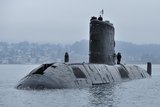
Contracted mariners serving on ships like the Ready Reserve Force’s MV Cape Hudson require improved training to operate effectively in contested environments. (Photo: US Navy)
A US DoD report questioned the adequacy of contested environment training for civilian mariners supporting surge sealift missions and called for improved inter-agency coordination to better prepare them for potential conflict zones.


A report by the US DoD’s Inspector General released earlier this year brought into question the adequacy of training provided to civilian personnel who would directly support ‘surge’ sealift missions.
The report, published in July, acknowledged that sealift is how the US transports most of its military equipment overseas. In the majority of scenarios, that movement is conducted by Military Sealift Command (MSC), which operates around 125 civilian-crewed ships that replenish US Navy vessels, conduct specialised missions, strategically preposition combat cargo around the world, and move military equipment and supplies used by deployed forces and coalition partners.
In performing this
Our news & analysis is now part of Defence Insight®
A Basic-level or higher Defence Insight subscription is now required to view this content.



More from Training
-
![Cubic tailors mortar simulator for the US Army]()
Cubic tailors mortar simulator for the US Army
The company’s mortar trainer received improvements based on soldier’s feedback.
-
![Saab expands footprint in the US]()
Saab expands footprint in the US
The company will operate in two new locations in the coming years to better support US services.
-
![How terrain management capabilities can improve military training]()
How terrain management capabilities can improve military training
This type of tool provides more realistic training easing the incorporation of new scenarios that accurately represent the threats of the battlefield.
-
![I/ITSEC 2024: Australian Army approaches second phase of countermining training]()
I/ITSEC 2024: Australian Army approaches second phase of countermining training
The Engineering Corps has been conducting individual instruction using FLAIM Systems’ Sweeper and should start collective deployments in 2025.
-
![I/ITSEC 2024: Zeiss introduces Velvet 4K SIM projector for night flight simulation]()
I/ITSEC 2024: Zeiss introduces Velvet 4K SIM projector for night flight simulation
The next-generation platform is motion-compatible and can be used in OTW and NVG applications.
-
![I/ITSEC 2024: Saab introduces UAV live training capability]()
I/ITSEC 2024: Saab introduces UAV live training capability
The system can be used to prepare soldiers for both drone offensive operations and CUAS missions.