US Coast Guard announces measures to further implement Force Design 2028 strategy
A ScanEagle is launched from the USCGC Stratton. The force is setting up a Robotics and Autonomous Systems PEO to manage the procurement of such systems. (Photo: USCG)
The US Coast Guard (USCG) created new units, including five Programme Executive Offices (PEOs), to facilitate and speed up the procurement of new capabilities.


The USCG announced on 30 June several procedures to advance the implementation of the Force Design 2028 (FD 2028) strategy and simplify its acquisition and contracting processes. It will also accelerate the delivery and fielding of new capabilities.
The FD 2028 Bold Blueprint and Evolving Our Organisation papers noted that it represents a “full-service effort” to address deficiencies the branch needs to “urgently” fix, make “lasting transformational change” and grow the service’s capacity and capability.
Coming into effect on 1st July, the measures involve modifying the mission profile of some organisations, dissolving others and creating new entities. This includes creating five
Our news & analysis is now part of Defence Insight®
A Basic-level or higher Defence Insight subscription is now required to view this content.


More from Naval Warfare
-
![From the Baltic to the Gulf: where USV procurement is heading next]()
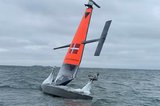
From the Baltic to the Gulf: where USV procurement is heading next
Saildrone’s new Copenhagen base is one sign of a larger shift, as navies globally turn to uncrewed vessels for surveillance and mine clearance.
-
![Israeli Navy looks to expand as war reshapes future force requirements]()
Israeli Navy looks to expand as war reshapes future force requirements
Israel’s navy is preparing for a larger and more technically diverse role, but its ambitions could be impacted by supply chain restrictions, accelerating demand for domestic naval production as well as autonomous maritime capabilities.
-
![Quantum sensing gathers pace as navies eye undersea advantage]()
Quantum sensing gathers pace as navies eye undersea advantage
As AI dominates defence conversations, industry increasingly points to quantum sensing as the technology set to change submarine and uncrewed underwater vehicle operations.