US Army’s future autonomous launcher nears next phase with awards expected in August
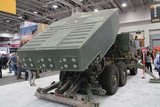
Live-fire exercise with a GMLRS. (Photo: US Army)
The Common Autonomous Multi-Domain Launcher (CAML) is the US Army’s main effort to provide an autonomous or optionally crewed missile launcher, with more details revealed at a CSIS webinar discussion this week.


The US Army has been working towards awarding contracts by the end of August for the Common Autonomous Multi-Domain Launcher (CAML), an effort poised to impact acquisitions, sustainment and deployment doctrine in the artillery and air defence domains.
The programme is intended to provide an autonomous or optionally crewed, highly mobile, air transportable, multi-domain capability “with the potential to augment or replace existing Army launchers”, according to the branch.
The service envisions the CAML to operate worldwide and be able to fire both offensive and defensive missiles, including Tomahawk, Patriot Advanced Capability-3 Missile Segment Enhancement (PAC-3 MSE), Indirect
Our news & analysis is now part of Defence Insight®
A Basic-level or higher Defence Insight subscription is now required to view this content.


More from Country-focused updates
-
![AUSA 2026: XM30 competitors keep their cards close as US Army decision approaches]()
AUSA 2026: XM30 competitors keep their cards close as US Army decision approaches
The US Army’s XM30 programme is an ambitious multi-billion-dollar effort to replace Bradley infantry fighting vehicles. American Rheinmetall and General Dynamics Land Systems are fighting for the contract.
-
![Anduril’s $6.6bn wager on fixing America’s submarine bottleneck]()
Anduril’s $6.6bn wager on fixing America’s submarine bottleneck
Anduril’s Arsenal-2 is a gamble on a brand-new yard and perfect timing, but with Virginia-class output stuck at 1.1 to 1.2 boats a year, it is a bet worth making.
-
![US Coast Guard faces key procurement decisions after C-130J and MQ-9B orders]()
US Coast Guard faces key procurement decisions after C-130J and MQ-9B orders
The service is updating several parts of its aviation fleet including fixed-wing and rotary-wing aircraft and procuring uncrewed aircraft to boost its maritime surveillance.
-
![Canada targets 2027 frigate trials for CU179 Peregrine uncrewed helicopter]()
Canada targets 2027 frigate trials for CU179 Peregrine uncrewed helicopter
The Royal Canadian Navy’s CU179 Peregrine will undergo Halifax-class frigate trials in 2027 ahead of initial operational capability in 2028, while River-class destroyer integration arrangements remain undefined.
-
![Singapore confirms fully automated SIGMA SPH as new precision-strike system emerges]()
Singapore confirms fully automated SIGMA SPH as new precision-strike system emerges
Singapore has confirmed plans to introduce a fully automated howitzer alongside an emerging precision-strike capability whose weapon type and deployment status have not been disclosed.
-
![The US DoD’s counter-drone marketplace begins to produce results]()
The US DoD’s counter-drone marketplace begins to produce results
The Pentagon's push to accelerate counter-drone procurement is opening new opportunities for defence companies as it seeks to bring emerging technologies into operational service more quickly.