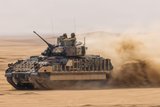
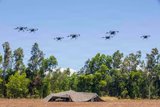
Combined arms the Turkish way – showcasing new tech at an amphibious exercise
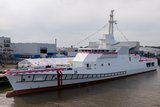
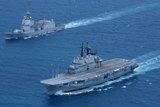
The flagship of the Turkish Navy is the TCG Anadolu, shown here at the EFES 2026 exercise. (Photo: author)
New Turkish weapon systems and operational capabilities continue to evolve, as the recent EFES 2026 event clearly demonstrated.


Between April and May this year, Turkey completed a major exercise in the Aegean that tied together its full capability across air, land and sea domains.
Command and control was carried out from the flagship of the Turkish Navy, the TCG Anadolu landing helicopter dock, which was deployed close-in rather than at a distance offshore as it would have been in a true amphibious landing. TCG Anadolu was supported by destroyers, frigates, fast attack and landing craft as well as high-speed assault boats, all manufactured in Turkey.
The activity included not only a command post exercise but culminated in a night engagement
Our news & analysis is now part of Defence Insight®
A Basic-level or higher Defence Insight subscription is now required to view this content.


More from Country-focused updates
-
![AUSA 2026 preview: Uncrewed systems and platforms to defend against them set to feature]()
AUSA 2026 preview: Uncrewed systems and platforms to defend against them set to feature
The Association of the US Army’s flagship conference and exhibition takes place in Washington, DC from 12 to 14 October. Shephard takes a look at what might be in store at the 2026 show, with uncrewed and counter-uncrewed systems and platforms under the spotlight.
-
![US Army extended-range CUAS missile ramjet work to continue through December 2029]()
US Army extended-range CUAS missile ramjet work to continue through December 2029
Northrop Grumman’s US$18.8 million XRC propulsion contract runs through December 2029, but performance targets and the pathway to operational fielding remain undisclosed.
-
![Companies downselected for British Army vehicle programme]()
Companies downselected for British Army vehicle programme
It is believed that three companies did not make the downselect but a dark horse in Spain’s Iturri is believed to have got through.
-
![Singapore expands maritime presence with future-ready Sentinel OPV]()
Singapore expands maritime presence with future-ready Sentinel OPV
Singapore is building space for uncrewed systems and future technologies into its new Sentinel-class OPVs, reflecting a wider move towards adaptable vessels capable of maintaining persistent maritime presence.