Sweden and Denmark sign for $2.5 billion of BAE Systems’ CV90 combat vehicles
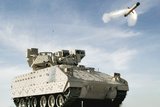
Sweden and Denmark have ordered more CV90s with some destined for Ukraine. (Photo: BAE Systems)
Denmark is buying 115 CV9035 MkIIICs and Sweden 50 with the agreement also including further vehicles for Ukraine financed by the two governments.


BAE Systems will produce 115 CV9035 MkIIIC combat vehicles for Denmark and 50 for Sweden under separate contracts totalling US$2.5 billion which includes vehicles for Ukraine financed by the two Nordic countries.
The contracts are being fulfilled under new three-party framework agreements with the Danish Ministry of Defence Acquisition and Logistics Organisation and the Swedish Defense Materiel Administration (FMV). This builds on an initial contract signed between BAE Systems and Sweden’s FMV in May 2024.
Chief of the Royal Danish Army, Maj Gen Peter Boysen, said the vehicles were key to a rebuilding of the country’s new Heavy Brigade.
“The 115 new vehicles will significantly enhance Denmark’s contribution to collective security and international operations. With the 44 existing vehicles, we will have a total of 159 vehicles, providing us with substantial strength,” Boysen said.
The new version of the CV9035 MkIIIC is built to the same standard as the latest CV90 mid-life upgrade programme for the Netherlands and equipped with the new CV90 turret.
There are 1,900 vehicles in 17 different variants with eight NATO and another two European countries. Vehicles have seen combat in Afghanistan and Ukraine, as well as operations in Liberia.
The Swedish deal had been foreshadowed in May and the Danish order in September while Slovakia expects to receive its first vehicles soon and Lithuania recently approved the purchase of CV90s.
Related Programmes in Defence Insight
CV90 [Sweden - Replacement Order]
Related Equipment in Defence Insight

More from Land Warfare
-
![AUSA 2026: companies adapt munitions and missiles for greater effect at lower costs]()
AUSA 2026: companies adapt munitions and missiles for greater effect at lower costs
Rather than developing entirely new weapons, defence companies are looking to build on existing weapons and systems to deliver greater capability, control costs and accelerate fielding.
-
![AUSA 2026: CUAS market expands as suppliers target new threats and operational requirements]()
AUSA 2026: CUAS market expands as suppliers target new threats and operational requirements
New developments from MARSS, MyDefence, Mountain Horse Solutions and Rafael suggest that future counter-drone protection will increasingly depend on combining advanced detection, rapid interception and integrated defensive networks.
-
![US Army seeks CAML-Lite autonomous launcher prototypes for 2027 live-fire trials]()
US Army seeks CAML-Lite autonomous launcher prototypes for 2027 live-fire trials
The optionally crewed, C-130-transportable platforms would combine modular offensive and defensive fires with autonomous resupply, with demonstrations planned for Talisman Sabre 2027.