Sweden orders more CV90s to replace vehicles donated to Ukraine
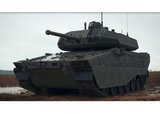
The new Swedish vehicles will be the same standard as Dutch CV90s which have undergone a mid-life update. (Image: BAE Systems)
As the domestic manufacturer and original operator of the CV90 IFV, Sweden has had a continuous fleet of CV90s in service since the 1990s. Consisting of a wide variety of variants and upgrade standards, Sweden is reported to have 459 CV90s following the donation of 50 CV90 40Cs donated to Ukraine in 2023.


BAE Systems will supply Sweden with new CV9035 MkIIIC IFVs along with logistics support under a deal announced on 21 May. The deal has been long been anticipated to fill the gap left by vehicles donated to Ukraine for its war against Russia.
In addition, the Swedish government will procure more new-build CV90s to expand Ukraine capabilities and the contract will provide the opportunity for other nations to join in the procurement of CV90 MkIIICs.
The vehicles will be built to the same standard as the newest CV90 mid-life upgrade programme for the Netherlands. The vehicles will be equipped with a new turret which has improved design and functionality and has had an ergonomic upgrade.
The number of vehicles or value of the contract were not disclosed but Shephard Defence Insight noted this was the anticipated precursor to serial production of additional CV90 MkIII units. It has been anticipated that the initial order of an expected 50 CV9035 MkIIIC could have a value of up to US$360 million with a delivery timeline of between 2025 and 2027.
BAE Systems stated that 1,700 vehicles have been ordered in 17 different variants. They have been selected by 10 European nations, eight of them NATO-members, and the vehicles have seen combat in Afghanistan and Ukraine, as well as operations in Liberia.
Related Programmes in Defence Insight
CV90 [Sweden - Replacement Order]
Related Equipment in Defence Insight


More from Land Warfare
-
![AUSA 2026: CUAS market expands as suppliers target new threats and operational requirements]()
AUSA 2026: CUAS market expands as suppliers target new threats and operational requirements
New developments from MARSS, MyDefence, Mountain Horse Solutions and Rafael suggest that future counter-drone protection will increasingly depend on combining advanced detection, rapid interception and integrated defensive networks.
-
![US Army seeks CAML-Lite autonomous launcher prototypes for 2027 live-fire trials]()
US Army seeks CAML-Lite autonomous launcher prototypes for 2027 live-fire trials
The optionally crewed, C-130-transportable platforms would combine modular offensive and defensive fires with autonomous resupply, with demonstrations planned for Talisman Sabre 2027.
-
![AUSA 2026: Nammo advances 155mm ramjet artillery technology for extended-range fire]()
AUSA 2026: Nammo advances 155mm ramjet artillery technology for extended-range fire
Nammo is developing new artillery ammunition designed to extend firing ranges, combining ramjet propulsion research with conventional, base-bleed and rocket-assisted projectile designs.